
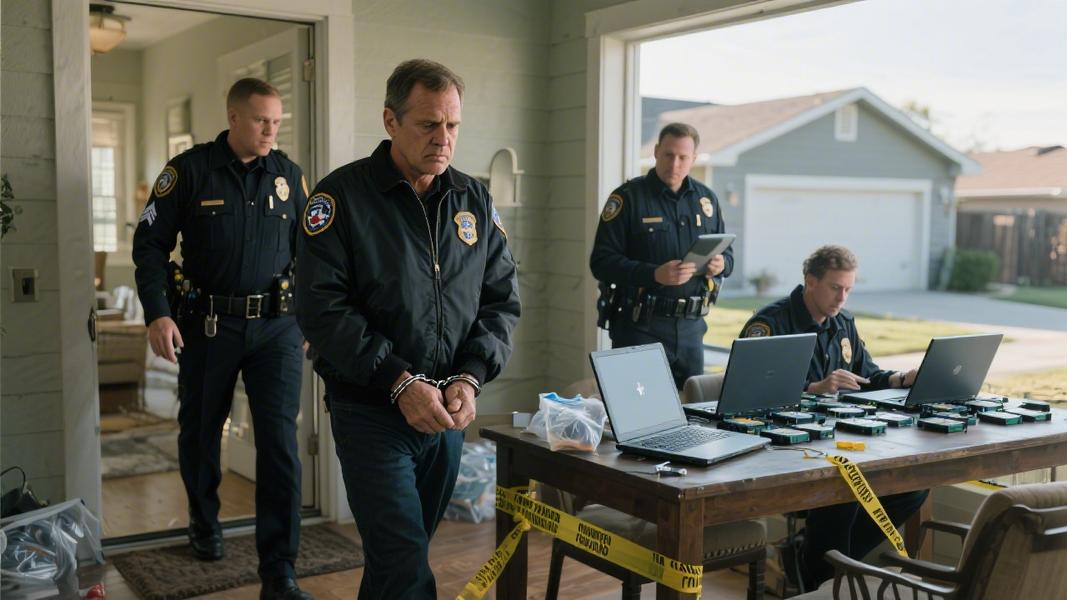
A Harlingen man is heading to federal prison for the next 14 years after investigators found more than 1,500 images and dozens of videos of child sexual abuse material stored across his personal devices. It’s the kind of case that moves fast through a courtroom — and for good reason.
Todd Edward Ellison, 57, was sentenced to 168 months in federal prison this week, with a judge tacking on lifetime supervised release once he’s out. U.S. District Judge Fernando Rodriguez Jr. handed down the sentence after federal prosecutors built their case around a forensic analysis of digital devices seized from Ellison’s residence in the Rio Grande Valley.
What Investigators Found
The numbers are staggering. Forensic analysts documented over 1,500 images and 21 videos of child pornography spread across multiple digital devices taken from Ellison’s home. That’s not a borderline case. That’s a collection — assembled, stored, and kept.
Still, the mechanics of how investigators got there, and what exactly triggered the search, weren’t detailed in the public record. What is clear is that once they looked, they found plenty.
The Federal Response
U.S. Attorney Nicholas J. Ganjei announced the sentencing, framing it as part of the Southern District of Texas’s broader effort to prosecute child exploitation offenses aggressively. The lifetime supervised release component is significant — it means federal oversight of Ellison doesn’t end when he walks out of prison. It doesn’t end at all.
That’s not a small thing. Lifetime supervision restricts where a person can live, work, and who they can be around. For someone convicted of possessing this volume of material, prosecutors and the court apparently felt a hard stop wasn’t enough. The sentence, as noted by regional outlets covering the announcement, reflects the federal government’s increasingly firm posture on child exploitation cases.
Fourteen Years — Is That Enough?
Depends who you ask. Federal sentencing guidelines for possession of child sexual abuse material can vary widely depending on volume, age of victims depicted, and prior criminal history. A 168-month sentence sits at the serious end of that range for a possession charge — though critics of the system have long argued that even lengthy sentences don’t fully reckon with the harm baked into every image in a collection like this one.
Each file represents a real child. That’s the part that doesn’t shrink with a prison term.
Ellison’s case is now closed in a legal sense. But for the federal system, it’s one data point in a long, ongoing effort to hold accountable those who fuel the demand for material that documents abuse. Fourteen years from now, a man who is 57 today will be 71 — and still, technically, under federal watch for the rest of his life.
That’s the sentence. Whether it’s justice is a harder question.
