
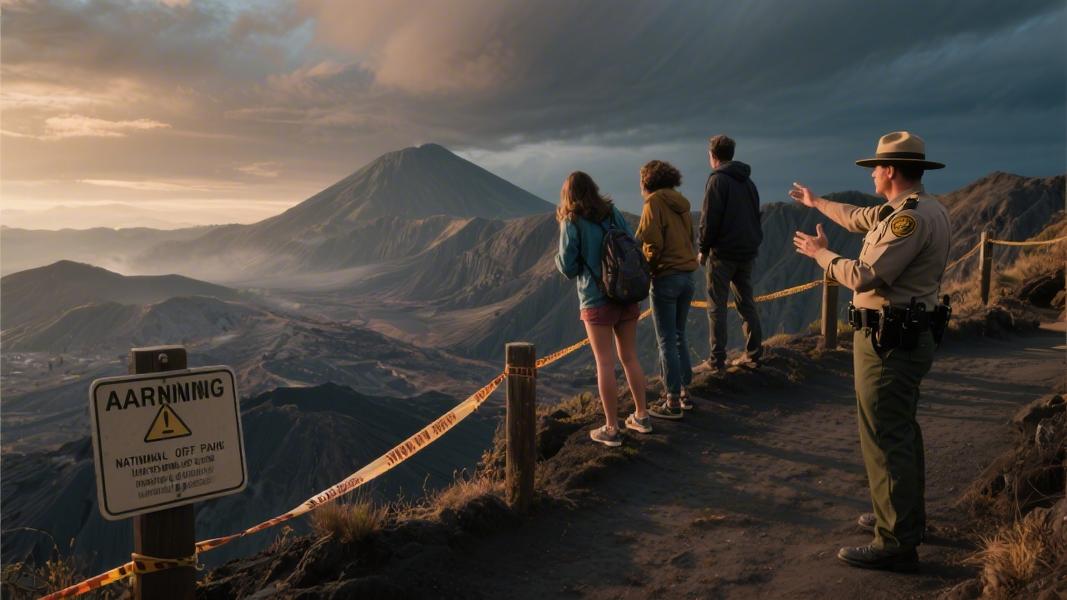
A man is dead after ignoring closed-area barriers at one of the most volcanically active places on Earth — and authorities say it’s part of a troubling, recurring pattern.
A 33-year-old Hawaii resident died late last week after entering a restricted section of the Kīlauea caldera at Hawaiʻi Volcanoes National Park, triggering a grueling overnight search and rescue operation. Crews eventually located him, airlifted him on February 27, and transported him to Hilo Benioff Medical Center, where he was pronounced dead, the National Park Service confirmed.
A Closed Area — For Good Reason
The section of the caldera where the man was found isn’t closed arbitrarily. Kīlauea is an actively erupting volcano, and the restricted zones exist precisely because the terrain can be unpredictable, unstable, and laced with toxic volcanic gases. There’s no ambiguity in the signage. The barriers are there. And yet, people keep crossing them.
That’s the catch. The National Park Service has been dealing with this problem for years — visitors who treat warning signs as suggestions rather than rules, who assume the danger is overstated, or who simply want a closer look at something genuinely extraordinary. Kīlauea draws that kind of impulse. It’s one of the most dramatic natural spectacles on the planet, and it kills without warning.
Rescue Teams Worked Through the Night
What’s often lost in these stories is the toll on the people who respond. Search and rescue crews spent the overnight hours navigating the same hazardous terrain to find this man, operating in conditions that put their own lives at risk. The airlift alone — conducted in the dark, over volcanic landscape — is no small undertaking. By the time he reached the hospital, it was already too late.
The victim was a local resident, not a tourist unfamiliar with the islands. That detail matters. It’s easy to frame these incidents as outsiders underestimating Hawaii’s dangers, but this wasn’t that. This was someone who, by all geographic familiarity, should have known better — and still didn’t make it out.
A Pattern That Won’t Quit
How many times does this have to happen? Park officials and safety advocates have long flagged the issue of repeat violations at national parks, and Hawaiʻi Volcanoes is far from the only site where visitors routinely breach restricted zones. But the stakes here are uniquely unforgiving. Lava fields don’t offer second chances. Neither does volcanic gas.
Still, the incidents keep coming. Visitors have been documented sneaking past barriers at the park with startling regularity, drawn by the spectacle and apparently unbothered by the consequences — consequences that, until they’re personal, can feel abstract. This death is a reminder of how quickly that changes.
The National Park Service has not released additional details about the circumstances leading up to the man’s entry into the closed area, or whether anyone else was with him. What’s known, as noted by multiple outlets covering the incident, is that rescue teams located him after an extensive overnight search — suggesting he had traveled deep into the restricted zone before something went wrong.
The Larger Question
The National Park Service manages over 400 sites across the country with limited staffing and resources. Enforcing restricted-area compliance at a place like Kīlauea — sprawling, dramatic, and magnetic to thrill-seekers — is a genuine operational challenge. Rangers can’t be everywhere. The reality is that the system depends, in large part, on visitors choosing to follow the rules.
Some don’t. And sometimes, as reported in the case of this 33-year-old, that choice is the last one they make.
The volcano, for its part, doesn’t care why you crossed the barrier. It was there long before the signs went up — and it’ll be there long after.
