
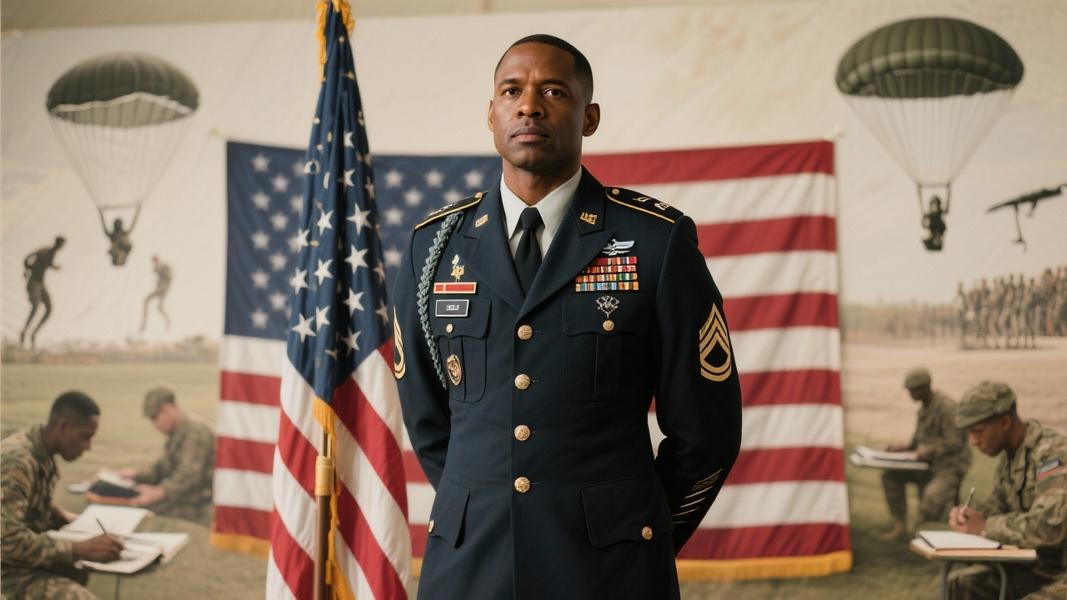
From “buddy plan” enlistment to investigating equipment theft in Vietnam, Sergeant Gregg Reeves’ military journey has taken him through combat zones, disaster relief, and eventually to a senior role managing multi-million-dollar IT projects for veterans. Now, his story is being preserved as part of a Texas initiative to ensure such service isn’t forgotten.
The Texas Veterans Land Board (VLB) recently highlighted Reeves’ oral history as part of its Voices of Veterans program, an archival project that documents the experiences of those who served. Reeves, who entered the Army through what was known as a “buddy plan” with his friend Hornell Thomas, represents the kind of non-combat military experience that shaped both his life and his subsequent civilian career.
From Vietnam to Fort Hood: A Different Kind of Service
Unlike many Vietnam-era stories centered on combat, Reeves’ military path took him through Fort Campbell and Fort Lee for training in accountancy before he completed jump school. When deployed to Saigon, his role focused on investigation rather than combat. “I worked with CID, the Criminal Investigative Division, and our focus was identifying pilfering,” Reeves recalled in his oral history. “I was young, and it was amazing for me to see what was going on.”
After Vietnam, Reeves found perhaps his most rewarding work at Fort Hood, where he served as a training specialist. “Say an individual came into the military who didn’t have a high school diploma. I would arrange for them to go to school within the military and get their GED,” he explained. This role included identifying soldiers with leadership potential – work that would foreshadow his civilian career trajectory.
What makes Reeves’ story particularly interesting is the blend of his Army service and his subsequent 15 years with the Texas National Guard. There, he assisted with equipment logistics and responded to disasters within Texas, including “flooding in the Valley, and where people were in need and the Governor said we need to go help.”
Military Experience Shapes Civilian Career
The skills Reeves developed during his military service translated directly to his civilian work with the Department of Veterans Affairs in Austin. There, he rose to become a Senior Program Manager for Information Technology, where he managed teams developing proprietary software and oversaw multi-million-dollar budgets.
His teams included senior system engineers, programming analysts, database administrators, and systems administrators – creating software programs still used today. He also coordinated financial systems applications audits conducted by the VA Office of Inspector General and the Office of Business Oversight.
Did military service make a difference in his civilian success? Reeves thinks so. “I think it helped me become a better decision-maker when I was in the military because I met some very wise people, very wise people, in the military,” he stated.
Preserving Veterans’ Voices
The Voices of Veterans program, championed by Texas Land Commissioner and Veterans Land Board Chairwoman Dawn Buckingham, M.D., aims to ensure that stories like Reeves’ aren’t lost to time. The program permanently archives veteran interviews at the Office of Veterans Records at the Texas General Land Office.
“For me, it’s important that they really understand the value of being in the military,” Reeves emphasized when discussing conversations with young soldiers unsure about military service. “Not only from the factor of serving your country, but even personally, how it can benefit you.”
These archives aren’t just sitting on a shelf gathering dust. They’re made available to researchers, historians, genealogists, and the public – ensuring that diverse military experiences beyond combat stories are preserved for future generations.
Reeves’ journey – from entering the Army with a buddy who remains a friend more than five decades later, to investigating equipment theft in Vietnam, to helping soldiers earn their GEDs, to managing complex IT systems for veterans – represents the kind of multifaceted military experience that shapes both individuals and institutions long after the uniform comes off.
