
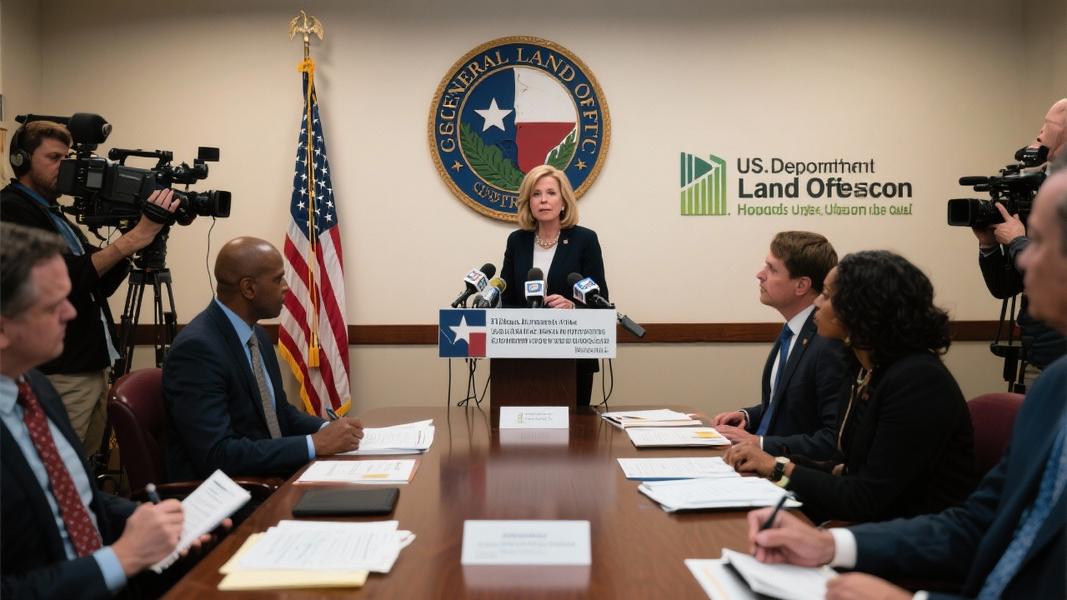
In a dramatic reversal, the U.S. Department of Housing and Urban Development (HUD) has officially closed its civil rights investigation into the Texas General Land Office (GLO), finding no evidence to support previous claims that the agency discriminated against minority communities when distributing Hurricane Harvey relief funds.
The conclusion comes after years of politically charged accusations that the GLO intentionally steered billions in mitigation funding away from predominantly Black and Hispanic urban areas toward whiter, rural communities with less flood risk — allegations that had previously led HUD to refer the case to the Department of Justice.
Investigation Finds “No Direct Evidence” of Discrimination
After reviewing more than 80,000 pages of documents and internal communications, HUD’s final determination stated that “the record discloses no direct evidence that GLO designed or operated the Harvey Competition (or any portion of the Action Plan) with a racially discriminatory motive.”
This finding directly contradicts HUD’s previous position under the Biden administration, which had claimed the GLO “focused Mitigation resources in communities that benefited smaller populations of rural White Texans over communities of urban Black and Hispanic Texans, particularly those closer to the coast and more prone to flooding from hurricanes and other natural disasters.”
How did such contradictory conclusions emerge from the same federal agency? The answer appears to lie in a broader policy shift at HUD, which in March 2025 dropped several civil rights cases to reassess Biden-era investigations.
Competing Narratives Over Who Benefited
The GLO has consistently maintained that its distribution of the $2.1 billion in Community Development Block Grant Mitigation (CDBG-MIT) funding followed federal guidelines and benefited minority communities. In fact, the agency asserts that racial and ethnic minorities made up two-thirds of expected beneficiaries, with 100% being low-to-moderate income residents — exceeding HUD’s requirements.
“For many years, politically motivated claims of discrimination were allowed to go unchallenged by reporters and unsupported by evidence or rule of law,” the GLO argued in a recent statement. “A simple fact remains uncontested – more than a million minorities – two thirds of the total population – benefited from this funding.”
But housing advocates tell a different story. Groups like Texas Housers and the Northeast Action Collective had celebrated HUD’s initial finding that the GLO had “knowingly developed and operated a competition for the purpose of allocating funds that steered money away from urban Black and Hispanic communities that had the highest storm and flood risk into Whiter, more rural areas with less risk.”
The National Low Income Housing Coalition had also supported HUD’s earlier determination that the GLO’s scoring criteria effectively penalized areas with larger non-white populations.
Political Accusations Fly
Texas Land Commissioner Dawn Buckingham didn’t mince words about what she sees as the political nature of the original investigation. “While the Biden Administration has now lost its bully pulpit it used for political stunts like this, we now call on the DOJ to say what it said before, this is fake news,” Buckingham declared following HUD’s reversal.
The case has become something of a political football, with both sides accusing the other of using Hurricane Harvey victims as pawns in a larger ideological battle. Conservative officials characterize the original investigation as an attempt by liberal appointees to direct funding toward their preferred urban centers, while housing advocates maintain that the GLO’s distribution methods systematically disadvantaged communities of color most vulnerable to future disasters.
What happens next remains unclear. The Department of Justice, which previously received the referral from HUD, has not yet announced whether it will continue to pursue the case in light of HUD’s reversed findings.
For hurricane-affected Texans still recovering from Harvey’s devastation nearly eight years later, the legal and political wrangling offers little comfort as they prepare for future storms in a region where climate change threatens to make extreme weather events more frequent and severe.
