
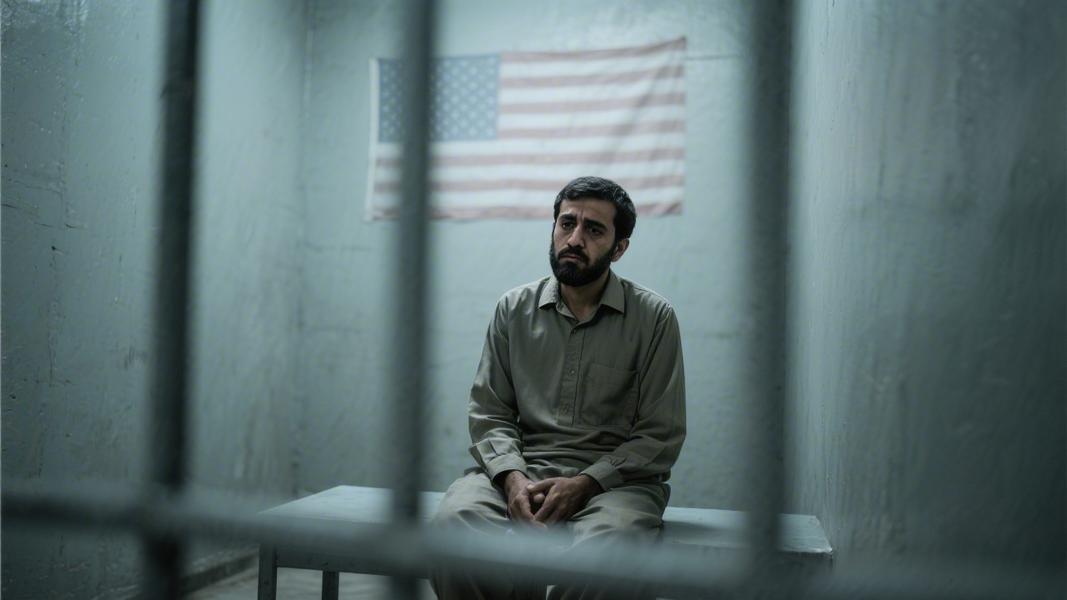
A detained father sat in an ICE facility while his disabled son died in a North Texas hospital — and then was denied the chance to attend his own child’s funeral. That’s not a hypothetical. It happened.
Maher Tarabishi, a 62-year-old Jordanian national, has been held in federal immigration custody since October 28, 2025, when agents detained him during what was supposed to be a routine annual check-in in Dallas. He had entered the United States legally on a tourist visa back in 1994 — more than three decades ago. For years, those annual check-ins had been uneventful. This one wasn’t.
A Son Left Without His Only Caregiver
What makes this case particularly wrenching is who Maher left behind. His son, Wael Tarabishi, was 30 years old, a U.S. citizen, and living with a rare disorder that caused severe muscle weakness and serious heart complications. Maher wasn’t just his father — he was his full-time caregiver, reportedly around the clock. When ICE took Maher away, Wael lost the one person keeping him stable.
Wael’s health deteriorated rapidly in the weeks that followed. He was hospitalized. Then, last week, he died. Before his death, he had recorded a video message that, by any measure, is hard to watch. “Mentally, I have never been worse,” Wael said. “My father was always my hero, my safe place. He did everything for me, 24 hours a day, and ICE took him for no reason.”
Requests were made — by the family, by attorneys — for Maher to visit his dying son. They were denied. When Wael passed, another request went in: let the father attend the funeral. That was denied too, even though ICE policy technically allows for escorted visits in compassionate circumstances.
The Government’s Counterclaim
Here’s where it gets complicated — or at least, where the government says it does. The Department of Homeland Security has characterized Maher as a “criminal alien” and a self-admitted member of the Palestine Liberation Organization, claiming he had previously been ordered removed but was permitted to remain in the country illegally for nearly two decades. That’s the official line, anyway.
The family flatly rejects it. “We denied that he’s part of PLO or any other part of organization. And we did, his lawyer did,” a family member stated. No additional evidence supporting DHS’s characterization has been made publicly available, and the family’s legal team has contested the claims.
That said, even if the government’s characterization were accurate — and the family says it isn’t — the denial of a visitation to a dying U.S. citizen’s bedside raises questions that don’t go away quietly. ICE’s own guidelines exist precisely for situations like this one. They weren’t applied here.
A Pattern That’s Becoming Familiar
Is this an isolated case? Increasingly, it’s hard to argue that it is. Across the country, immigration enforcement actions under the current administration have ensnared people with decades-long ties to American communities — individuals who, whatever their technical legal status, had been living, working, and raising families here for years, sometimes generations. Maher Tarabishi had been checking in annually with federal authorities. He wasn’t hiding.
Still, the specifics here are stark in a way that’s difficult to contextualize away. A disabled American citizen is dead. His father, the man who cared for him every single day, was locked in a detention facility when it happened. He wasn’t allowed to say goodbye. He wasn’t allowed to stand at a graveside.
Whatever the legal arguments on either side, Wael Tarabishi — a U.S. citizen — spent his final days without his father. And his father spent them without him.
Some distances, once created, can’t be closed after the fact.
