
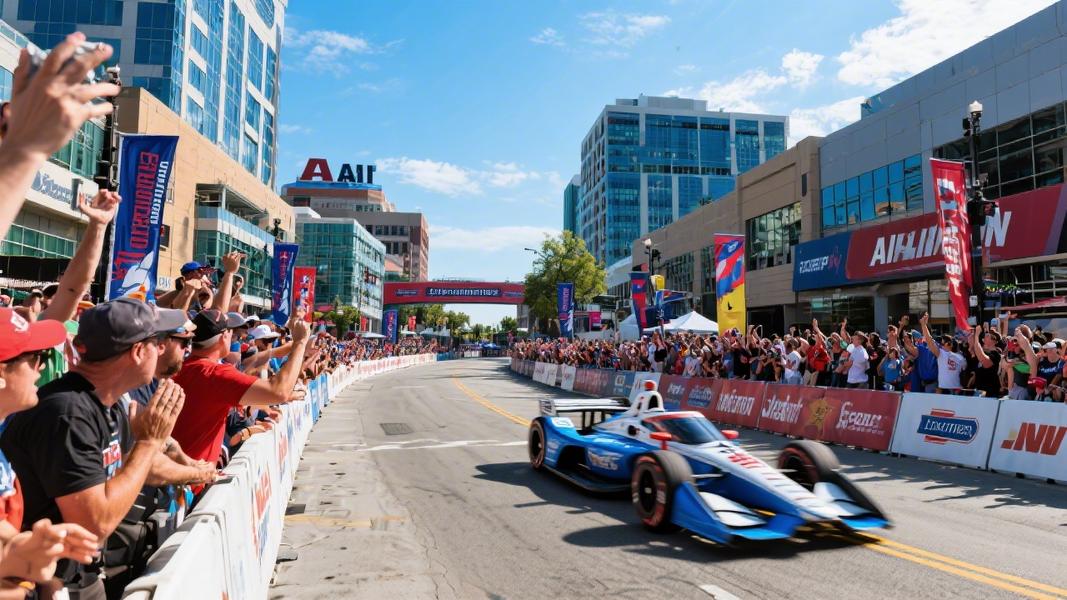
IndyCar is back — and this time, it’s racing in the shadow of two of America’s most recognizable sports cathedrals. The series rolls into Arlington, Texas, for a street-style showdown that puts the glittering skyline of the Dallas-Fort Worth metroplex squarely in the frame.
The 2025 IndyCar race in Arlington marks a genuinely striking addition to the open-wheel calendar — a 2.73-mile temporary circuit that wraps around AT&T Stadium, home of the Dallas Cowboys, and Globe Life Field, home of the Texas Rangers. Two iconic venues, one racing layout, and a green flag dropping at noon ET on Sunday, March 15. For a series that’s been sprinting through its early-season schedule, this one carries real weight.
A Track Built Around Icons
It’s not every weekend that a race circuit snakes past two venues that fans across the country already know by heart. As organizers have noted, “The 2.73-mile track layout will feature two iconic sporting venues recognized by fans around the world: AT&T Stadium, home of the National Football League’s Dallas Cowboys, and Globe Life Field, home of Major League Baseball’s Texas Rangers.” That’s a marketing pitch that essentially writes itself — but the engineering behind it is anything but simple.
The course features a split-pit lane and what designers are calling a technical horseshoe section nestled right next to AT&T Stadium. That kind of layout tends to punish drivers who can’t balance mechanical grip with raw aggression. Expect the horseshoe to be a flashpoint — tight, unforgiving, and almost certainly the spot where races are won and lost in the closing laps.
The Numbers Behind Sunday’s Race
Twenty-five drivers. 70 laps. 191.1 miles of racing. The projected race window sits at just under two hours — 1 hour and 55 minutes — which, in IndyCar terms, means there’s precious little margin for error on strategy calls. One bad pit stop, one ill-timed yellow flag, and a podium contender can find themselves watching the leaders disappear into traffic.
This is also, notably, the third consecutive weekend IndyCar has put on a race. “For the third weekend in a row, the green flag will wave for IndyCar!” the series has announced — a pace that tests not just the drivers and their teams, but the entire traveling circus of engineers, mechanics, and logistics crews who make these events possible. Three weekends in a row is a grind. Anyone in the paddock will tell you that.
Why Arlington, and Why Now?
That’s the question worth sitting with for a moment. Arlington isn’t a traditional racing town in the way that Indianapolis or St. Petersburg might claim to be. But there’s a logic to it — a deliberate effort by IndyCar to plant its flag in major American sports markets, to put its product directly in front of audiences who fill NFL stadiums and MLB ballparks but may never have watched an open-wheel race from start to finish.
Still, ambition and execution aren’t always the same thing. A circuit that circles two massive stadium complexes creates logistical puzzles that a traditional permanent track simply doesn’t. Sight lines, spectator flow, access points — all of it has to be built from scratch and then torn down again the moment the checkered flag falls. It’s temporary racing at its most ambitious.
What to Watch on Race Day
The technical demands of the Arlington layout — particularly that horseshoe section — suggest this won’t be a straightforward, follow-the-leader affair. The split-pit lane alone introduces strategic wrinkles that teams will have been gaming out since qualifying wrapped up. When your pit crew’s position on pit road is different from your competitor’s, timing becomes a chess match layered on top of an already complicated race.
With 25 cars on a street-style circuit, attrition is a real factor too. Walls are close. Mistakes are permanent. And in a series where championships have been decided by single-digit points margins, every position — from first to twenty-fifth — carries consequences that ripple forward into the rest of the season.
Arlington may be new to IndyCar, but IndyCar is no stranger to proving itself in unfamiliar territory. Sunday’s race, framed by two of America’s most famous stadiums, is the series making its case to a whole new audience — one lap at a time.
