
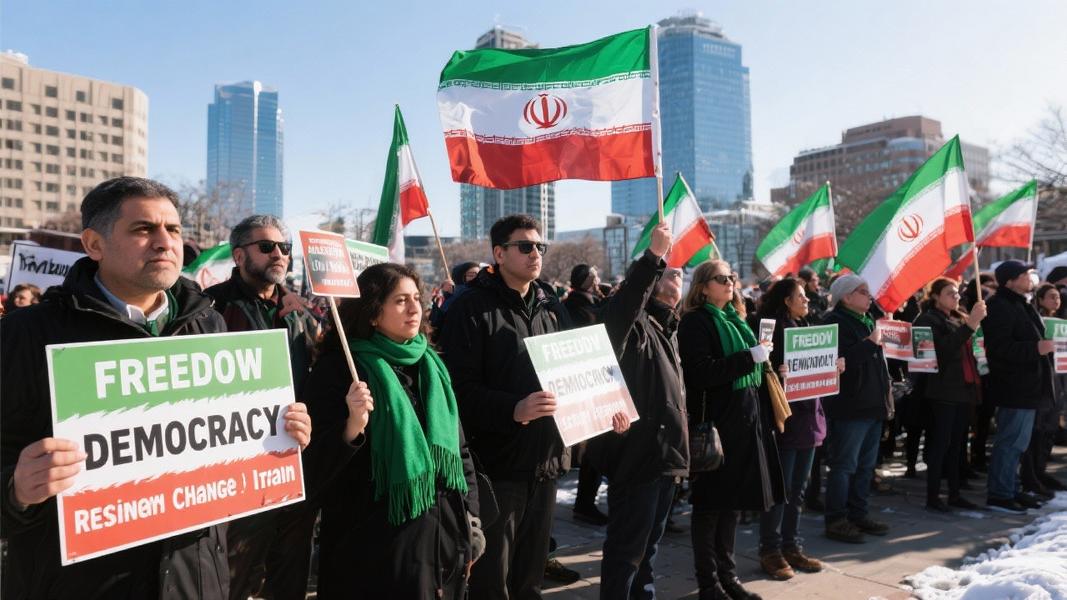
Deadly protests are sweeping across Iran as demonstrators risk their lives demanding freedom and an end to authoritarian rule, with at least 62 people killed and thousands arrested in a government crackdown that’s intensifying by the day.
The nationwide demonstrations, which began in late December over economic and social issues, have evolved into what some Iranian-Americans are calling a revolution — one that Iran’s supreme leader Ayatollah Ali Khamenei is blaming on external forces while threatening further violence against protesters he’s labeled as “terrorists.”
Solidarity Across Oceans
As the Iranian regime cuts off internet access and international communications, Iranian-Americans in North Texas have mobilized to show support for their countrymen. “They want freedom and democracy,” explained one organizer. “They want an end to any sort of dictatorship. Their slogan is ‘down with the oppressor.'”
Homeira Hesami, president of the Iranian-American Community of North Texas, has been organizing local protests in Dallas and plans to join a national demonstration in Washington, D.C. Hesami, who immigrated about 40 years ago, was denied basic rights in Iran including higher education opportunities and freedom of expression — the same freedoms today’s protesters are demanding.
The information blackout imposed by Iranian authorities has made it difficult to assess the full extent of the government’s response. Still, the United Nations estimates more than 2,000 people have been arrested since the unrest began.
International Response
President Trump has issued stern warnings to Iranian leadership, threatening severe consequences if peaceful protesters are killed. “And I said if they’re going to do that, we’re going to hit them very hard,” Trump stated, adding that “they’re going to have to pay hell.”
How is the Iranian government responding? Khamenei has doubled down, blaming the United States and Israel for instigating the protests, a claim that seems aimed at delegitimizing the grassroots nature of the demonstrations.
The current wave of protests follows a call from Iran’s exiled crown prince, giving the movement both historical context and potential political direction. According to those familiar with the situation, the Iranian resistance movement is well-established, with leaders promoting a 10-point plan focused on democratic change for the country’s future.
Some Iranian-Americans in North Texas remain cautiously optimistic despite the mounting death toll. They view this moment as potentially transformative for a country that has lived under authoritarian religious rule for decades.
As international pressure mounts and protests continue despite the brutal crackdown, the question remains whether this movement can succeed where previous uprisings have faltered. For Iranians inside the country risking their lives for basic freedoms, and for those watching anxiously from abroad, the stakes couldn’t be higher.
