
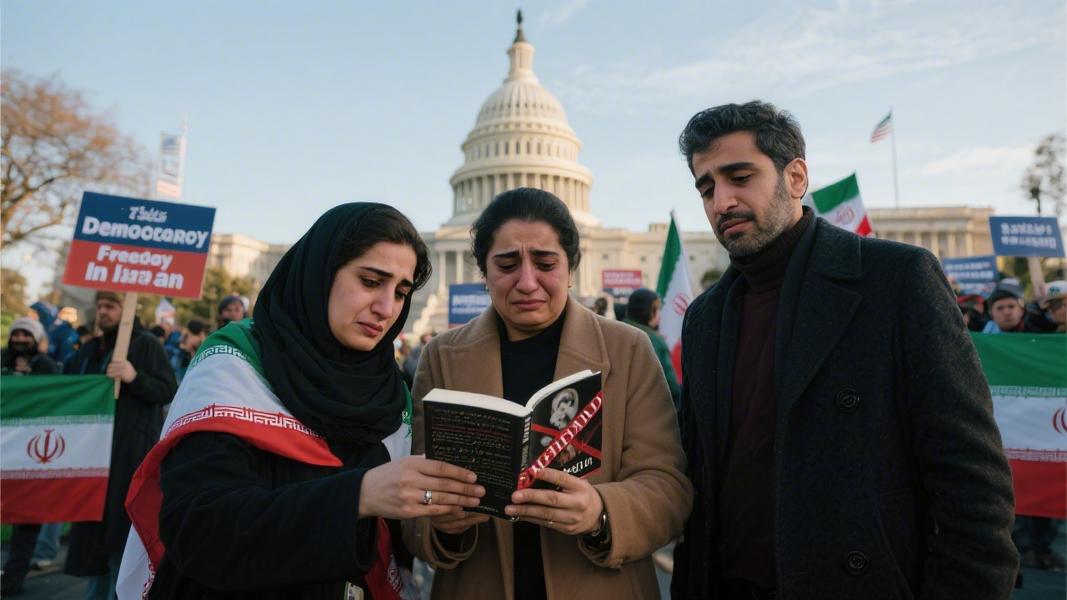
Washington is bracing for a defining moment — and for many Iranian Americans, it’s been a long time coming.
On Saturday, March 7, 2026, thousands are expected to descend on the nation’s capital for a Unity Rally and March for a Democratic Republic in Iran, a demonstration organized by Iranian American activists calling for regime accountability and a free Iran. The rally, set to begin at 11:30 AM EST, arrives just days after one of the most seismic geopolitical events in a generation — and with emotions still raw, the streets of Washington are likely to reflect a country, and a diaspora, deeply divided over what comes next.
A World Upended in a Matter of Days
The backdrop to all of this is staggering. On February 28, 2026, the United States and Israel launched Operation Epic Fury, a coordinated military campaign targeting Iran’s nuclear infrastructure and military apparatus. President Donald Trump justified the strikes as a response to Iran’s nuclear program and its brutal crackdown on domestic protesters — a crackdown that, just weeks earlier, had left thousands dead in the streets. Shortly after the strikes commenced, Iran’s Supreme Leader Ayatollah Ali Khamenei was confirmed dead.
The January 2026 uprising had already shaken the world. Iranians from every corner of the country took to the streets demanding regime change, only to be met with live fire from the Islamic Revolutionary Guards Corps. “In January 2026 nationwide uprising for regime change, thousands and possibly tens of thousands of pro-democracy protesters were mercilessly gunned down by regime’s Islamic Revolutionary Guards,” the Organization of Iranian American Communities documented in a widely circulated account of the violence. The scale of the killing drew immediate comparisons to the worst atrocities of the 20th century.
Joy, Grief, and Everything in Between
For many Iranian Americans, the news of Khamenei’s death hit like a thunderclap. From Boston to Los Angeles, jubilant crowds spilled into the streets, waving flags and embracing strangers. “Jubilant Iranian-Americans on Saturday took to the streets from Boston to Los Angeles to cheer the death of Supreme Leader Ayatollah Ali Khamenei and voice hope for a brighter future for their homeland,” the Times of Israel reported. It was a moment decades in the making for a diaspora that has carried loss in its bones.
Homeira Hesami is one of them. She carries a book — banned in Iran — that catalogs the names of more than 20,000 Iranians killed for resisting the Islamic Republic. Her own cousin was executed in 1988. “There are students. There are physicians, there are like from all factions of life you see over here,” she said, describing the victims documented in its pages. The book isn’t just history to her. It’s a ledger of everything the regime has taken.
Then there’s Hannah Jam, whose parents survived as political prisoners in Iran before seeking asylum in the United States. Jam recalls the first time she attended a protest on American soil — and the shock of realizing no one was going to arrest her for it. That fear, she explained, was baked into her from birth. “I was blessed to have a chance to study here, to find a job,” she said quietly. “Well, what about other people that didn’t have this chance?”
Not Everyone Is Celebrating
But it’s not that simple. Even as Iranian Americans celebrated in the streets, a parallel protest movement was forming — and fast. On the same day as the strikes, demonstrators gathered outside the White House to oppose the military action, voicing opposition to what they called an escalating and illegal conflict. Anti-war sentiment spread quickly to other U.S. cities, with protesters calling for diplomacy over bombs.
The opposition movement drew a broad — and, to some, eyebrow-raising — coalition. The demonstrations were organized primarily by left-wing groups, including the A.N.S.W.E.R. Coalition, CodePink, Democratic Socialists of America, Black Alliance for Peace, and the National Iranian American Council, which critics have long characterized as a lobbying arm of the Islamic Republic. Together, they condemned the strikes as illegal and a violation of international law.
That framing hasn’t sat well with many in the Iranian American community — particularly those who watched their relatives get shot in January for carrying a protest sign. The tension between anti-war principles and the lived reality of life under the IRGC is real, and it’s playing out in real time on American streets.
What March 7 Means
So what exactly is the March 7 rally about? Organizers say it’s about the Iranian people — not the regime, not geopolitics, and not the debates happening in Washington think tanks. “Iranian Americans will rally and march in Washington, DC on Saturday March 7, 2026 to stand in solidarity with freedom, democracy and the sovereignty of the Iranian people,” the Organization of Iranian American Communities announced in a statement laying out the event’s purpose.
The word “unity” in the rally’s name carries weight. The Iranian diaspora is not monolithic — it never has been. There are monarchists and republicans, secularists and religious moderates, those who support the strikes and those who don’t. What organizers are betting on is that the desire for a free, democratic Iran is broad enough to hold all of those factions together, at least for one afternoon on the National Mall.
Whether that unity holds — in Washington and beyond — may say as much about the future of Iran as anything happening on the ground in Tehran right now.
Hesami, for her part, already knows which side of history she’s standing on. She’ll be there on March 7, book in hand, carrying 20,000 names into the streets of the city that’s supposed to stand for freedom. Some things, she’d tell you, can’t wait any longer.
