
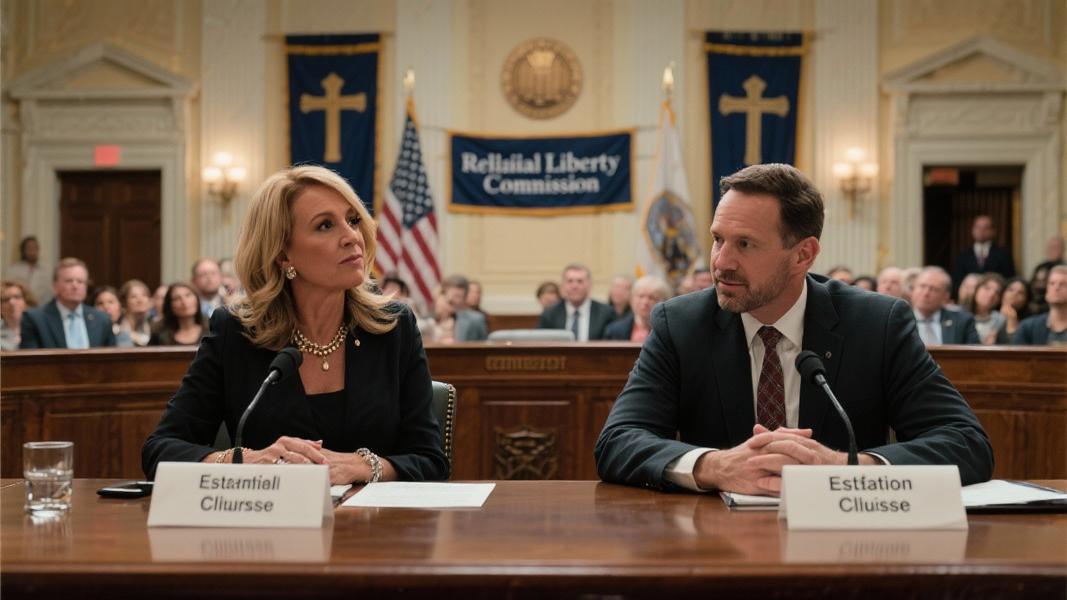
Texas Lt. Gov. Dan Patrick has drawn a line in the sand on religious liberty in America, pointing to what he calls a decades-long erosion of foundational freedoms that began with the Warren Court. As chair of the newly formed Religious Liberty Commission, Patrick’s message was clear: religious freedom in the United States is under threat, and apathy may be as dangerous as active opposition.
During the commission’s inaugural hearing, Patrick identified two major domestic threats to religious liberty: court decisions dating back to the mid-20th century that he believes undermined constitutional protections, and what he described as growing indifference among people of faith. “If you don’t fight for it, you can lose it,” Patrick warned attendees, adding that when religious liberty falls, “all the other liberties fall by the wayside quickly.”
Reclaiming a Religious Inheritance
The commission, composed primarily of Christian representatives but including advisory boards with Jewish and Islamic leaders, has set its sights on examining how judicial interpretations have shaped — or according to Patrick, distorted — religious freedoms in America. The hearing explored the founders’ intent and the Establishment Clause, with commissioners expressing particular concern over the phrase “freedom to worship” — terminology they believe wrongly confines religion to private spaces rather than acknowledging its legitimate role in public life.
“This commission, in part with the President’s guiding, is so that we all in America can reclaim that inheritance our founders gave us,” Patrick stated during proceedings. “The Declaration of Independence is consistent with the Bible, and the Bible is consistent with the Declaration of Independence.”
Bishop Robert Barron set the tone with an opening prayer that emphasized gratitude “for our country, which is based upon the acknowledgment that our freedoms and rights come from You [God].” The invocation underscored the commission’s stated mission to enhance and protect religious freedoms for all Americans.
Beyond Worship: Religion in Public Life
What exactly constitutes religious liberty? That question emerged as a central theme, with commissioners pushing back against narrow interpretations that would limit religious expression to houses of worship. Many expressed “dismay at common attempts by public figures and secular culture” to frame religious freedoms in ways that “relegates religion to the private sphere rather than uplifting it as a valid and invited form of action in public life.”
The hearing also highlighted the theme “Religion Lifts People Up,” with Patrick focusing on religion’s positive societal contributions during a segment that explored how faith communities contribute to social cohesion and public welfare.
Despite the commission’s predominantly Christian makeup, Patrick emphasized its inclusive mission. “Where can I pray? When can I pray? Who can I pray to? Because this commission is about all faiths,” he stated, signaling an intention to address religious liberty concerns across traditions.
Still, the commission’s framing of religious liberty as something that has been “lost” and must be “brought back” reflects a particular perspective on American legal history — one that views Supreme Court decisions of the mid-20th century as having fundamentally altered the constitutional understanding of church-state relations.
As the Religious Liberty Commission continues its work, the question remains whether its approach will bridge or deepen divides over the proper place of religion in American public life. For Patrick and his fellow commissioners, the stakes couldn’t be higher.
