
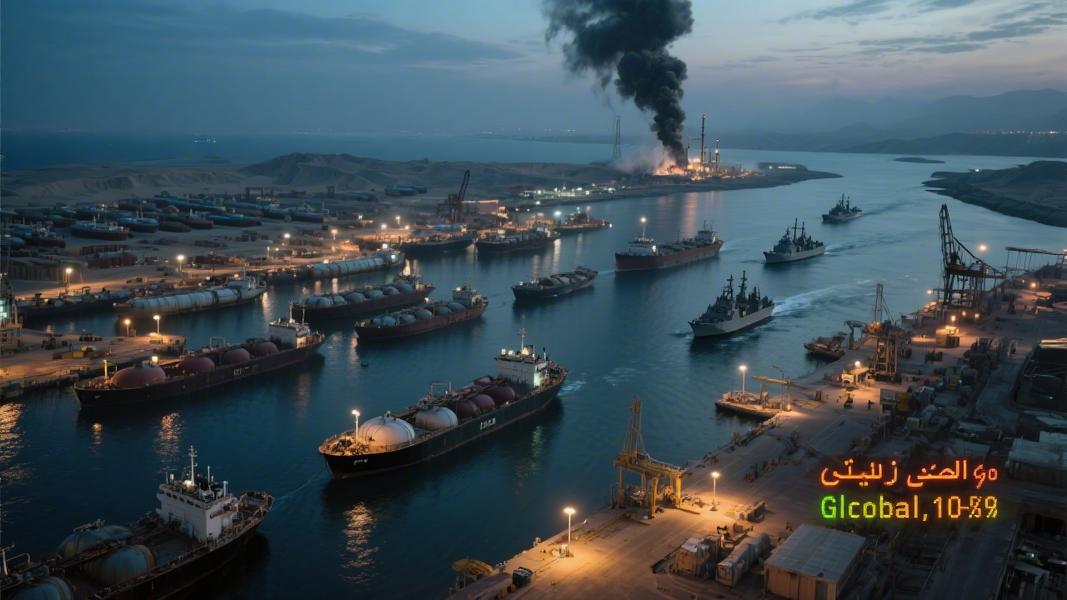
The Middle East crossed a threshold it can’t easily step back from. In a massive coordinated military operation, Israel and the United States struck dozens of military installations across Iran, targeting the Islamic Republic’s nuclear infrastructure, missile production sites, and — apparently — its supreme leadership itself.
The strikes, which Israel designated “Roaring Lion” and the United States called “Operation Epic Fury,” hit cities across western and central Iran including Tehran, Isfahan, Qom, Karaj, and Kermanshah. The scale was staggering. The Israeli Air Force alone deployed roughly 200 fighter jets against some 500 military targets — the largest combat sortie in the country’s history — with its opening wave codenamed “Operation Genesis.” That name wasn’t chosen casually.
Why Now — and Why This Big?
Israeli officials were blunt about their reasoning. Foreign Minister Gideon Sa’ar warned that waiting any longer simply wasn’t an option, arguing that further “delay would have allowed the Iranian regime to reach a level of immunity for its nuclear program, as well as to engage in the mass production of long-range ballistic missiles.” That’s the core of it — a closing window, and a decision made to act before it shut entirely.
Prime Minister Benjamin Netanyahu framed the operation in sweeping, almost historic terms. The goal, he said, was to eliminate existential threats and open a new chapter for ordinary Iranians, declaring that “our joint action will create the conditions for the brave Iranian people to take their destiny into their own hands.” Whether Iranians see it that way is, of course, a very different question.
The Question Everyone Is Asking: Where Is Khamenei?
Then came the detail that set off alarm bells across every capital watching. Israeli strikes hit the Tehran compound of Supreme Leader Ali Khamenei, and in the aftermath, he went dark — cut off from contact entirely. Israeli officials privately assessed he was likely wounded in the strike, though no formal confirmation came from either side. A 85-year-old man, the iron center of the Iranian theocracy, suddenly unreachable. The implications of that alone are almost impossible to overstate.
Still, Tehran pushed back — hard. Iranian Foreign Minister Abbas Araghchi appeared publicly and flatly insisted, “As far as I know, Khamenei is still alive.” It was a careful, hedged denial — not exactly a ringing reassurance. “As far as I know” is doing a lot of work in that sentence.
Iran’s Response: A Promise of Fire
Whatever his condition, a warning attributed to Khamenei’s office was not long in coming. Iran’s supreme leader threatened a “crushing response” to the Israeli and American strikes, according to statements circulating shortly after the operation began. It’s the kind of language Tehran has used before — but rarely under circumstances quite like these, with its military infrastructure smoldering and its leader’s whereabouts genuinely uncertain.
That’s the catch with operations of this magnitude. They don’t end the story. They begin a new, far more dangerous chapter — one where the rules of engagement, the chain of command in Tehran, and the appetite for escalation on all sides are suddenly, terrifyingly unclear.
How this unfolds in the days ahead may well define the region for a generation. And the world is watching, with very little certainty about what comes next.
