
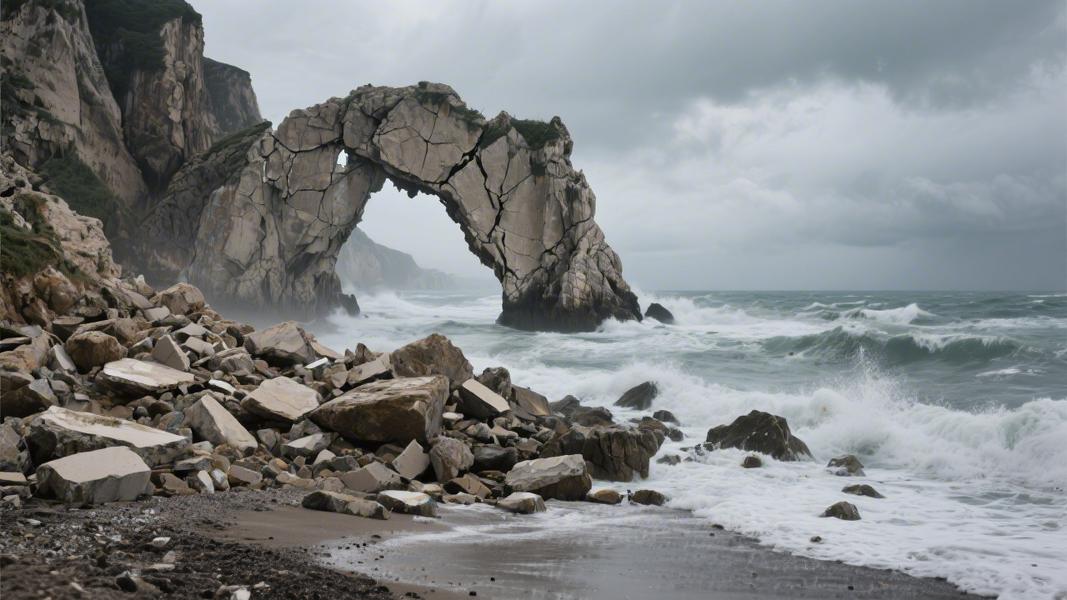
Italy’s iconic “Lovers’ Arch,” a natural rock formation that has drawn tourists and romantics for decades, dramatically collapsed on Valentine’s Day — a timing so ironic it feels almost deliberately cruel.
The beloved arch, located near Melendugno in southern Italy’s picturesque coastline, crumbled into the Adriatic Sea on February 14, 2026, after enduring days of punishing weather conditions including heavy rainfall, powerful winds, and turbulent seas that ultimately proved too much for the limestone structure to withstand.
“This is an unwanted Valentine’s Day gift,” lamented Maurizio Cisternino, the mayor of Melendugno, in comments to a local newspaper according to regional reports. The timing couldn’t have been more symbolic for a formation that had become associated with romance and enduring love.
Nature’s Valentine Message
The collapse occurred during what locals describe as one of the most intense weather systems to hit the region in recent years. What makes this natural disaster particularly noteworthy? The date itself has turned what would otherwise be a geological event into something that feels oddly personal.
For generations, couples had visited the arch to take photos, make proposals, or simply enjoy the romantic symbolism of the formation. Some local traditions even suggested that kissing beneath the arch would ensure lasting love — a belief that now seems to carry an unintended metaphorical warning about the fragility of even the most seemingly solid structures.
Tourism officials in Puglia, the region where the arch was located, are already assessing the economic impact of losing such a significant natural attraction. The arch had been featured on countless postcards and travel brochures highlighted by regional tourism campaigns.
Geologists had previously noted minor erosion in the formation but hadn’t indicated any immediate risk of collapse. The combination of sustained rainfall saturating the porous limestone and powerful wave action from below created what one expert described as “the perfect storm” for structural failure.
Many local residents gathered at the coastline after news of the collapse spread, some bringing flowers in what spontaneously evolved into an impromptu memorial for the natural landmark.
“It’s like losing an old friend,” said Francesca Donati, 67, who has lived her entire life in the area. “My husband proposed to me there in 1979. Now I’ll only have the photos to show my grandchildren.”
Environmental authorities are monitoring the area to assess any additional damage to the surrounding ecosystem and to ensure the safety of visitors who might still attempt to access the dangerous coastline during ongoing poor weather conditions.
This isn’t the first time a beloved natural arch has succumbed to the elements. Similar formations in Malta, Australia, and along the California coast have collapsed in recent decades, reminding us that even the most enduring natural wonders exist in a state of slow-motion change.
Still, there’s something particularly poignant about this Valentine’s Day demise that has resonated with people far beyond Italy’s borders.
As one local poet aptly noted on social media: “Even stone hearts eventually break.”
