
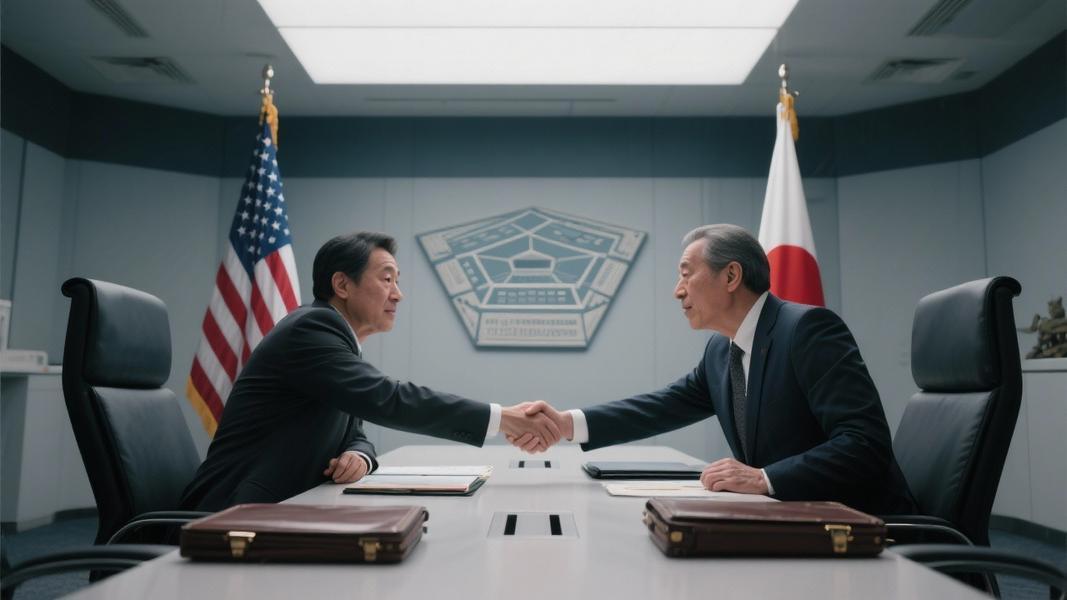
Japan has ramped up its defense spending to a record $58 billion for fiscal year 2026, marking the 12th consecutive year of increases as regional tensions continue to simmer in the Indo-Pacific region.
The 9.04 trillion yen budget, approved amid growing concerns about China’s military assertiveness and North Korea’s weapons programs, represents a 3.8 percent increase from the previous year. The spending plan specifically targets bolstering unmanned defense systems and enhancing standoff missile capabilities in what officials have described as a “deteriorating security environment.”
Strategic Shift in Defense Posture
Japan’s defense transformation represents one of the most significant military buildups among U.S. allies in recent years. The country is positioning itself as an increasingly important security partner in the region as China flexes its military muscle in disputed territories and North Korea continues to advance its nuclear and missile programs.
This latest budget is part of a broader five-year defense buildup program that aims to elevate Japan’s annual military spending to approximately 10 trillion yen ($64 billion), which would make it the world’s third-largest defense spender behind only the United States and China. Military analysts have noted this represents a dramatic shift for a nation whose post-World War II constitution explicitly limits its military to self-defense.
What’s driving this dramatic increase? The answer lies in the rapidly changing security landscape of East Asia.
Regional Security Concerns
The record spending comes as Japan reassesses its defense priorities in response to what it perceives as growing threats. Chinese naval activities near disputed islands in the East China Sea have intensified in recent years, while North Korea’s missile testing program has repeatedly sent projectiles over Japanese territory.
Japan’s defense ministry has emphasized the importance of developing “counterstrike capabilities” that would allow the Self-Defense Forces to hit enemy bases in response to an attack, marking a significant departure from its traditionally defensive posture.
The budget prioritizes unmanned systems, which reflects a growing trend among modern militaries to reduce human exposure in combat situations while expanding surveillance capabilities. Advanced drone systems and autonomous vehicles are expected to form a key component of Japan’s evolving defense strategy.
Long-term Implications
The sustained increase in defense spending signals Japan’s commitment to playing a more assertive role in regional security arrangements, particularly within the framework of its alliance with the United States. Defense experts suggest that this trajectory will likely continue in the years ahead.
Still, the expanded military budget has drawn criticism from some neighboring countries, particularly China, which has repeatedly expressed concern about what it characterizes as Japan’s departure from its post-war pacifist principles.
Domestic opposition has also emerged, with critics questioning whether such massive defense expenditures are justified given Japan’s substantial public debt and pressing social welfare needs as its population continues to age rapidly.
The defense ministry counters that the investments are essential to maintaining Japan’s security in an increasingly unpredictable region. “The security environment surrounding Japan is becoming more severe at unprecedented speed,” notes a recent ministry statement.
As Japan continues its military transformation, the question remains whether this sustained investment will achieve the desired security outcomes or potentially contribute to a regional arms race that could ultimately undermine stability in the Indo-Pacific.
