
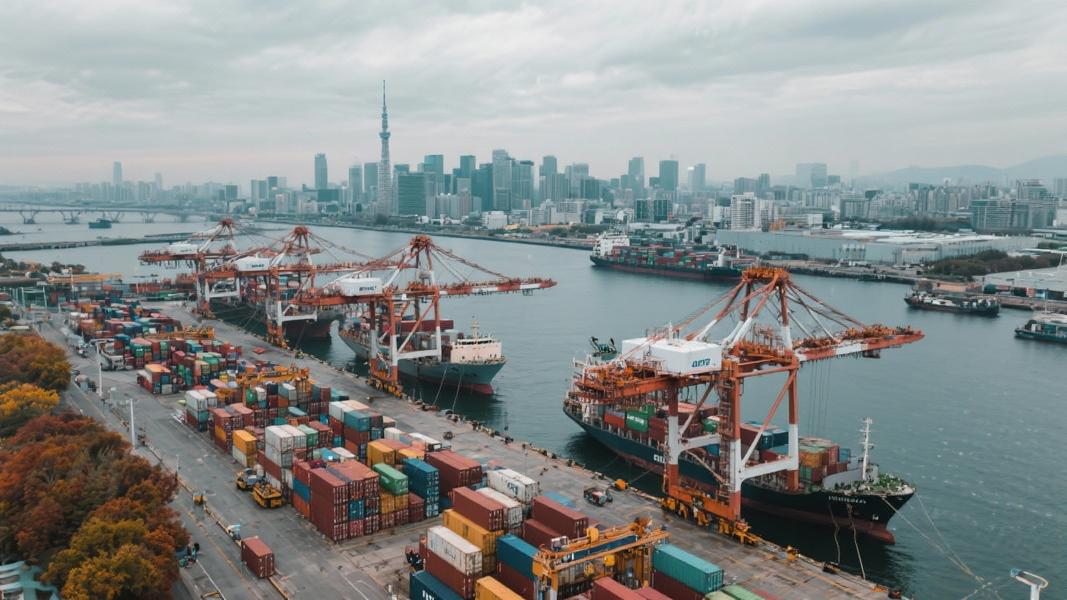
Japan’s economy has taken a deeper dive than initially thought, shrinking at an annualized rate of 2.3% in the third quarter of 2025. The revised government figures, released Monday, paint a bleaker picture than preliminary estimates that had suggested a 1.8% contraction.
The disappointing data represents a 0.6% quarter-on-quarter decline, worse than the 0.4% drop initially reported and highlights growing challenges for the world’s fourth-largest economy as it grapples with both domestic constraints and mounting international trade pressures.
Trade Tensions and Trump Tariffs
What’s behind the slump? A significant factor appears to be the impact of tariffs imposed by U.S. President Donald Trump earlier this year. Exports fell 1.2% compared to the previous quarter, unchanged from preliminary data, as Japanese goods faced steeper barriers in American markets.
“Trump implemented higher tariffs on imports from many countries earlier this year,” according to economic analysis of the situation. While the U.S. eventually softened its stance somewhat, reducing planned 25% tariffs on most Japanese imports to 15% in September, the damage was already being felt throughout Japan’s export-dependent economy.
The tariffs on automobiles — a cornerstone of Japan’s manufacturing prowess — remain “a serious blow to Japan’s economy,” as industry observers note. In response to these pressures, Japan has promised a staggering $550 billion in investments in the United States, a conciliatory move announced during tariff negotiations.
Domestic Challenges Compound Problems
It’s not just international headwinds causing trouble. The revised figures show private residential investment plummeted by 8.2% — slightly better than the 9.4% drop initially estimated but still a dramatic decline.
Why such a steep fall? Analysts point to revisions in Japan’s building code that caused housing starts to plunge earlier this year, creating a ripple effect throughout the construction and real estate sectors. This domestic policy shift, combined with external trade pressures, has created a perfect storm for economic contraction.
There were some modest bright spots in the data. Private consumption managed a slight gain of 0.2%, suggesting Japanese consumers haven’t completely pulled back despite the broader economic challenges. Meanwhile, imports decreased by 0.4%, reflecting weaker domestic demand.
Political Implications
The economic downturn presents a significant test for Sanae Takaichi, Japan’s first female prime minister, who has maintained strong popularity partly due to her nationalist-leaning rhetoric. Takaichi has been fostering hopes for economic revival, though the path forward remains unclear given the current indicators.
Can she navigate these troubled economic waters? The tariff situation has strained the crucial alliance between Japan and the United States at a time when regional security concerns make the relationship more important than ever.
The $550 billion investment pledge to the U.S. signals how far Japan is willing to go to preserve its most important international partnership — even as its own economy shows signs of significant stress.
As 2025 draws to a close, economists are watching closely to see if the fourth quarter brings any relief or if Japan might be heading toward a technical recession. For now, the combination of Trump’s tariffs, building code revisions, and broader global uncertainty has left Japan’s economic recovery hanging in the balance — a precarious position for Prime Minister Takaichi as she attempts to deliver on promises of renewed prosperity.
