
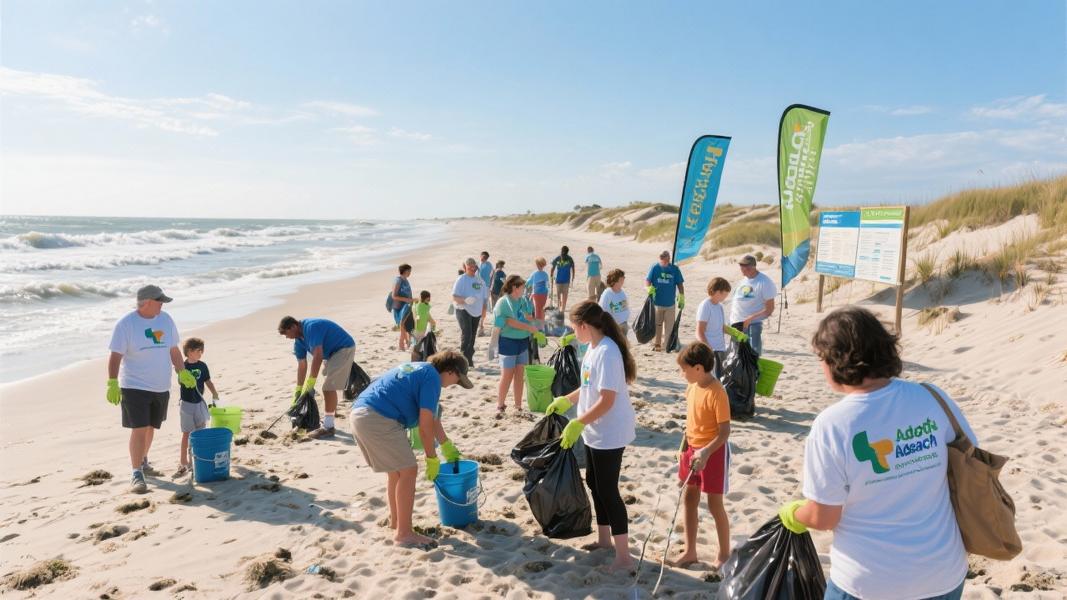
Texas coastline enthusiasts have a date with debris next fall as the General Land Office gears up for its 2025 Adopt-A-Beach Coastwide Cleanup, an annual tradition that has already removed over 10,000 tons of trash from the state’s beloved beaches.
The cleanup is scheduled for Saturday, September 20, 2025, from 9:00 a.m. to noon across 21 locations stretching from Sea Rim State Park to Boca Chica, the GLO announced. Volunteers can begin checking in at 8:30 a.m. at their chosen site.
Texas Land Commissioner Dawn Buckingham, the first woman to hold the position, has made coastal preservation a cornerstone of her administration since taking office in 2022. “The Texas Coast was my home for over a decade, and as Land Commissioner, I am dedicated to ensuring our beautiful beaches are preserved for future generations,” Buckingham said in a statement. “These Adopt-A-Beach Cleanups are vital to our goal of keeping Texas beaches clean.”
Four Decades of Beach Cleanups
The program’s impact is difficult to overstate. Since its inception in 1986, when 2,800 volunteers collected 124 tons of trash in the inaugural event, the initiative has grown dramatically. To date, 593,162 volunteers have participated in the program, removing more than 10,000 tons of waste from Texas shorelines, according to program records.
Local efforts have been equally impressive. The Texas State Aquarium, which hosts cleanups at North Beach, has collected a staggering 112,776 pounds of trash along 9 miles of coastline since 2013.
Want to participate? The process is straightforward. Volunteers may pre-register online or simply show up at their preferred cleanup site on the day of the event. The GLO provides all necessary supplies, though participants are encouraged to bring their own garden or work gloves and reusable water bottles, according to the event registration.
Tech-Enabled Trash Tracking
This isn’t just about picking up garbage—it’s also about data collection. Participants are encouraged to download the CleanSwell app, which helps track and document the types of marine debris found along Texas beaches. This information proves invaluable to researchers and policymakers working to address the sources of coastal pollution.
“I want to thank the volunteers who have already signed up for this year’s fall cleanup and encourage anyone interested in volunteering to sign up to participate in a day full of fun and giving back to our coast and its communities,” Commissioner Buckingham added.
Practical considerations? Organizers strongly advise volunteers to wear closed-toe shoes, bring ample drinking water, and don hats for sun protection. The Texas coast in September can still be quite warm, and the three-hour cleanup requires appropriate preparation, event organizers note.
As coastal pollution continues to threaten marine ecosystems worldwide, these volunteer efforts represent a small but significant countermeasure—one that has kept Texas beaches cleaner for nearly four decades and counting, one piece of trash at a time.
