
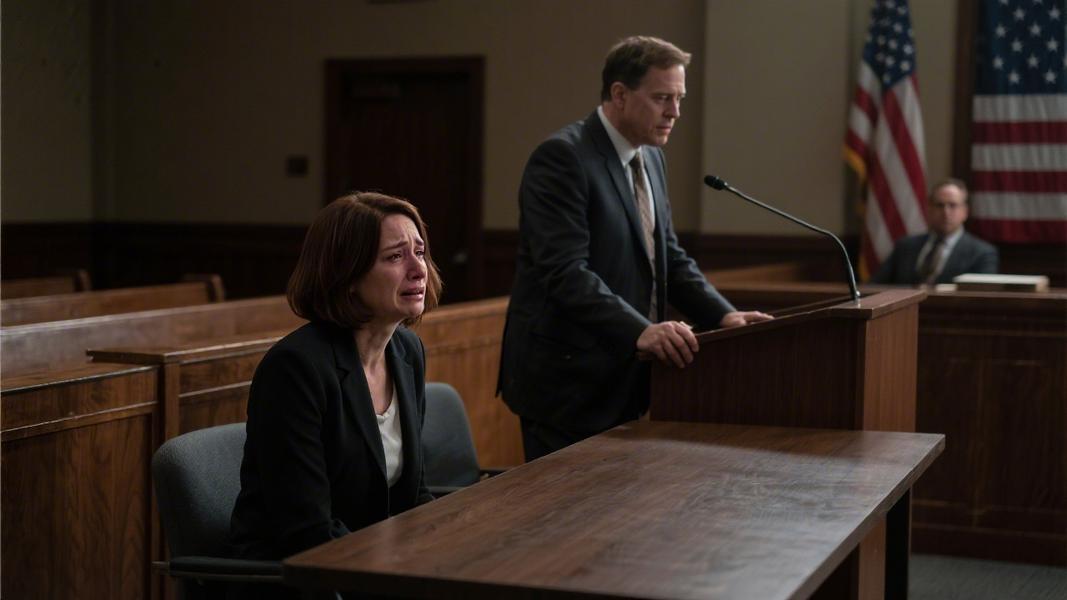
A North Texas courtroom is hearing what prosecutors describe as chilling evidence of a premeditated, coordinated assault — one that unfolded on the Fourth of July and left a police officer wounded outside an immigration detention facility.
The federal trial of nine defendants charged in connection with the July 4, 2025, attack on the ICE Prairieland Detention Center in Alvarado, Texas, is now underway, with opening statements, body camera footage, and damning testimony painting a picture of what the government calls a domestic terrorism operation carried out by a cell of North Texas Antifa operatives. The case involves nineteen arrests in total, a sprawling federal indictment, and questions about just how deep the planning went.
A Night Officers Called a ‘Coordinated Terror Attack’
The body cam footage alone was enough to stop the courtroom cold. Jurors watched as officers responding to the scene on the night of the attack struggled to process what they were seeing in real time. “What the [expletive]! This appears to be a targeted hit on Prairieland,” one officer can be heard saying. Another added, “This is like a straight coordinated terror attack on the ICE detention center.” Not the kind of thing officers typically say — and not the kind of thing prosecutors let juries forget, either. Fox4 documented the footage’s impact on the courtroom.
Among those responding that night was Alvarado Police Lt. Thomas Gross, who was struck by gunfire during the assault. He survived. Nine defendants now face charges including rioting, use of weapons and explosives, providing material support to terrorists, obstruction, and attempted murder — charges a federal grand jury handed down following the attack.
The Alleged Mastermind and the Moment It All Started
Prosecutors say the operation didn’t spontaneously combust. It was called. According to opening statements, as the group moved into position that night, someone yelled “Get to the rifles” — a command that, in the government’s telling, is the clearest possible evidence of coordinated, premeditated violence. CBS News noted that prosecutors leaned on that moment heavily in their opening salvo to jurors.
One of the defendants, Benjamin Hanil Song, a former U.S. Marine Corps reservist, is accused of purchasing four firearms — including two AR-style rifles equipped with a binary trigger — that were later recovered at the scene. Prosecutors say Song was the one who yelled the order to move to the rifles before gunfire broke out. ABC News tracked Song’s alleged weapons purchases as part of its broader coverage of the ongoing manhunt for additional suspects.
A Co-Defendant Who Says She Didn’t Know What She Was Walking Into
That’s the catch, legally speaking, for at least one of the accused. A lead investigator testified that co-defendant Meagan Morris felt “duped” and “betrayed” after realizing the full scope of what she’d allegedly participated in — apparently believing she had been misled by whoever prosecutors consider the cell’s mastermind. Whether that defense gains traction with jurors is another matter entirely. Fox4 reported on the investigator’s testimony regarding Morris’s state of mind.
Still, feeling betrayed doesn’t necessarily equal innocence under federal law — and prosecutors aren’t likely to let that distinction slide. The nine defendants currently on trial include Daniel Estrada, Ines Soto, Elizabeth Soto, Maricela Rueda, Bradford Morris, Savanna Batten, Benjamin Song, Zachary Evetts, and Cameron Arnold. Seven additional individuals were charged by information rather than indictment, a distinction that often signals cooperation or plea negotiations with federal authorities.
Nineteen Arrests and Counting
How many people does it take to storm a federal detention facility on Independence Day? Apparently, more than a dozen. In total, nineteen people have been arrested in connection with the Prairieland attack, including Dario Emmanuel Sanchez, Janette Goering, and Nathan Baumann, among others. KERANEWS outlined the full timeline of arrests and charges as the investigation has unfolded over the past several months. Authorities have also indicated that at least one additional suspect remains at large.
The scale of the alleged conspiracy — the coordination, the weapons procurement, the apparent command structure — is precisely why federal prosecutors have framed this not merely as a violent protest gone wrong, but as domestic terrorism, plain and simple. The material support charges alone carry severe federal penalties.
What Comes Next
The trial is expected to continue for weeks. Jurors will hear more testimony, more footage, and more arguments about intent, coordination, and culpability. For some defendants, the government’s case may hinge on how clearly they can be tied to the planning. For others, like Song, the alleged paper trail of gun purchases and the reported command to “get to the rifles” may prove harder to explain away.
It’s a case that has already drawn national attention — and not just because of the political temperature surrounding immigration enforcement. It’s because, if prosecutors are right, a group of people decided that a federal holiday was the right moment to open fire on law enforcement officers outside a detention center. Whatever one thinks of the underlying policy debates, that’s the fact pattern sitting in front of a federal jury in Fort Worth right now.
The question isn’t just what happened on that July night in Alvarado. It’s what a verdict here tells us about where the line between protest and terrorism gets drawn — and who gets to draw it.
