
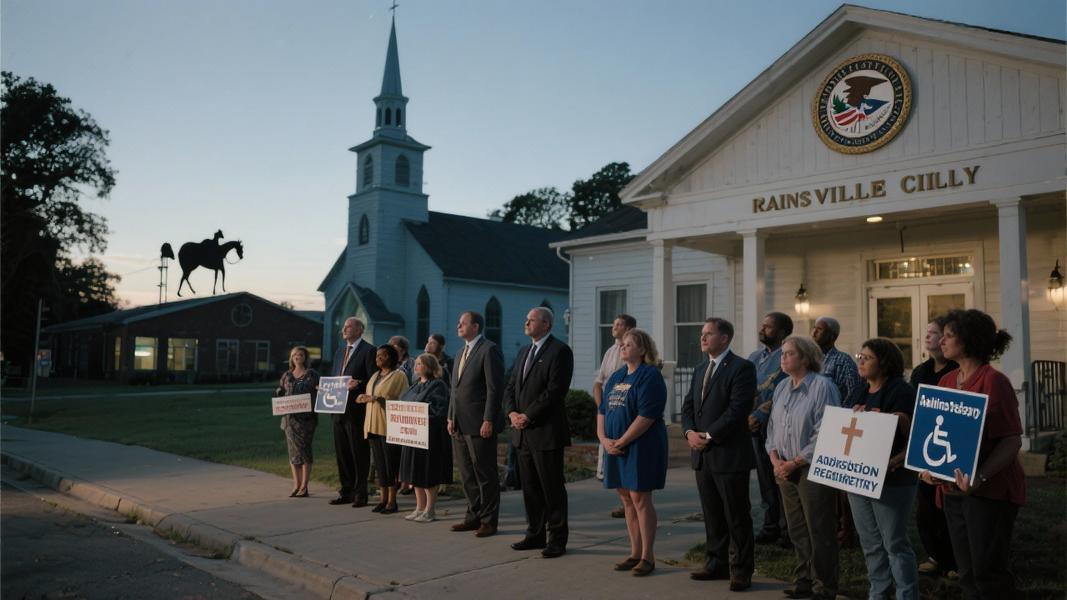
The U.S. Justice Department has launched an investigation into Rainsville, Alabama, after the city allegedly blocked a faith-based addiction recovery center — a decision that might have violated multiple federal civil rights laws.
At the heart of the probe is a complaint that city officials denied a Christian organization’s application to establish a rehabilitation program for men struggling with substance abuse, reportedly motivated by a desire to keep “drug addicts” out of the community, according to Justice Department documents released Wednesday.
Three Federal Laws Potentially Violated
The Civil Rights Division is examining whether Rainsville violated the Americans with Disabilities Act (ADA), the Religious Land Use and Institutionalized Persons Act (RLUIPA), and the Fair Housing Act — a triple threat of federal protections that shield both people with disabilities and religious organizations serving them.
“The ADA affords every individual, including those on the path to recovery, the dignity and opportunity to fully participate in society,” said Assistant Attorney General Harmeet K. Dhillon in a statement. “The Civil Rights Division stands guard to protect not only the rights of Americans with disabilities, but also the rights of religious institutions to minister to those recovering from substance abuse.”
What makes this case particularly notable? It highlights the intersection of disability rights and religious freedom — two protected classes that don’t always align in legal disputes but appear to be working in tandem here.
Recovery and Religious Rights
The ADA explicitly protects people recovering from substance use disorders who aren’t currently using illegal drugs, prohibiting public entities from discriminating against them based on their disability status. Meanwhile, the Fair Housing Act prevents municipalities from making housing unavailable to people with disabilities — a provision that could apply to recovery facilities. Federal authorities note that both laws would be relevant in this case.
The third law in question, RLUIPA, specifically “guards religious institutions from unduly burdensome, unequal, or discriminatory land use regulations,” according to Justice Department officials. Enacted in 2000, this lesser-known but powerful statute has been increasingly used to protect religious organizations facing zoning obstacles.
The Christian recovery organization had planned to establish a discipleship program aimed at rehabilitating men with drug and alcohol dependency “and other life-controlling problems,” the complaint alleges. But city officials apparently had other ideas.
Not In My Backyard
This case appears to follow a familiar pattern seen in communities across America: the NIMBY (Not In My Backyard) response to addiction recovery facilities. Despite widespread acknowledgment of the addiction crisis gripping many communities, recovery centers often face fierce local opposition.
The Justice Department hasn’t publicly named the Christian organization involved or provided specific details about when the application was denied. However, the investigation signals federal authorities’ growing willingness to challenge municipal decisions that might stem from stigma against people with substance use disorders.
For individuals who believe they’ve experienced similar discrimination, the Civil Rights Division encourages filing complaints through their online portal or by calling the ADA Information Line at 1-800-514-0301.
As the opioid epidemic continues ravaging communities nationwide, the outcome of this investigation could set an important precedent for how cities balance community concerns with federal civil rights protections — and whether faith-based recovery programs receive the same considerations as their secular counterparts.
