
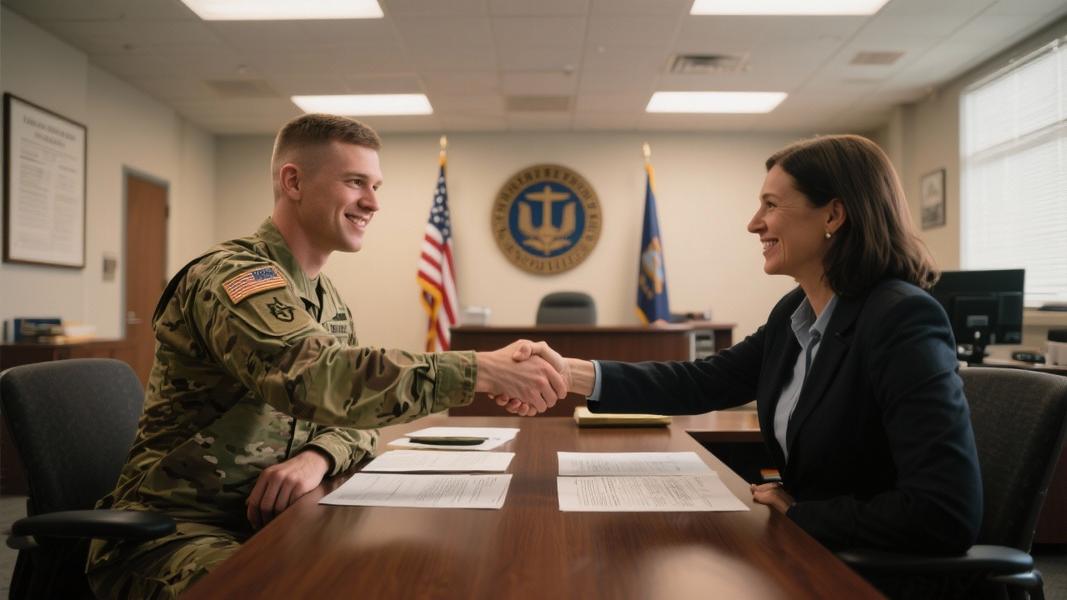
When Major Stephen W. Terry returned from military service to his civilian job at Kansas City Kansas Community College, he didn’t expect to find himself unemployed. Now, after a legal battle with the Justice Department backing his cause, he’s received vindication — and the college will pay.
The Justice Department announced a settlement with Kansas City Kansas Community College (KCKCC) over violations of the Uniformed Services Employment and Reemployment Rights Act (USERRA), a law specifically designed to protect servicemembers from losing their civilian jobs while serving their country. The agreement, which includes payment of lost wages to Major Terry and mandatory training for college staff, resolves allegations that the school wrongfully terminated the Kansas Army National Guard officer after his return from military duty, as detailed in the announcement.
A System Meant to Protect Those Who Serve
USERRA explicitly prohibits employers from discriminating against employees based on their military obligations — something Assistant Attorney General Harmeet K. Dhillon emphasized in her statement on the case. “When servicemembers leave their families and civilian jobs to serve our nation, USERRA protects them from discrimination and wrongful termination,” said Dhillon, who heads the Justice Department’s Civil Rights Division. “The Department is committed to safeguarding servicemembers’ rights under USERRA to freely serve their country without fear of losing their civilian jobs,” she added.
For many who serve, the protections aren’t just legal abstractions but vital safeguards for their livelihoods. The law guarantees reemployment rights following absences due to military service obligations, creating a safety net that allows servicemembers to fulfill both their military and civilian responsibilities.
What happens when these protections fail? Cases like Major Terry’s highlight the real-world consequences — and why enforcement matters.
Personal Connection to Military Service
U.S. Attorney Ryan A. Kriegshauser, who represents the District of Kansas, brought a personal perspective to the case. As a Navy reservist himself, Kriegshauser understands firsthand the sacrifices servicemembers make. “I missed the birth of my youngest daughter while serving in Afghanistan,” he revealed in his statement.
That personal connection appears to have strengthened his resolve in pursuing the case. “Now, it is my honor and our duty to make sure the employment rights of servicemembers are protected once they return home,” Kriegshauser stated. “My office will continue to vigorously defend the rights justly earned by those who serve our country, and we thank them for their service.”
The settlement requires KCKCC to provide comprehensive training on USERRA to its management and human resources staff — a preventative measure designed to ensure other servicemembers don’t face similar difficulties. This training component, coupled with the financial compensation for lost wages, represents both accountability for past actions and a framework for future compliance.
The Justice Department has confirmed that enforcing USERRA remains a priority, highlighting the broader significance of cases like this one in establishing expectations for employers nationwide.
For Major Terry, the settlement brings closure to what must have been a challenging period. But for the thousands of other servicemembers who balance military duties with civilian careers, it serves as a reminder that the system designed to protect them can still work — even if sometimes it takes a legal battle to make it happen.
