
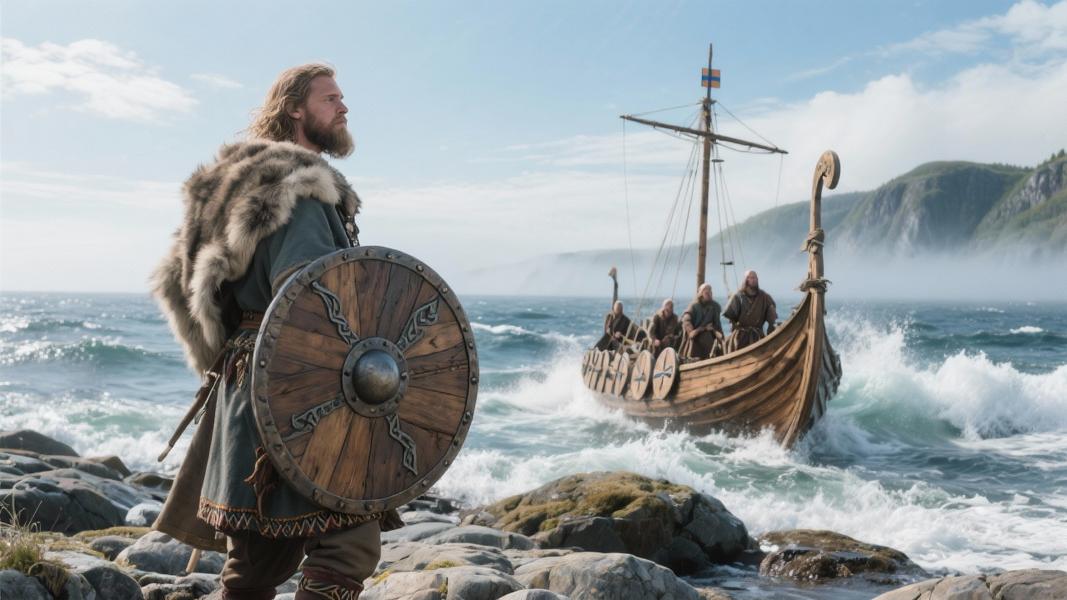
On Columbus Day weekend, as many Americans debate which explorer deserves recognition for “discovering” the New World, a quieter celebration marks the achievements of a Viking who beat Columbus to North American shores by nearly 500 years.
Leif Erikson Day, officially observed each October 9th through presidential proclamation, commemorates the Norse explorer who first set European boots on North American soil around 1000 CE, establishing a settlement at what’s now known as L’Anse aux Meadows in Newfoundland, Canada — a place he poetically named “Vinland.”
A Presidential Tradition
Since 1964, when Congress established the commemorative day through Public Law 88-566, every U.S. president from Lyndon B. Johnson onward has issued an annual proclamation honoring the explorer and the broader Nordic-American heritage. These declarations consistently praise “the contributions of Americans of Nordic descent generally and the spirit of discovery,” according to the National Day Calendar.
Why October 9th? Curiously, the date wasn’t chosen to mark Erikson’s actual arrival in North America. Rather, it commemorates the 1825 landing of the Norwegian sloop Restauration in New York Harbor, which initiated the first significant wave of Norwegian immigration to America.
This connection between past and present remains central to the observance. In his 2024 proclamation, President Donald J. Trump emphasized both historical achievement and contemporary diplomacy, noting that “My Administration continues to strengthen our bonds with the proud Nordic nations from which Erikson came. Together, with our allies in Norway, Sweden, Denmark, Iceland, and Finland, we are advancing fair trade and promoting peace through strength.”
From Vinland to the Moon
Erikson’s legacy extends far beyond his initial landing. His exploration “inspired countless explorers to venture into North America, and ultimately paved the way for the first American settlement in Jamestown, Virginia, more than 600 years later,” the White House states.
Modern proclamations often draw a direct line from Erikson’s voyage to later American explorations. “Leif Erikson’s triumphant spirit of exploration has continued to define the American story — from the pioneers who tamed the Western frontier to the Apollo 11 astronauts who proudly planted the Stars and Stripes on the Moon,” reads one recent declaration.
What makes Erikson’s story particularly compelling is his personal background. Frequently described as “son of Iceland and grandson of Norway” in official proclamations, his mixed Nordic heritage reflects the complex interrelationships of Scandinavian history — and perhaps foreshadows the multicultural American identity that would develop centuries later.
Community Celebrations
Across America, Nordic-American communities take the presidential call to action seriously. Annual events include “appropriate ceremonies, activities, and programs” that celebrate both Erikson’s achievement and the broader contributions of Nordic Americans to U.S. society and culture.
These celebrations often provide a counterpoint to Columbus Day festivities, offering Americans of Nordic descent an opportunity to highlight their own heritage during a weekend otherwise dominated by Italian-American cultural events.
Six centuries before Columbus set sail, a red-haired Viking stood on North American shores, looking westward. While his settlement at Vinland proved temporary, Leif Erikson’s legacy as America’s first European visitor endures — remembered each October 9th as a testament to the human spirit of exploration that continues to shape our national character.
