
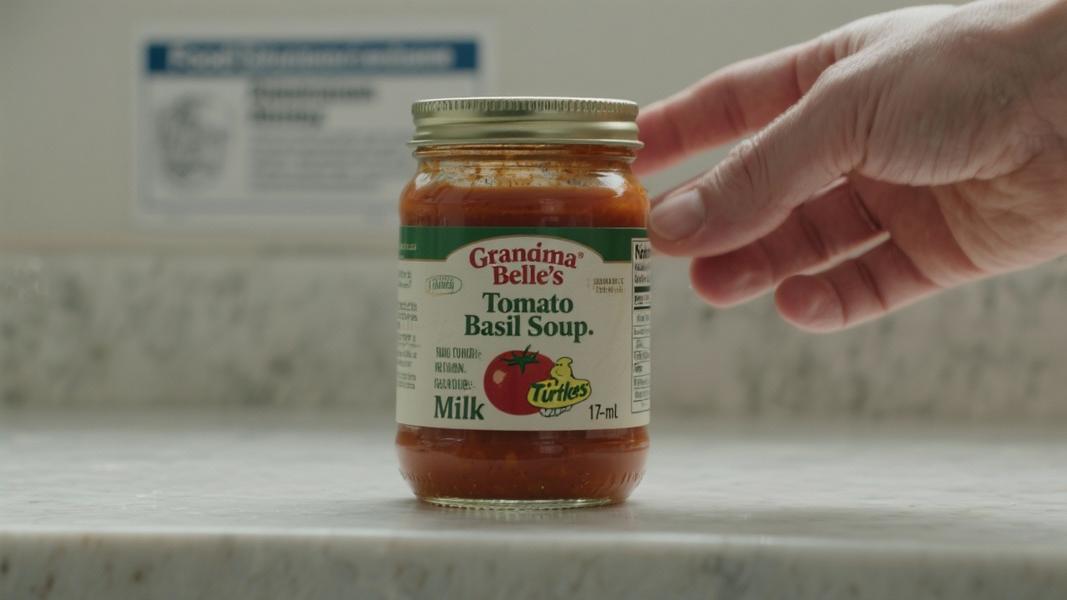
Lil’ Turtles has issued a voluntary recall of its Grandma Belle’s Tomato Basil Soup after discovering an undeclared milk ingredient that could pose serious health risks to consumers with allergies.
The company is pulling all lots of the soup, which comes in 17-ounce glass jars, from store shelves across 14 states where it was distributed between September 2022 and December 2025. According to the recall notice, “people who have an allergy or severe sensitivity to milk run the risk of a serious or life-threatening allergic reaction if they consume this product,” the company warned.
What’s particularly concerning is the wide distribution footprint. The product reached stores across multiple regions, including Ohio, Pennsylvania, and New York, potentially putting thousands of consumers with milk allergies at risk who might have purchased the soup expecting it to be milk-free, as the label suggested. The FDA has classified the issue as “misbranding” since the milk allergen wasn’t disclosed on the product packaging.
How Was the Problem Discovered?
The oversight came to light during a routine inspection by the Ohio Department of Agriculture. So far, there have been no reports of illnesses connected to the tomato soup — a small bit of good news in an otherwise concerning situation.
Food allergen labeling has become increasingly critical as awareness of food allergies grows. Milk is one of the eight major food allergens that account for the majority of serious allergic reactions in the United States, and federal law requires clear labeling when products contain these ingredients.
Got the soup sitting in your pantry? Consumers who purchased Grandma Belle’s Tomato Basil Soup and have milk allergies or sensitivities are being urged to take immediate action. The company has instructed customers to contact Lil’ Turtles for a replacement product or call Josh Coblentz at 330-897-6400 with questions about the recall.
This incident highlights the ongoing challenges in food production and labeling, where even established companies can sometimes miss critical ingredients in their labeling process. For the millions of Americans managing food allergies, such oversights aren’t just inconvenient — they’re potentially dangerous.
