
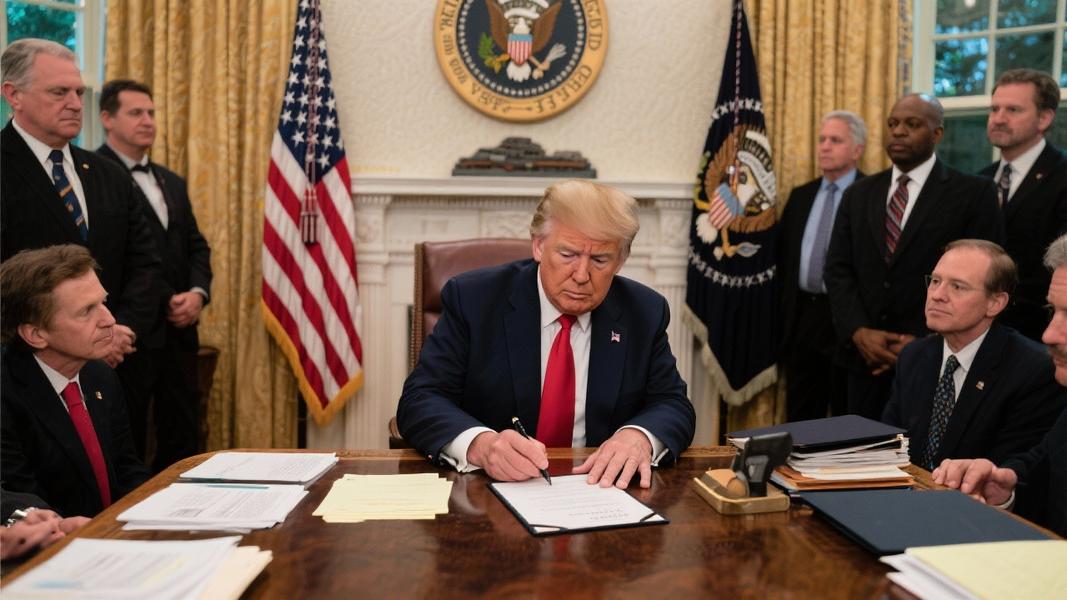
President Biden has established an Emergency Board to investigate ongoing labor disputes between the Long Island Rail Road and five major unions, postponing a potential strike that threatened to disrupt service for hundreds of thousands of commuters.
The board, which becomes effective September 18, 2025, will consist of a chair and two members appointed by the President to mediate the increasingly contentious standoff between the LIRR and labor organizations representing engineers, signalmen, machinists, electrical workers, and others. The creation of this board automatically delays any potential work stoppage for at least 120 days while negotiations continue.
Strike Averted — For Now
“There is established, effective 12:01 a.m. eastern daylight time on September 18, 2025, a Board composed of a chair and two other members, all of whom shall be appointed by the President to investigate and report on these disputes,” states the official White House announcement. The board must deliver its recommendations within 30 days.
For commuters, the immediate news is clear: trains will continue running. The unions have postponed strike action that had been planned for this week, allowing regular service to continue while the emergency board conducts its investigation.
At the heart of the dispute? Money and time. Many workers have gone more than three years without a raise while facing rising costs for essentials. The Brotherhood of Locomotive Engineers and Trainmen, which represents 600 LIRR engineers, had voted 99.9% in favor of authorizing a strike if necessary, according to union statements.
A House Divided
The railway’s workforce appears split on the proposed contract. About half of LIRR employees have already accepted terms offering 9.5% wage increases over three years. However, five major unions — the Transportation Communications Union, Brotherhood of Locomotive Engineers and Trainmen, Brotherhood of Railroad Signalmen, International Association of Machinists and Aerospace Workers, and International Brotherhood of Electrical Workers — have banded together in opposition, seeking better terms.
The MTA hasn’t minced words about the unions’ approach. “If these unions wanted to put riders first, they would either settle or agree to binding arbitration. And if they don’t want to strike, they should say so — and finally show up to the negotiating table. This cynical delay serves no one,” said John McCarthy, MTA’s chief of policy and external relations, in a statement criticizing the unions’ tactics.
Why does this matter beyond New York? The LIRR is the nation’s busiest commuter railroad, and any disruption would impact hundreds of thousands of daily riders and the region’s economy. The Presidential Emergency Board represents a significant federal intervention in what has become an increasingly tense labor situation.
What Happens Next
Under railway labor law, the establishment of this emergency board triggers important timelines. The directive states: “For 120 days from the date of the creation of the Board, no change in the conditions out of which the disputes arose shall be made by the parties to the controversy, except by agreement of the parties.”
This effectively creates a four-month cooling-off period during which neither side can escalate the situation through strikes or lockouts. The board must deliver its findings within 30 days, but the parties will have additional time to negotiate based on those recommendations.
For Long Island’s commuters, the immediate crisis has been averted. But the fundamental issues — wage increases that keep pace with inflation, working conditions, and benefits — remain unresolved as both sides prepare their cases for the Presidential Emergency Board.
