
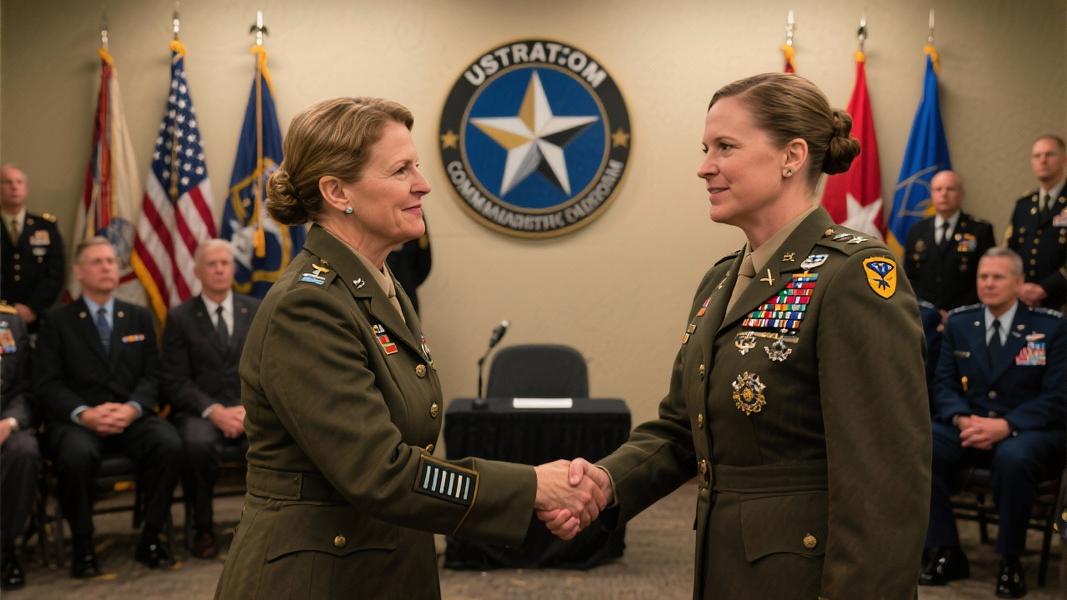
In the sprawling world of U.S. military leadership, Command Sergeant Major JoAnn Naumann stands apart. Not just as the first female Command Sergeant Major of the U.S. Army Special Operations Command (USASOC), but as a transformative leader whose influence stretches across 80 countries and approximately 36,000 personnel.
From Language Analyst to Special Operations Command
Naumann’s military journey began with what she thought would be a brief detour. After graduating from the College of William and Mary with degrees in American Studies and Government in 1996, she enlisted with a clear exit strategy. “I had a plan to learn another language and to get a clearance… and get some experience to increase my likelihood of being hired by the Foreign Service,” she explained. “I didn’t seek a commission because I had no intention of staying in the Army.”
Those temporary plans evolved into a 27-year career that has seen Naumann complete the Arabic Basic Course at the Defense Language Institute and deploy 14 times throughout the CENTCOM and AFRICOM regions, as documented in Army records.
What changed her trajectory? Mentorship and meaningful experiences, certainly. But there’s also something less tangible in Naumann’s story — a commitment to pushing boundaries until doors opened.
Breaking Barriers in Special Operations
“Today, we shine a spotlight on the extraordinary journey of Command Sergeant Major JoAnn Naumann, from her early days as a Voice Language Analyst to her current role as the Command Sergeant Major of United States Army Special Operations Command,” reads the introduction to a recent profile published on military channels.
Before assuming her historic position at USASOC in 2023, Naumann served as the senior enlisted advisor for both Joint Special Operations Command and Special Operations Command-Korea. The breadth of her experience reflects the military’s evolving approach to leadership diversity — though Naumann herself focuses less on breaking gender barriers and more on breaking performance barriers.
Leadership Philosophy: Honest Feedback and Adaptability
How does one effectively lead an organization spread across dozens of countries with missions ranging from counter-terrorism to foreign military training?
For Naumann, it starts with brutal honesty. She “opens up about the transition from doer to enabler, why modeling honest feedback is non-negotiable for leaders, and how she’s staying grounded while helping shape the future of Army Special Operations,” according to a recent leadership podcast interview.
This emphasis on candid communication serves a strategic purpose. As USASOC navigates transformation to meet evolving threats, Naumann’s role has expanded from traditional sergeant major duties to becoming a key architect of organizational change.
Transformation and Innovation
In a recent Joint Special Operations University Fireside Chat, Naumann delved into the challenges of leading through significant change. “From lessons on adaptability and education to the strategic restructuring of Special Operations Forces, this episode offers a behind-the-scenes look at leadership in action,” the program noted.
At the heart of this transformation is an effort to integrate various special operations components while adopting innovations that maintain America’s asymmetric advantage. It’s complex work that requires both technical expertise and people skills — a balance Naumann has cultivated throughout her career.
The transformation includes significant educational initiatives. Naumann has championed continuous learning as essential for special operations forces facing rapidly evolving threats and technologies.
That commitment to education comes full circle from her academic beginnings. The woman who once planned to use the Army as a stepping stone to the Foreign Service now helps shape how special operations forces prepare for global missions.
As USASOC continues its evolution under her watch, Naumann’s unlikely journey from language specialist to command leadership stands as testament to what happens when temporary plans meet permanent potential. In special operations — where adaptability is currency — her career embodies the very qualities she now works to instill throughout the command.
