
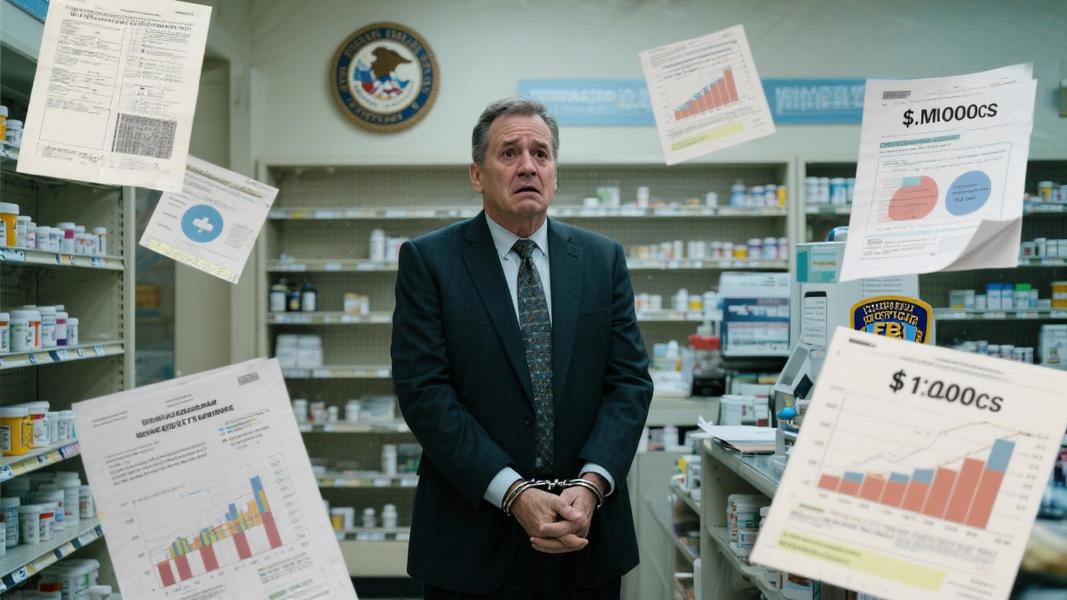
Michigan Pharmacist Gets Nearly 4 Years in Prison for $4 Million Medicare Fraud
A former Michigan pharmacist will spend the next 46 months behind bars after running a multi-million dollar health care scam that left Medicare footing the bill for medications that never reached patients.
Nabil Fakih, 50, of Wayne County, was sentenced this week for orchestrating a $4 million fraud scheme through his Dearborn Heights pharmacy. Beyond prison time, Fakih must pay back the full $4 million in restitution and forfeit four real estate properties along with more than $726,000 in cash, federal authorities announced.
Phantom Medications, Real Payments
How did the scheme work? For six years, between 2011 and 2017, Fakih systematically billed Medicare for expensive prescription medications he never actually dispensed. He particularly targeted high-reimbursement drugs like blood thinners and specialized inhalers for lung disease — medications his pharmacy didn’t even stock on its shelves, investigators discovered.
To cover his tracks, Fakih manipulated inventory records and carefully managed the flow of fraudulent proceeds. The money wasn’t going toward patient care — it was being diverted for his personal benefit, according to court documents.
“As a result of his crime, Fakih caused a total of approximately $4 million of loss to Medicare,” the Department of Justice stated.
The pharmacist’s scheme finally unraveled this year when he pleaded guilty to one count of health care fraud before a federal judge in the Eastern District of Michigan in August 2024. That guilty plea culminated in this week’s sentencing, bringing an end to the years-long investigation.
Part of a Larger Battle
Fakih’s case represents just one battle in the government’s ongoing war against health care fraud. The announcement came from a coalition of heavy hitters: Acting Assistant Attorney General Matthew R. Galeotti, FBI Detroit Field Office Special Agent Jennifer Runyan, and HHS-OIG Special Agent Mario Pinto — underscoring the multi-agency approach to tackling these crimes.
The prosecution was led by the Justice Department’s Criminal Division Fraud Section, which spearheads the Health Care Fraud Strike Force Program. It’s a formidable operation. Since its inception in 2007, the program has charged more than 5,800 defendants across 27 federal districts who collectively billed federal programs and private insurers over $30 billion in fraudulent claims.
Still, Medicare fraud remains a persistent problem. Cases like Fakih’s highlight the ongoing challenge facing government programs designed to provide healthcare for vulnerable populations, as some medical professionals continue to exploit the system for personal gain.
As Fakih prepares to begin his prison sentence, his case serves as a stark reminder of the steep personal and professional price paid by healthcare professionals who cross the line from care provider to criminal.
