
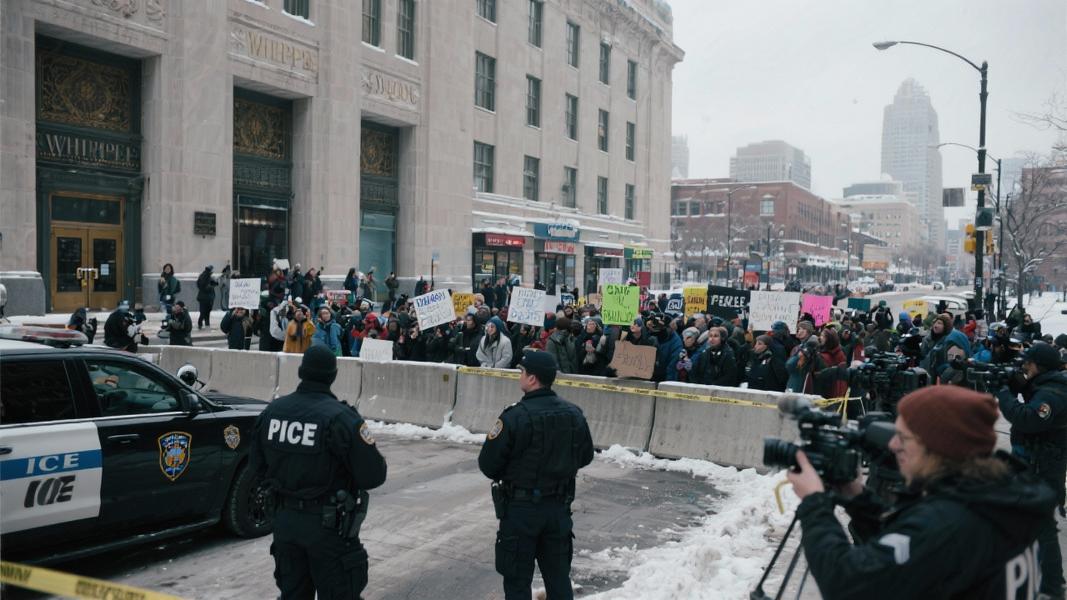
Minnesota and its largest cities filed a federal lawsuit Monday against the Department of Homeland Security, seeking to halt what officials described as an unprecedented immigration enforcement operation that has thrown communities into chaos.
Attorney General Keith Ellison, joined by the mayors of Minneapolis and St. Paul, alleged that “Operation Metro Surge” violates multiple constitutional protections and federal law. “This represents, fundamentally, a federal incursion into the Twin Cities and Minnesota. It must cease,” Ellison said in announcing the legal challenge.
The lawsuit comes amid escalating tensions over the massive operation, which has deployed at least 2,000 DHS agents to the region since early December. In a January 6 statement that raised eyebrows among local officials, DHS characterized the effort as “the largest immigration operation ever taking place right now.”
Constitutional Challenges
The legal complaint, filed in federal court, contends that the operation violates several constitutional provisions, including the First and Tenth Amendments, equal sovereignty protections, and the Administrative Procedure Act. State and city officials argue that enforcement actions have specifically targeted communities based on political viewpoints and have involved excessive force.
Ellison didn’t mince words about the operation’s impact. In a press conference announcing the lawsuit, he stated that immigration operations had “upended life for millions” in Minnesota and caused “chaos and violence” throughout affected communities.
The strain on local resources has been substantial. Since December 9, emergency services have fielded over 80 calls related to immigration enforcement activities, with police overtime costs estimated to exceed $2 million in just a four-day period.
Community Impact
What’s happening on the ground? According to court documents, the operation has created widespread disruption across the Twin Cities metro area, with reports of agents conducting raids at workplaces, homes, and even schools and places of worship.
The lawsuit represents an unusual direct challenge from a state government to federal immigration enforcement actions. Legal experts note that while immigration policy falls under federal jurisdiction, the manner and scope of enforcement can still be subject to constitutional constraints.
“We’re not challenging the federal government’s authority over immigration,” Ellison emphasized. “We’re challenging how they’re exercising that authority — through intimidation, through excessive force, and through what appears to be targeting based on politics rather than public safety.”
The Trump administration has defended the operation as necessary to address what it calls a crisis of illegal immigration in the region, though critics have questioned both the timing and scale of the enforcement surge.
For now, Minnesota residents await the court’s response to the state’s request for an immediate injunction to halt the operation — a decision that could set important precedents for the boundaries of federal immigration enforcement under the new administration.
