
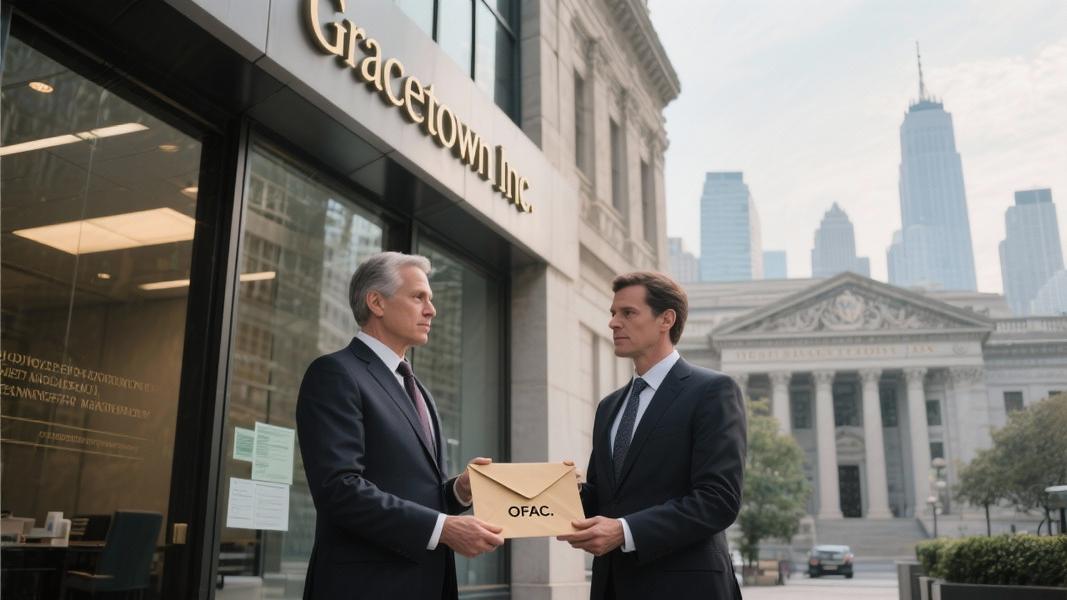
Treasury slaps New York property firm with $7.1 million penalty for Russian oligarch dealings
A New York property management company has been hit with a $7.1 million fine for continuing to do business with Russian oligarch Oleg Deripaska after he was placed on a sanctions list, the Treasury Department announced Monday.
Gracetown Inc., established in 2006 to manage luxury real estate in New York and Washington, D.C., received 24 payments totaling $31,250 between April 2018 and May 2020 on behalf of a company owned by Deripaska — despite explicit warnings from the government that such dealings were prohibited. The company also failed to report blocked assets in its possession for nearly four years, further violating federal requirements.
Sanctions? What sanctions?
The case highlights an increasingly aggressive approach by U.S. authorities toward enforcing Russia-related sanctions. According to Treasury officials, Gracetown had been notified of its compliance obligations when Deripaska was sanctioned in 2018 but chose to maintain an “ongoing arrangement” with his entity anyway.
“Treasury will act firmly against those who ignore our sanctions and aid our adversaries,” stated John K. Hurley, Under Secretary for Terrorism and Financial Intelligence.
The fine is particularly notable given the relatively small dollar amount of the transactions involved. At $7.1 million for $31,250 in payments, the penalty represents approximately 228 times the value of the prohibited transactions — a clear message that even minor violations carry major consequences.
A luxury property empire
Before sanctions were imposed, Deripaska was the ultimate beneficial owner of Gracetown, which managed three high-end properties acquired through various legal entities. The company essentially served as a property management arm for the oligarch’s American real estate holdings.
When Deripaska was designated under sanctions in 2018, Gracetown should have ceased all dealings with him and his companies. Instead, the firm continued receiving regular monthly payments in the United States on behalf of a Deripaska-owned entity for nearly two more years.
The investigation also revealed that Gracetown failed to report blocked assets under its control for over 45 months — another serious violation of OFAC regulations that require prompt disclosure of such assets.
Broader enforcement efforts
The Gracetown penalty comes amid stepped-up efforts to enforce sanctions against Russia and its oligarchs following the 2022 invasion of Ukraine, though this particular case predates that conflict.
“Under Secretary Bessent’s leadership, we will continue to investigate and hold accountable those who enable sanctioned actors,” Hurley added, suggesting more enforcement actions may be forthcoming.
For companies dealing with international clients, the message is unmistakable: when it comes to sanctions compliance, claiming ignorance isn’t just expensive — it might cost you hundreds of times more than whatever you gained from the prohibited business.
