
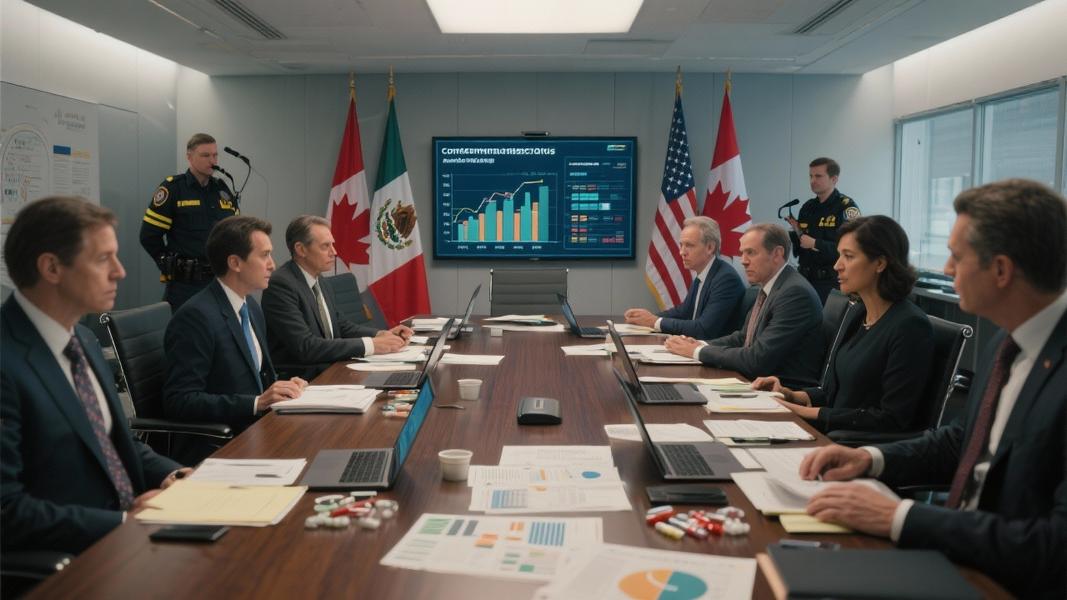
North America’s fight against fentanyl and illicit drugs just got a strategic overhaul. Officials from Canada, Mexico, and the United States gathered in Ottawa last week for a high-stakes meeting that could reshape how the continent tackles its ongoing drug crisis.
The Ninth Meeting of the North American Drug Dialogue (NADD), held January 27-28, 2026, brought together counternarcotics policy makers, law enforcement leaders, and public health experts from the three nations to forge a coordinated response to what has become one of the region’s most pressing threats. “The annual NADD meeting brings together the three countries’ counternarcotics policy makers, law enforcement leaders, and public health experts to collaborate on strategies to counter the grave threat posed by the manufacturing, trading, and misuse of fentanyl and other illicit drugs,” the White House stated in a release following the gathering.
Building on Past Efforts
The meeting wasn’t starting from scratch. Participants spent significant time reviewing progress on five priority areas established in previous dialogues, including drug trafficking methods, emerging synthetic drugs, public health approaches, illicit financial flows, and firearms trafficking as an enabler of the drug trade. This comprehensive assessment confirmed the interconnected nature of these challenges and the need for a multifaceted approach.
What’s new this time? A more ambitious, longer-term strategy. The three countries agreed to coordinate efforts over the next three years under three strategic priorities: “securing the global supply chain and related institutions against drug trafficking; strengthening effective drug policy implementation and law enforcement; and reducing overdose deaths, mitigating harm and increasing long-term recovery,” according to the White House announcement.
From Plans to Action
Plans are one thing, but implementation is where most cross-border initiatives stumble. The NADD appears to recognize this reality, outlining specific methods to turn strategy into action. These include “enhancing border and postal security; stopping firearms trafficking networks that support the drug trade; closing financial systems to criminal networks; and deploying wastewater testing and early drug warning capabilities,” the official statement explained.
Perhaps the most significant development wasn’t even at the meeting itself. The three nations discussed what the White House called a “historic commitment” secured by President Trump from China regarding the control of precursor chemical exports to North America. These chemicals, essential for manufacturing synthetic drugs like fentanyl, have long been a point of contention in U.S.-China relations. The countries agreed to track China’s compliance through the NADD framework, as documented in the post-meeting report.
This emphasis on supply chain security marks a notable shift in strategy. By targeting precursor chemicals at their source, officials hope to disrupt drug production before synthetic opioids even reach North American shores.
The Road Ahead
Will this three-year plan succeed where previous efforts have struggled? That remains the multi-billion dollar question. The drug crisis continues to evolve rapidly, with criminal networks constantly adapting to enforcement efforts.
The inclusion of wastewater testing and early warning systems suggests officials are prioritizing real-time intelligence about drug trends—a crucial advantage in a landscape where new synthetic compounds can emerge and spread within weeks.
As the three nations move forward with implementation, the true test will be whether this renewed cooperation can translate into fewer overdose deaths and diminished cartel influence across the continent—goals that have proven frustratingly elusive despite decades of cross-border collaboration.
