
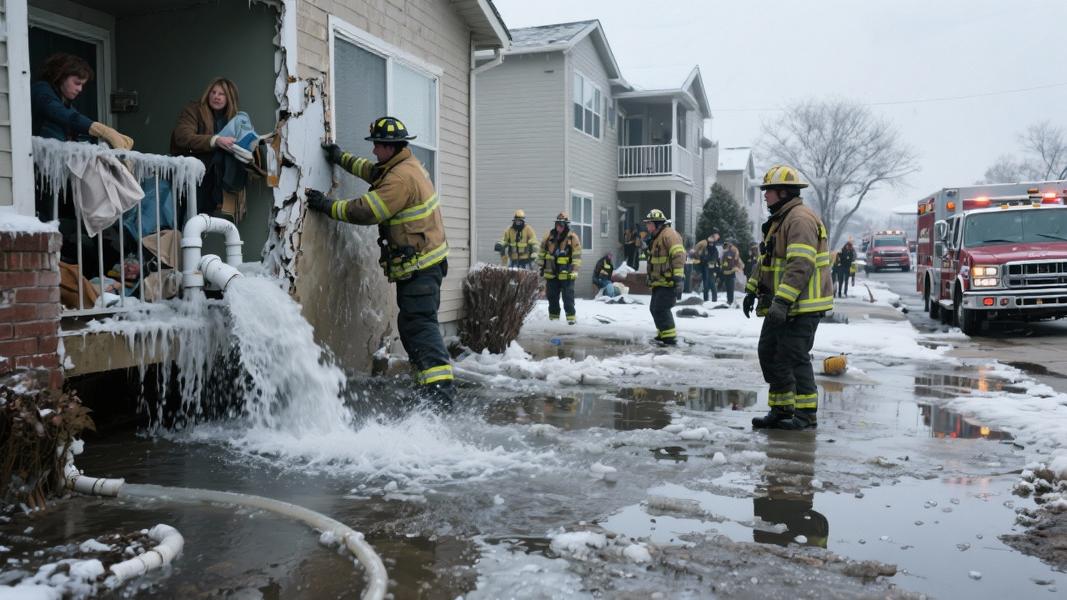
Burst pipes are flooding homes across North Texas as a record-breaking cold snap gives way to warmer temperatures, catching homeowners in a destructive thaw-and-flood cycle that has emergency services scrambling to keep up.
Dallas Fire-Rescue responded to more than 130 water-related emergency calls in a single day as frozen pipes began cracking open under the pressure of expanding ice. The situation is only expected to worsen as temperatures climb above freezing, revealing damage that has been silently developing during the region’s 65-hour deep freeze.
The Calm Before the Flood
“Once it gets above freezing, everything starts thawing. Yeah, we are going to run into some problems for as far as the people that have already had frozen pipes,” plumber Clayton Whitmire warned as the mercury began to rise.
That’s the insidious nature of this crisis. Many North Texas residents don’t yet know they have a problem. Pipes can begin freezing in as little as six hours of subfreezing temperatures, but the real damage often takes 24-72 hours to develop — a threshold the region has blown past with its recent 65-hour arctic plunge, according to home protection experts.
Homes throughout the Dallas-Fort Worth metroplex and surrounding areas now face significant risk as temperatures climb and frozen water expands, putting pressure on weakened pipes that ultimately burst when they thaw, indicates local reporting.
When Water Turns Destructive
Sound familiar? It should. This isn’t the first time North Texas has faced such widespread plumbing catastrophes. Video footage near the University of North Texas has already documented early examples of the destruction, with water cascading through ceilings and walls as pipes give way.
The situation creates a painful dilemma for homeowners: frozen pipes mean no water, but thawing them improperly can lead to flooding and thousands in damage. Professional plumbers recommend using specialized tools like heat guns or pipe-wrapping heat tape to safely restore water flow, suggests industry guidance.
What shouldn’t you do when trying to thaw pipes? Experts strongly caution against using open flames or high-heat sources like blowtorches, which not only create fire hazards but can actually cause more damage to the pipes themselves, cautions a local service provider.
The Waiting Game
For many residents, it’s now a tense waiting game. Those who’ve taken precautions like dripping faucets and insulating exposed pipes may escape unscathed. Others might be mere hours away from discovering ceiling-staining leaks or, worse, full-blown indoor flooding.
Emergency plumbing services across the region are already reporting hours-long backlogs, with some unable to promise same-day service even for urgent calls. The situation highlights the vulnerability of infrastructure to extreme weather events that, while rare in North Texas, can quickly overwhelm systems designed for milder conditions.
As temperatures continue to rise and more pipes thaw throughout the weekend, residents are advised to familiarize themselves with their home’s main water shutoff valve — it might be the most important home feature they’ll need in the coming days.
