
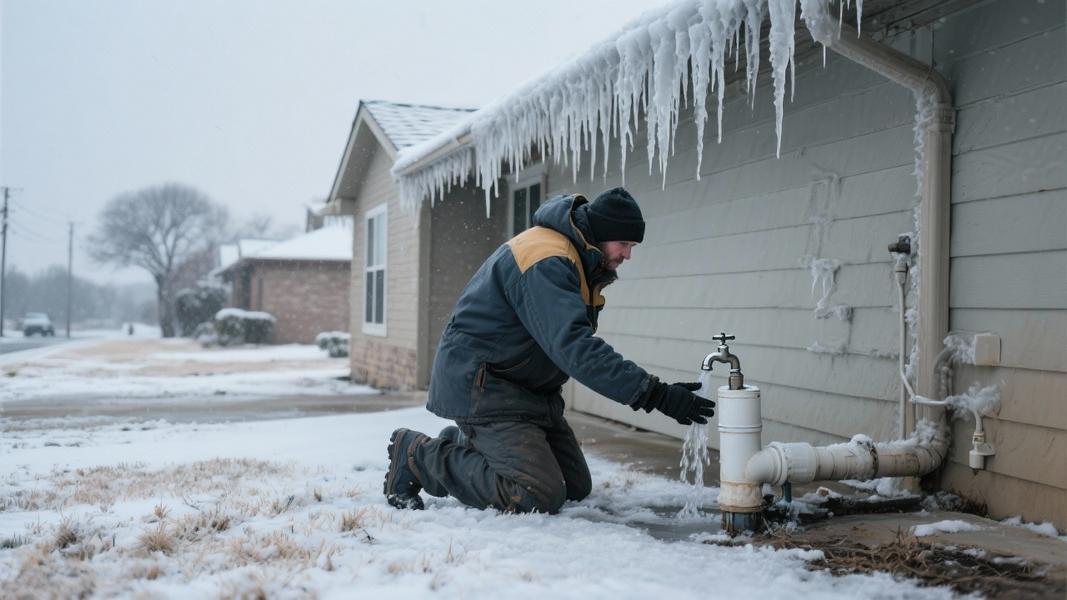
As North Texas prepares for a winter thaw, plumbers are sounding the alarm about a hidden danger lurking in frozen pipes across the region. The real trouble, experts say, often strikes not during the freeze itself but in the critical hours after temperatures begin to rise.
“Plumbers warn that frozen pipes often reveal cracks and cause major water damage only after temperatures rise, and the ice begins to melt,” according to recent reports from local experts monitoring the situation.
Why Texas Pipes Are Vulnerable
Clayton Whitmire, a plumber with Berkey’s Plumbing, points to a fundamental issue with Texas infrastructure that makes the region particularly susceptible to winter pipe damage. “Our lines, really in Texas, aren’t buried deep enough in this area,” Whitmire explained. This shallow placement is precisely why North Texans need to take precautions like dripping faucets — a practice not as necessary in traditionally colder regions where pipes are installed with winter in mind.
But here’s the thing about those dripping faucets — you might be doing it wrong. A small, steady stream of water proves far more effective than the slow drip many homeowners rely on.
“You know, all the icicles that are rolling off the roof, that’s from a drip that is rolling off, and it’s freezing before it can actually drip. If you have a solid stream, it is not going to freeze,” Whitmire noted.
The Science Behind Pipe Damage
What makes frozen pipes so destructive? It comes down to basic physics and materials science.
“When water freezes, it expands. So, if you have old copper lines or galvanized lines, that material isn’t made to expand like PEX,” Whitmire clarified. “PEX is what the new water lines and all the new houses are going to. It’s made to extend a little to give it a little comfort where it doesn’t just crack and bust.”
That expansion is the critical factor behind the pipe failures that can devastate homes. Consumer Reports indicates the risk of pipes freezing or bursting can jump tenfold during winter storms — a sobering statistic for homeowners in regions not built for sustained freezing temperatures.
The Thaw: When Danger Strikes
Counterintuitively, the most dangerous moment isn’t when pipes are frozen solid — it’s when they begin to thaw. This is when homeowners should be most vigilant.
“Water can go a long way in a very short amount of time. You can cause a lot of damage with water. I mean, just within an hour span,” Whitmire warns. “So when it does get above freezing, and you have an issue, if you have issue, yes, that’s when you would go to turn the water off at either your home shutoff valve or at the city valve.”
Experts recommend being physically present at home during the thawing process, ready to act quickly if leaks appear. Running water through the pipes can actually help the thawing process. “Running water—even a trickle—helps melt ice and relieves pressure building in the pipe. Leave the faucet open throughout the thawing process,” plumbing specialists advise.
The Cost Calculation
Worried about the water bill from letting faucets run? Don’t be, say experts.
“Your water bill will be higher than your normal for the month beforehand, but would you rather have a high-water bill of, you know, $30, $40, or an expensive plumbing bill and possibly water damage?” Whitmire questioned.
It’s a simple cost-benefit analysis. The modest increase in a monthly water bill pales in comparison to the potential thousands in repairs, not to mention the heartache of damaged family treasures and disrupted lives that water damage can cause.
As temperatures in North Texas begin their slow climb upward, residents would do well to remember: the crisis doesn’t end when the mercury rises — that’s often exactly when it begins.
