
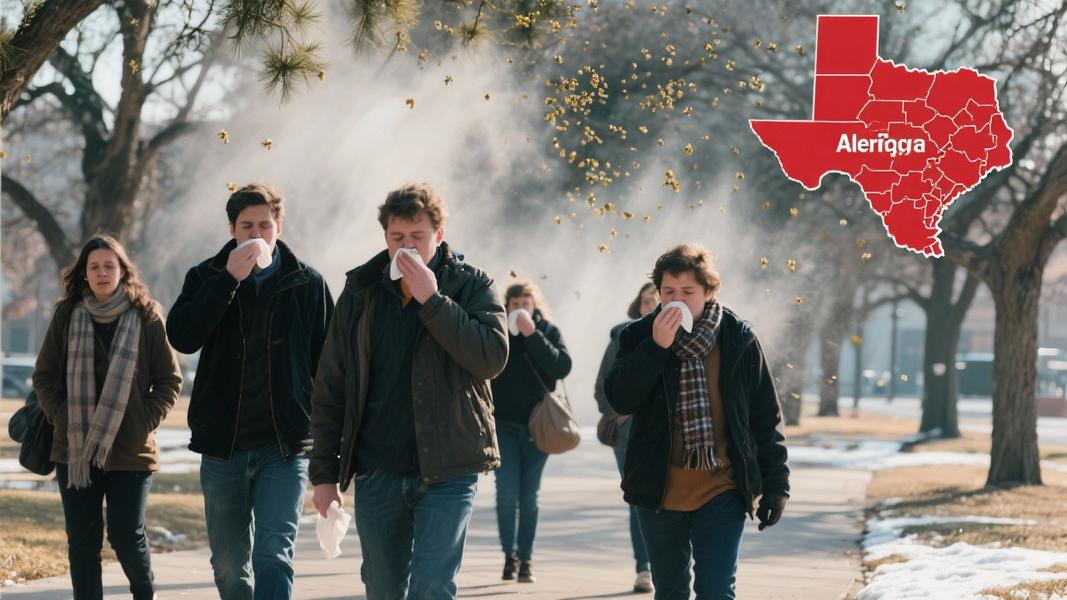
North Texans are suffering through what some locals call an “oppressive” allergy season as unusually warm winter temperatures have triggered high pollen counts across the region, particularly from mountain cedar trees.
“I’ve been sneezing and coughing more often than normal recently,” said Daniela Rodriguez-Lorraine, one of many residents battling stubborn allergy symptoms during what should be a reprieve from seasonal allergens.
Cedar Fever Strikes Early
The culprit? A phenomenon colloquially known as “cedar fever” — a misnomer since it doesn’t actually cause fever — which typically peaks between December and February in Texas. This season’s warmer temperatures have created particularly favorable conditions for pollen production.
Susan Hernandez, another North Texas resident, described how she “tends to get a stuffy nose and more congestion during high-pollen times like these,” a common complaint among locals this winter. The symptoms have become so familiar that many residents can predict high pollen days simply by how they feel when waking up.
Even newcomers to the region aren’t spared. Jorge Rodriguez-Lorrain, who recently relocated from Connecticut, noted that “his allergies got a lot worse when he moved to North Texas” just last month — a common experience for transplants unaccustomed to the region’s unique allergen profile.
Medical Perspective
Dr. Kareem Haroun, an ENT specialist, confirms what many are experiencing. “It’s very common to have a peak in cedar allergies this time of year,” he explained, adding that temperature fluctuations can worsen symptoms by drying out sinuses.
What exactly does cedar fever feel like? According to allergist Dr. Dennis Dilley, sufferers experience “itchy eyes, watery eyes, sneezing fits, followed by just copious amounts of mucus.” Not exactly the winter wonderland many had hoped for.
The mountain cedar pollen season typically reaches its zenith in mid-January and tends to taper off around Valentine’s Day, with notable spikes following cold fronts. This timing creates a perfect storm for winter allergies in a state where the general allergy season runs nearly year-round from January through November.
A Brief Respite?
There may be some good news on the horizon. Recent measurements in Dallas on January 2nd showed low counts for tree, grass, and weed pollen, suggesting potential relief for some sufferers. However, experts caution that pollen levels can fluctuate dramatically with changing weather patterns.
Is this the new normal for North Texas winters? Climate scientists have long warned that warming trends could extend pollen seasons and increase pollen production, potentially making seasonal allergies more severe and longer-lasting.
For now, residents like Daniela, Susan, and Jorge will continue their daily ritual of checking pollen forecasts alongside weather reports — a uniquely Texan winter tradition that shows no signs of fading away.
