
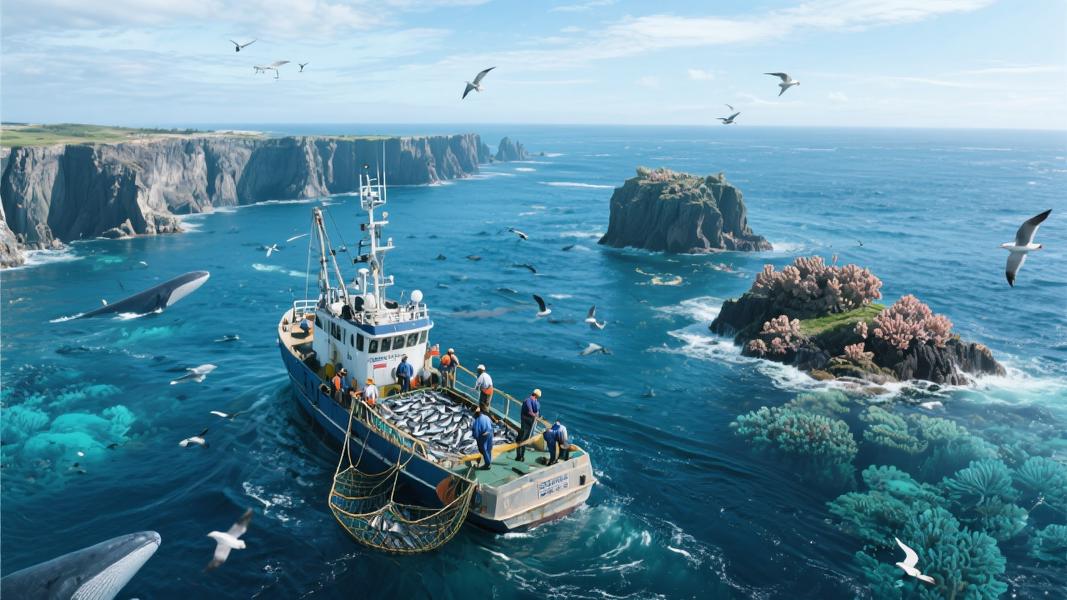
The Northeast Canyons and Seamounts Marine National Monument has become a political tennis match, with three consecutive presidents wielding their executive power to dramatically reshape protections for this Atlantic Ocean treasure.
Located roughly 130 miles southeast of Cape Cod, this 4,913-square-mile underwater preserve has ping-ponged between protection and exploitation since 2016, highlighting how conservation areas can become pawns in broader political battles over environmental policy and commercial interests.
A Conservation Area’s Roller Coaster Journey
The monument’s saga began in September 2016, when President Barack Obama designated the area through Proclamation 9496, creating the first marine national monument in the U.S. Atlantic Ocean. Obama’s proclamation included a 60-day grace period for commercial fishing operations before implementing a complete ban, with a seven-year exception for red crab and lobster fishing.
Fast forward to June 2020. President Donald Trump reversed course with Proclamation 10049, lifting the fishing restrictions while maintaining other protections. “We’re opening it today,” Trump declared at the time, framing the decision as supporting America’s “incredible” fishing industry and its workers.
But the fishing free-for-all wouldn’t last. When President Joe Biden took office, he quickly restored the original protections through Proclamation 10287 in October 2021, reinstating the commercial fishing prohibitions that Obama had initially established.
Why Does This Underwater Canyon Matter?
What makes this remote ocean area worth such presidential attention? The monument encompasses three underwater canyons deeper than the Grand Canyon and four extinct underwater volcanoes. These seamounts rise as high as 7,700 feet above the ocean floor, creating a biodiversity hotspot teeming with rare and endangered species.
Marine biologists have documented over 1,000 species in the area, including endangered sperm whales, sea turtles, and unique deep-sea corals that can live for thousands of years. “These fragile ecosystems are incredibly vulnerable to human disturbances,” explains marine ecologist Dr. Sandra Thompson. “Once damaged, some of these ancient coral communities may never recover.”
Commercial fishing interests, however, tell a different story. The restrictions hit New England’s fishing industry particularly hard. “We’ve fished these waters responsibly for generations,” says James Morison, a third-generation lobsterman from Maine. “These blanket bans ignore the sustainable practices we’ve developed.”
The Presidential Powers at Play
The back-and-forth over the monument underscores the extraordinary power presidents wield through the Antiquities Act of 1906. This century-old law allows presidents to protect lands and waters of historic or scientific interest with the stroke of a pen—no congressional approval required.
Critics argue this represents executive overreach. “The Antiquities Act was never intended to lock up vast stretches of ocean,” says Senator Mark Williams, who represents a coastal state with significant fishing interests. “These decisions should involve local stakeholders and Congress.”
Defenders of the monument point to the scientific consensus that marine protected areas help rebuild fish populations, potentially benefiting fishing communities over time. “Protected areas serve as nurseries,” says marine policy expert Dr. Elena Cortez. “They’re like savings accounts for future fish stocks.”
An Uncertain Future
The monument’s story isn’t over. Each presidential proclamation has faced legal challenges, with conservation groups and fishing associations battling in court over the legitimacy of these executive actions. The Supreme Court has yet to definitively rule on a president’s authority to modify or revoke a predecessor’s monument designation.
Meanwhile, climate change continues to threaten these underwater ecosystems. Rising ocean temperatures and acidification pose risks that transcend political battles over fishing rights.
For now, commercial fishing remains prohibited in the monument under Biden’s 2021 proclamation. But as recent history shows, that status could change with the next administration—leaving both fishing communities and conservationists in a perpetual state of uncertainty.
Perhaps the only certainty in this underwater saga is that these ancient seamounts, which have stood for millions of years, will continue to witness the much newer human drama playing out far above their peaks.
