
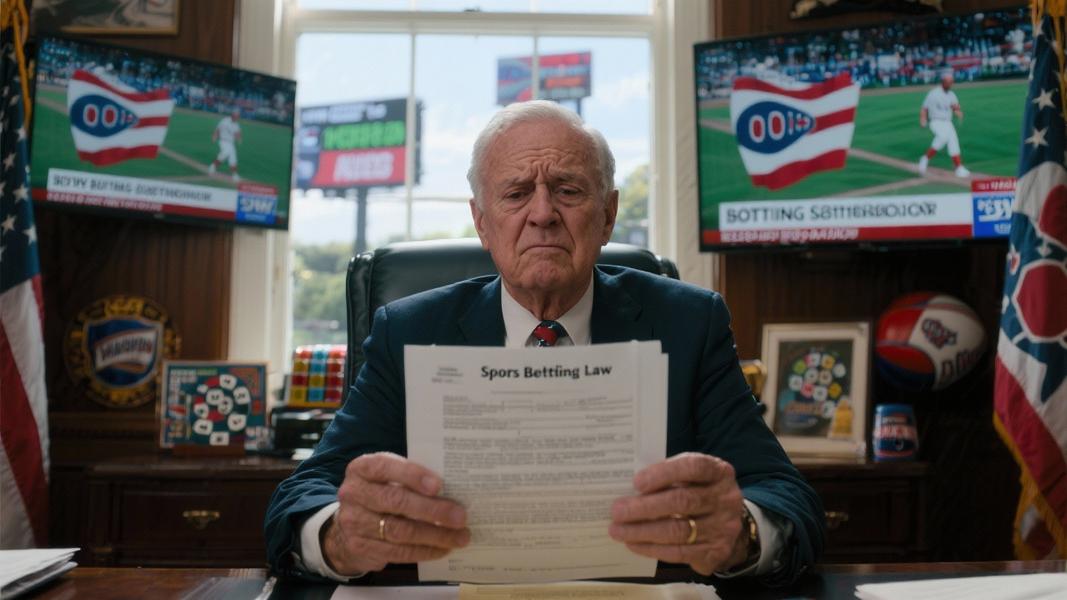
Ohio Governor Mike DeWine now regrets signing the state’s sports betting law into effect, expressing sharp concerns about the industry’s outsized influence and potential harms — a stark reversal from his position when he legalized wagering in 2021.
“I absolutely regret it,” DeWine said about approving the legislation that made sports betting legal across the Buckeye State. “Just the power of these companies and the deep, deep, deep pockets they have to advertise and do everything they can to get someone to place that bet is really different once you have legalization of them,” he admitted in recent comments.
From Champion to Critic
The governor’s about-face comes less than three years after he signed House Bill 29 in December 2021, which placed sports wagering “under the regulatory authority of the Ohio Casino Control Commission and the Ohio Lottery.” The law permitted adults 21 and older to place bets online, at casinos, racinos, and at kiosks in bars, restaurants, and sports facilities.
What changed? Several gambling-related scandals have erupted since the law took effect in 2023, including criminal probes involving professional athletes. Most notably, Cleveland Guardians pitchers were accused of rigging games, prompting serious concerns about sports integrity in an era of widespread betting access.
DeWine has since emerged as a surprising critic of the very industry he helped legalize, taking aggressive regulatory action to rein in what he now sees as excessive betting opportunities. His office began receiving troubling reports that gamblers were threatening University of Dayton basketball team members, according to state records.
Fighting Back Against ‘Prop Bets’
“Gov. DeWine really did a huge service, I think — to us, certainly, I can’t speak for any of the other sports — in terms of kind of bringing forward the need to do something in this area,” MLB Commissioner Rob Manfred told reporters last week.
The governor has become particularly focused on limiting “prop bets” — especially micro-bets on individual plays like baseball pitches — which critics say create heightened integrity risks. He successfully helped broker a deal to cap such bets at $200 and exclude them from parlays, while also contacting NCAA President Charlie Baker to remove collegiate prop bets from legal wagers in Ohio.
But not everyone in Ohio’s government shares DeWine’s newfound skepticism. Republican House Finance Chairman Brian Stewart has opposed eliminating prop bets entirely, stating in August that they are “a significant part of sports betting in the state of Ohio” and “something that clearly a lot of Ohioans have taken part in and enjoy.”
Money and Influence
Could the industry’s political influence explain some of this resistance? Lobbyists and political action committees connected to major gaming companies like Jack Casino, DraftKings, FanDuel, and MGM have donated approximately $130,000 to Ohio state legislators over three years, with about a third directed to top House and Senate leaders.
Meanwhile, DeWine has doubled tax rates on sportsbooks through the state budget in 2023 and enforced nearly $1.3 million in fines on betting companies for violations related to advertising and misleading promotions. He attempted to increase taxes again this year, demonstrating his growing skepticism toward the industry.
Would the governor support a complete repeal of the law he now regrets signing? In theory, yes — but he’s realistic about the political landscape.
“There’s not the votes for that. I can count,” he acknowledged. “I’m not always right, but I can pretty much guarantee you that they’re not ready to do this.”
Big Business, Bigger Concerns
The stakes are enormous. Ohio’s sports betting industry has grown rapidly since legalization, part of a nationwide boom projected to generate over $11 billion in revenue in the U.S. this year alone.
And micro-betting — the very practice DeWine is now working to restrict — remains “critical to the business strategy” of the industry, despite the integrity concerns and regulatory pushback.
How far will DeWine’s regulatory crusade go? That remains to be seen. But his transformation from sports betting legalizer to one of its most prominent critics highlights the complex challenges states face when gambling moves from prohibition to regulation — a journey that, at least in Ohio’s case, has proven far more complicated than lawmakers initially wagered.
