
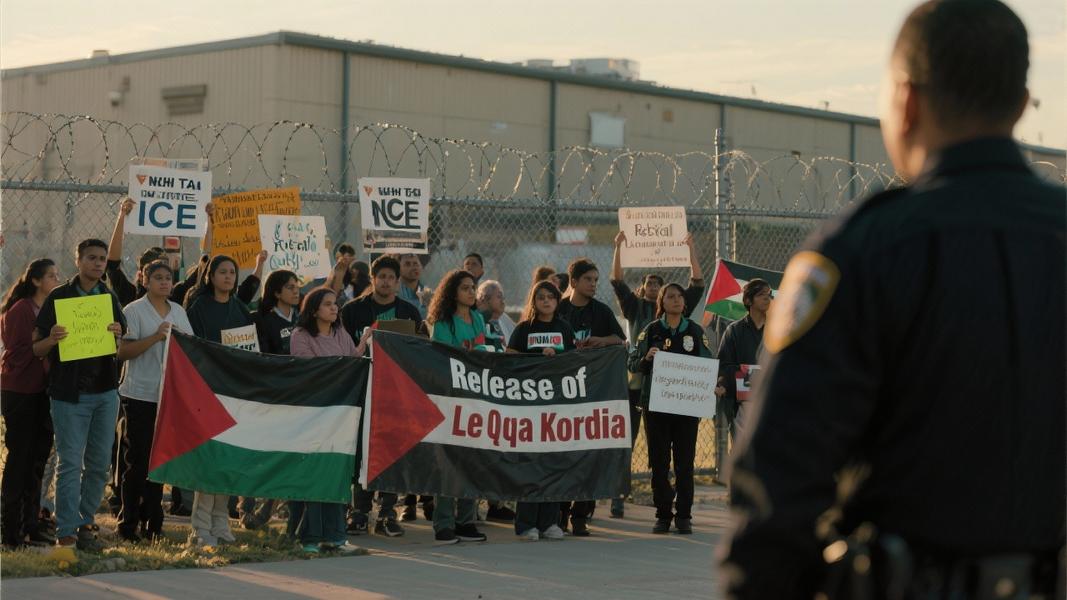
A Palestinian woman with deep ties to war-torn Gaza has spent the last 10 months detained at a North Texas immigration facility, despite an immigration judge granting her bond and the dropping of all protest-related charges against her.
Leqaa Kordia, 33, has been held at the Prairieland Detention Facility in Alvarado since March 13, when she was taken into custody during what was supposed to be a routine meeting with immigration officials. The detention came shortly after her participation in protests at Columbia University — protests that resulted in charges that were later dismissed.
Trapped in bureaucratic limbo
What makes Kordia’s case particularly devastating? While detained, she has reportedly lost approximately 175 family members in Gaza since the conflict began, according to human rights advocates following her case.
Her supporters — including legal representatives, family members, and several Texas lawmakers — gathered recently for a news conference demanding her immediate release. They’ve expressed frustration that despite being assessed as a low-risk individual and having a judge approve her bond, Kordia remains detained with no clear timeline for release.
“The system has completely failed her,” said Mona Ahmed, Kordia’s cousin, who spoke at the news conference. “She came to America believing in its promise of freedom and justice, yet she’s experienced nothing but the opposite since March.”
A protest with lasting consequences
The detention stems from Kordia’s participation in demonstrations at Columbia University early last year. Though all charges related to those protests were eventually dropped, Immigration and Customs Enforcement (ICE) officials took her into custody during what her legal team describes as a voluntary check-in.
Ten months later, she remains behind bars.
Legal advocates point to her case as emblematic of broader concerns about how immigration authorities handle cases involving political activism, particularly around contentious international issues. The fact that Kordia was deemed low-risk yet remains detained has raised questions about whether her Palestinian identity and political expression have influenced her treatment.
Could her detention be politically motivated? That’s what her supporters allege, pointing to the timing of her arrest following the Columbia protests and the continued detention despite favorable legal rulings.
Personal toll amid global tragedy
The personal toll on Kordia has been immense. Beyond the trauma of detention itself, she has been receiving news of family casualties in Gaza while unable to properly mourn or communicate freely with surviving relatives.
Human rights organizations, including Amnesty International, have taken up her case, issuing urgent action alerts calling for her release. They’ve highlighted not just the questionable legal basis for her continued detention but also the humanitarian concerns given her family situation.
State Representative Ana-Maria Ramos, who attended the news conference supporting Kordia, called the situation “unconscionable.”
“We’re talking about someone who has lost nearly 200 family members while sitting in a detention facility for almost a year,” Ramos stated. “And for what? All charges were dropped. A judge granted her bond. There’s no justification for this continued detention.”
As Kordia’s detention approaches its one-year mark, her supporters vow to continue pressing for her release, highlighting how a single protest has led to consequences far beyond what anyone could have anticipated — consequences playing out in a detention facility far from the halls of Columbia University where this story began.
