
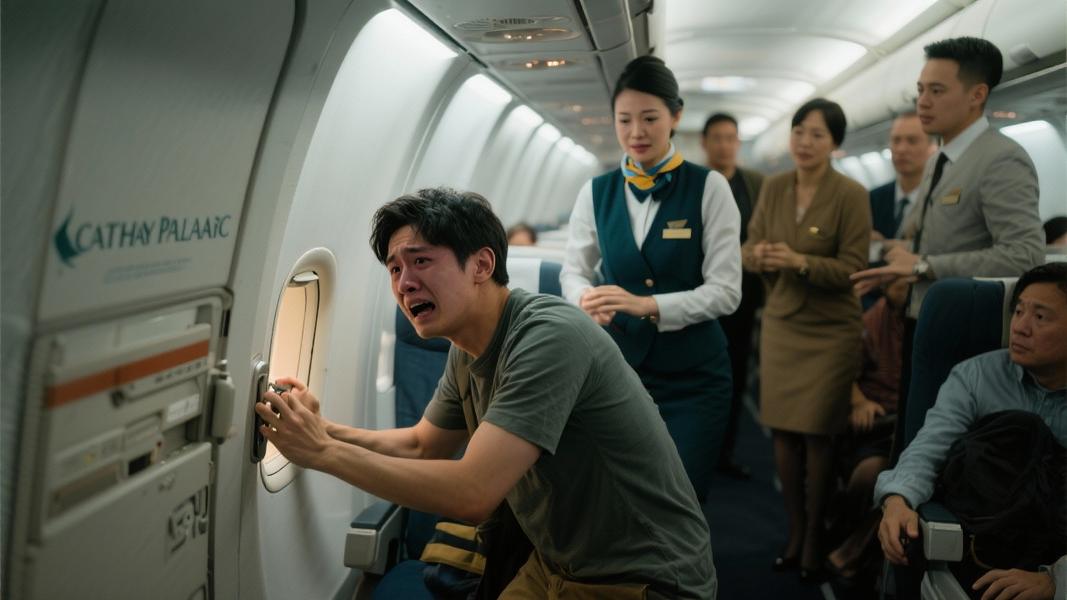
A passenger attempted to open an aircraft door mid-flight on a Cathay Pacific plane traveling from Boston to Hong Kong, leading to his arrest upon landing early Thursday morning, according to airline officials.
The incident occurred on Flight CX811, where cabin crew had to intervene when a male passenger was suspected of trying to access one of the aircraft’s doors while the plane was airborne. Quick action by flight attendants prevented what could have been a catastrophic situation.
“Our cabin crew immediately attended to the situation, inspected the door to ensure it was securely closed, and reported the incident to the relevant authorities and the police,” Cathay Pacific confirmed in a statement. The airline emphasized that no injuries resulted from the incident.
Swift Response and Arrest
Hong Kong police took a 20-year-old man from mainland China into custody shortly after the flight touched down at Hong Kong International Airport on December 11, 2025. He’s been arrested on suspicion of violating Hong Kong’s Aviation Security Ordinance — legislation that carries serious penalties for endangering aircraft safety.
What drives passengers to attempt such dangerous actions? Aviation experts have long noted that psychological distress, confusion, or intoxication can be contributing factors in these rare but alarming incidents.
The airline was quick to highlight its commitment to passenger welfare following the incident. “At Cathay, the safety of our customers and crew guides every decision we make,” the carrier stated, adding that “the case has been handed over to the police for investigation.”
Not an Isolated Incident
This attempt marks the latest in a series of similar disturbances on commercial flights globally. Just last month, a KLM flight departing from Atlanta experienced significant delays when a passenger opened an emergency exit while the aircraft was still taxiing, deploying the evacuation slide and triggering a security response at Hartsfield-Jackson Atlanta International Airport.
In another notable case earlier this year, quick thinking by a U.S. Marine prevented potential disaster when he restrained a passenger who had grabbed an emergency exit door during a flight from Tokyo. The Marine used zip ties to secure the individual until the plane could safely land.
Aviation safety experts point out that while it’s virtually impossible to open a pressurized cabin door at cruising altitude due to the pressure differential, attempts can still cause damage to door mechanisms and create panic among passengers.
Though rare, these incidents highlight the ongoing challenges airlines face in maintaining cabin security while balancing passenger comfort — a delicate balance that continues to evolve as air travel returns to pre-pandemic levels.
