
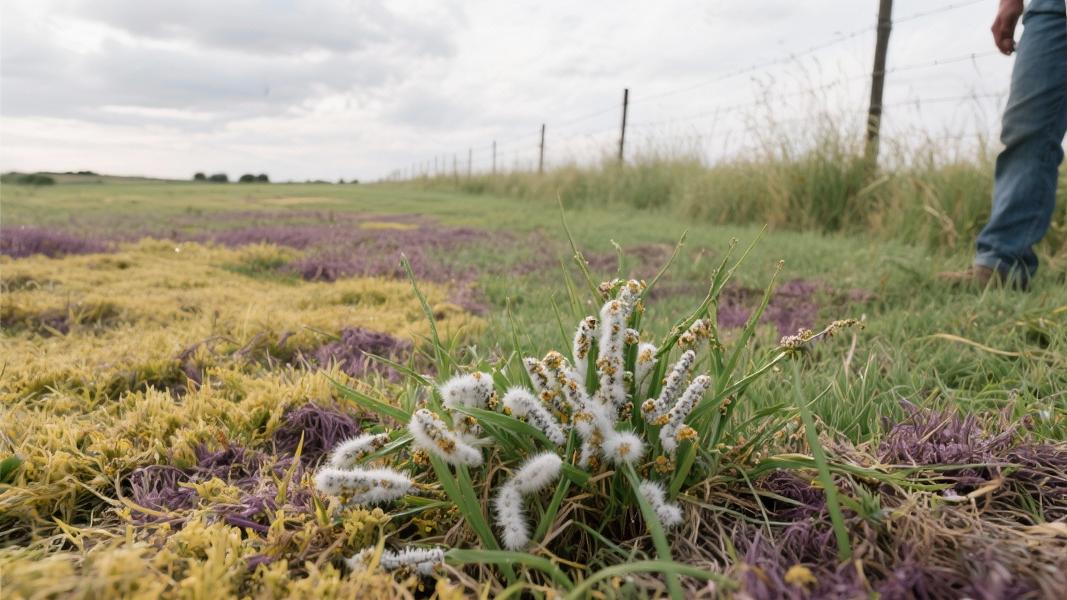
A new agricultural menace has made its way to American soil, and it’s leaving a trail of damaged pastures in its wake. The pasture mealybug, never before seen in North America, has now been confirmed in 22 Texas counties, threatening the state’s vast grazing lands.
“This is a completely new pest to our continent, and Texas is once again on the front lines,” Agriculture Commissioner Sid Miller said. “If the pasture mealybug spreads across Texas grazing lands like it has in eastern Australia, it could cost Texas agriculture dearly in lost productivity and reduced livestock capacity.”
An Unwelcome Arrival
First discovered in Australia in 1928, the pest devastated millions of acres of grazing land there before spreading globally. Now it’s found a foothold in the Lone Star State, where officials are scrambling to understand and contain the threat.
The tiny invader has been identified across a swath of counties spanning from the Rio Grande Valley northward through the coastal plains and into central Texas, including Cameron, Hidalgo, Willacy, Refugio, Calhoun, Victoria, Goliad, Dewitt, Lavaca, Fayette, Jackson, Matagorda, Brazoria, Galveston, Wharton, Colorado, Austin, Washington, Burleson, Brazos, Robertson, and Fort Bend.
What makes this pest particularly troubling? Unlike adult mealybugs, which don’t feed, the immature stages wreak havoc by sucking plant sap and excreting a sugary substance called honeydew over leaves. This creates a perfect environment for fungus growth that blocks photosynthesis. But that’s not all — their saliva is toxic to grass, causing a condition known as “pasture dieback.”
The symptoms appear with alarming speed. Within just a week of infestation, grasses begin yellowing and discoloring. Soon after comes purpling or reddening of foliage, stunted growth, poorly developed root systems, and premature aging that leaves plants vulnerable to other pathogens.
No Easy Solutions
Here’s the kicker: there’s currently no silver bullet for this problem.
“No currently labeled insecticides are effective at controlling the pasture mealybug,” according to research from insecticide trials conducted this year. The results have been inconsistent at best, and broad-spectrum insecticides like pyrethroids might actually make things worse by killing off the pest’s natural enemies.
The Texas Department of Agriculture is working with federal and university partners to develop management strategies, but in the meantime, they’re urging ranchers and land managers to stay vigilant. Biological control through beneficial insects like lady beetles and parasitoids may provide the best hope for containing the spread.
“Early identification is critical, and we need every producer’s eyes on the ground,” Miller stated. “We are working diligently with our federal and state partners to determine how to best combat this novel threat and stop it in its tracks.”
What to Look For
The Texas A&M AgriLife Extension has issued guidance for producers on how to spot these destructive pests. They recommend closely inspecting areas where grass shows yellowing or reddening, with particular attention to unmanaged areas like fence lines and roadsides.
“The pasture mealybug can be found on grass leaves, at the base of the plants, over the soil, in leaf litter, below the soil, and below cow patties,” AgriLife officials said. “Look for fluffy white, waxy or ‘fuzzy’ insects.”
The pest primarily targets warm-season grasses common throughout Texas, including Bermudagrass, Bahia grass, Johnsongrass, sorghum–sudangrass (hay grazer), St. Augustine grass, and several bluestem species. Broadleaf plants like legumes or brassicas appear to be unaffected — a small consolation for producers facing potential devastation of their grazing lands.
For a state where cattle production alone generated $13 billion in cash receipts in recent years, the stakes couldn’t be higher. If this tiny pest follows the pattern established in Australia, the economic impact could be profound, affecting not just individual producers but rippling through Texas’s agricultural economy.
As Miller puts it, Texas is “once again on the front lines” of an agricultural battle. This time, the enemy is microscopic, resilient, and moving fast.
