
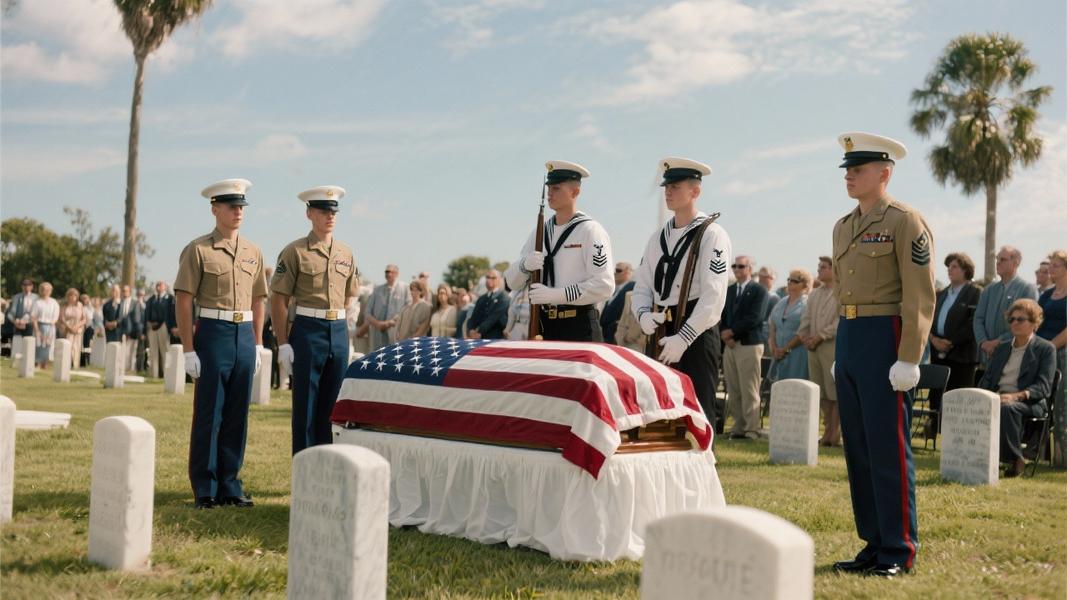
After more than 80 years lost at sea, U.S. Navy Storekeeper 3rd Class Roberto Stillman Garcia is finally coming home. The young sailor, killed during the Japanese attack on Pearl Harbor in 1941, will be laid to rest with full military honors in Texas soil this month.
Garcia, who was just 23 years old when he perished aboard the USS California, was one of 102 sailors and marines who lost their lives when the battleship was struck by torpedoes and a bomb during the surprise attack that launched America into World War II. His remains were recently identified through advanced DNA testing, confirmed the Defense POW/MIA Accounting Agency.
A Long-Awaited Homecoming
The burial ceremony, which will take place at the Coastal Bend State Veterans Cemetery in Corpus Christi, is open to the public. Texas Land Commissioner Dawn Buckingham has encouraged citizens to attend and pay their respects to a native son who made the ultimate sacrifice.
“This is a remarkable moment of closure for a family that has waited generations,” said a veterans affairs official familiar with the case. “It’s also a testament to our nation’s commitment that we never forget those who served.”
The USS California, a Tennessee-class battleship, was moored at Pearl Harbor on that fateful Sunday morning when Japanese aircraft attacked the U.S. Pacific Fleet. The ship was hit by two torpedoes and a bomb, causing extensive damage and flooding. Despite valiant efforts by the crew, the massive battleship eventually settled into the harbor mud.
What became of Garcia? For decades, his family knew only that he was among those killed during the attack. His remains were among those classified as non-recoverable – until now.
Science Brings Closure
Advanced forensic techniques finally made identification possible. The Defense POW/MIA Accounting Agency officially accounted for Garcia on April 14, 2025, following extensive DNA analysis that matched samples provided by his family members.
The identification of Pearl Harbor casualties continues as a slow but steady process. Modern technology, combined with meticulous historical research, has enabled the military to identify previously unknown remains from the attack that killed more than 2,400 Americans.
“Each identification represents not just scientific achievement, but a promise kept,” noted a military historian. “These sailors and marines went down with their ships expecting their country would never forget them. And we haven’t.”
Military records indicate that Garcia, who enlisted from Texas, served as a storekeeper aboard the USS California. Such personnel were responsible for maintaining and distributing supplies essential to the ship’s operation – a critical role on a vessel that housed more than 1,800 sailors.
Remembering the Fallen
Local veterans groups are planning to attend the ceremony in force. “When we say ‘never forget,’ this is what we mean,” said a representative from a Corpus Christi veterans organization. “Eighty-plus years later, and we’re still bringing our boys home.”
The identification and return of Garcia’s remains was documented as part of the ongoing effort to account for all service members missing from past conflicts. The process involves not only scientific work but extensive historical research and family outreach.
For the families of the Pearl Harbor dead, these identifications provide an opportunity for proper mourning and remembrance that has been denied them for generations. Many of the parents of those killed never lived to see their sons properly laid to rest.
As Garcia’s flag-draped casket is lowered into Texas soil, it will mark the end of a journey that began on a peaceful Sunday morning in Hawaii more than eight decades ago – a journey home that proves America’s solemn vow that no fallen service member is ever truly forgotten, no matter how much time has passed.
