
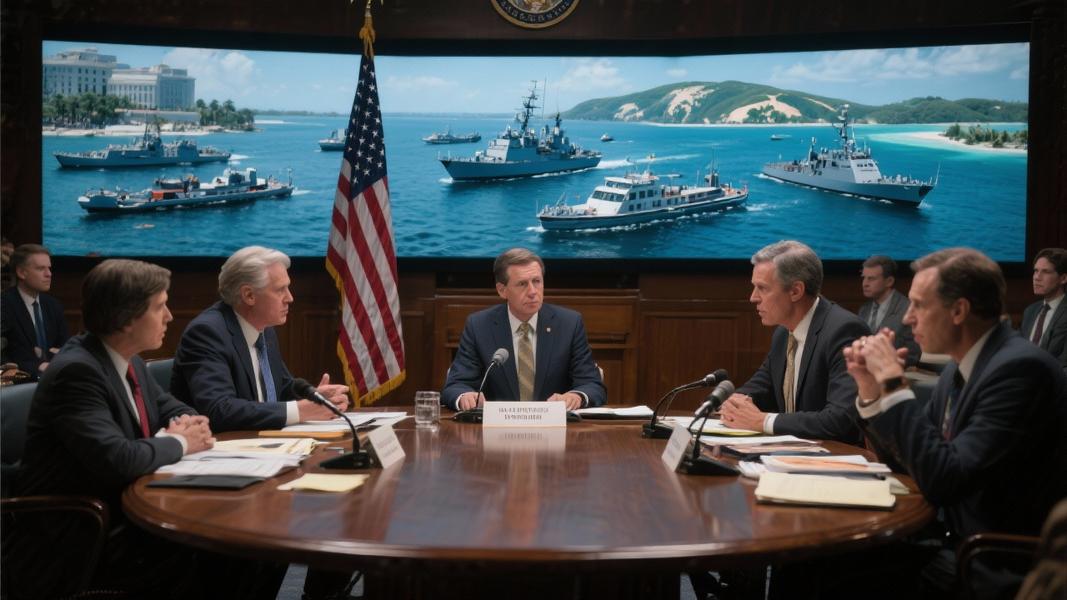
The Pentagon is facing a firestorm of bipartisan scrutiny after reports emerged that Defense Secretary Pete Hegseth may have ordered U.S. forces to kill all occupants of vessels during Caribbean drug interdiction operations that began last month.
Since September 2, U.S. military airstrikes have targeted boats allegedly transporting narcotics in the Caribbean and Pacific, killing at least 83 people according to human rights monitors. The operations, which began under direct authorization from President Donald Trump, initially focused on vessels purportedly operated by groups designated as narcoterrorists, including Venezuela’s Tren de Aragua and Colombia’s National Liberation Army.
A Kill Order Controversy
The controversy intensified after allegations surfaced that Secretary Hegseth verbally directed military personnel to leave no survivors during the September 2 strike that killed 11 people aboard a Venezuelan vessel. Sen. Tim Kaine (D-Va.) didn’t mince words: “This rises to the level of a war crime if it’s true.” Rep. Mike Turner (R-Ohio) agreed, stating, “Obviously, if that occurred, that would be very serious and I agree that that would be an illegal act.”
Hegseth vehemently denies the accusations. “Fake news is delivering more fabricated, inflammatory, and derogatory reporting to discredit our incredible warriors fighting to protect the homeland,” the Defense Secretary said in a written statement. He insisted that “our current operations in the Caribbean are lawful under both U.S. and international law, with all actions in compliance with the law of armed conflict—and approved by the best military and civilian lawyers, up and down the chain of command.”
But is that enough to quell congressional concerns? Not even close.
Bipartisan Oversight Promised
In an unusual display of unity, the top Republican and Democratic leaders of both the Senate and House Armed Services Committees have pledged thorough investigations. Senators Roger Wicker (R-MS) and Jack Reed (D-RI) announced their committee “will be conducting vigorous oversight to determine the facts related to these circumstances.”
Similarly, Representatives Mike Rogers (R-AL) and Adam Smith (D-WA) issued a joint statement saying, “We take seriously the reports of follow-on strikes on boats alleged to be ferrying narcotics in the SOUTHCOM region and are taking bipartisan action to gather a full accounting of the operation in question.”
The first strike occurred on September 1, 2025, though it wasn’t publicly announced until the following day when President Trump held a White House event showcasing video footage of the attack. Trump described the target as “loaded” with narcotics, a “lot of drugs” bound for the United States, though critics note that no evidence substantiating these claims has been presented.
Skepticism Even From Defense Hawks
Rep. Don Bacon (R-NE), a retired Air Force brigadier general and typically staunch Pentagon supporter, expressed doubt about the allegations against Hegseth while still supporting an investigation. “We should get to the truth. I don’t think he would be foolish enough to make this decision to say, kill everybody, kill the survivors because that’s a clear violation of the law of war,” Bacon said. “So, I’m very suspicious that he would’ve done something like that because it would go against common sense.”
The military operations have raised profound questions about due process and human rights. Critics point out that summary executions of suspected drug traffickers without trial or evidence presentation would violate fundamental legal principles.
That said, the administration maintains these are legitimate military operations against narcoterrorist organizations that pose a direct threat to U.S. national security interests.
As congressional hearings loom and international scrutiny mounts, one thing is certain: what began as a dramatic announcement of a new front in America’s war on drugs has transformed into something far more complex — a test of military ethics, congressional oversight, and the limits of executive power in the prosecution of transnational threats.
