
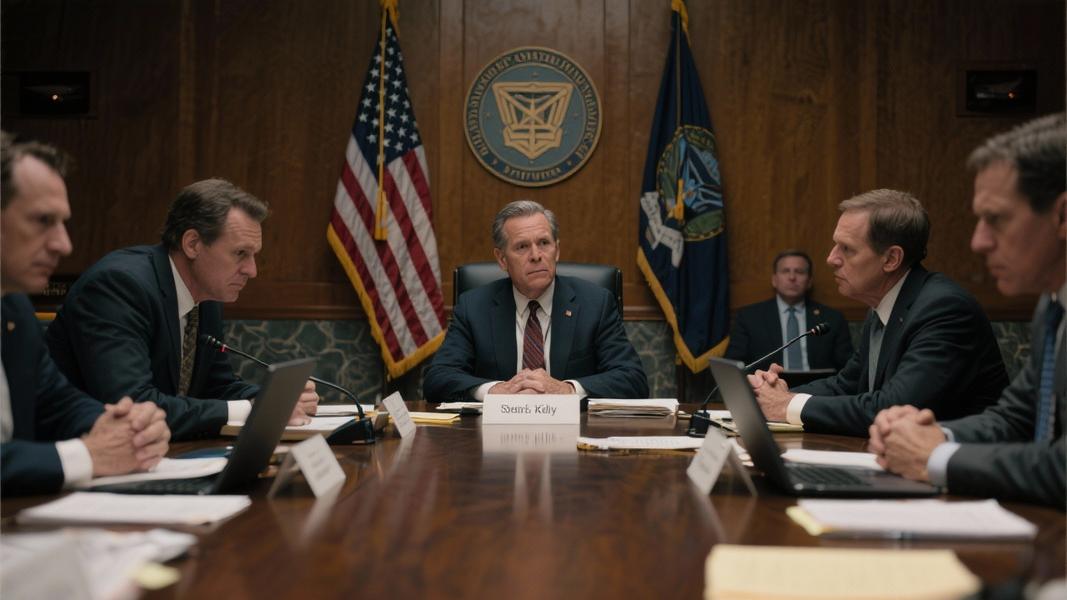
The Pentagon has launched an investigation into Senator Mark Kelly, a retired Navy captain, over a video where he and other Democratic lawmakers reminded service members they aren’t obligated to follow unlawful orders — a move critics say represents an unprecedented overreach into congressional affairs.
Defense Secretary Pete Hegseth described the lawmakers’ statements as “potentially seditious” and suggested Kelly could be recalled to active duty to face military charges. The extraordinary threat has sparked alarm among constitutional experts who view it as a dangerous blurring of military and civilian authority.
Legal Experts Question Pentagon’s Authority
The controversy stems from a video featuring six Democratic lawmakers, some with military or intelligence backgrounds, discussing the obligation of service members to disobey unlawful orders. But can a sitting U.S. senator really be court-martialed for statements made in his civilian capacity?
Legal scholars and former military prosecutors have expressed significant doubts. “Saying that you shouldn’t break the law cannot be a crime. But in addition, he did not do it as a military officer. He did it as a civilian,” multiple legal experts have pointed out, highlighting the fundamental distinction that seems lost in the Pentagon’s approach.
While the Pentagon does maintain some jurisdiction over the approximately 2 million retired military personnel receiving retirement pay, such prosecutions are exceedingly rare. Todd Huntley, a retired Navy captain and JAG officer, notes: “It’s not totally unheard of. I actually prosecuted an enlisted guy who had been retired for 16 years. He was essentially assaulting his adopted daughter. Basically no one else had jurisdiction so we prosecuted him.”
But that’s a far cry from investigating a senator for political speech, critics argue.
Constitutional Concerns Mount
The Pentagon’s move has sparked particular concern among constitutional scholars who see it as potentially violating separation of powers principles. Anthony Michael Kreis, a constitutional law professor at Georgia State University, warned: “Having a United States senator subject to discipline at the behest of the secretary of defense and the president — that violates a core principle of legislative independence. Any way you cut it, the Constitution is fundamentally structurally designed to prevent this kind of abuse.”
Former military prosecutors have been equally troubled by the legal reasoning. Colby Vokey, a civilian military lawyer and former military prosecutor, explained the dangerous precedent: “Let’s say you have a 100-year-old World War II veteran who is retired with pay and he steals a candy bar. Hegseth could bring him back and court-martial him. And that in effect is what is happening with Kelly.”
The Former JAGs Working Group has already stated that Kelly did not violate the Uniform Code of Military Justice in their assessment. “The video simply described the law as it pertains to lawful versus unlawful orders. It did not suborn mutiny or otherwise encourage military members to disregard or disobey lawful orders issued to them,” the group concluded.
Senator Stands Firm
For his part, Senator Kelly has dismissed the investigation as intimidation tactics. “I have given too much to this country to be silenced,” Kelly declared, characterizing the Pentagon’s actions as the work of “bullies” and insisting it would not prevent him and other lawmakers from holding the administration accountable.
The showdown raises profound questions about the relationship between military authority and civilian governance. That the Defense Department would consider recalling a sitting senator to face potential court-martial for statements made in his capacity as an elected official represents what many see as an unprecedented attempt to extend military jurisdiction into the political sphere.
Constitutional safeguards exist precisely to prevent such overreach, experts maintain. Yet as this case unfolds, it highlights the tensions that can emerge when military discipline collides with democratic principles — and the challenging legal terrain that lies at their intersection.
