
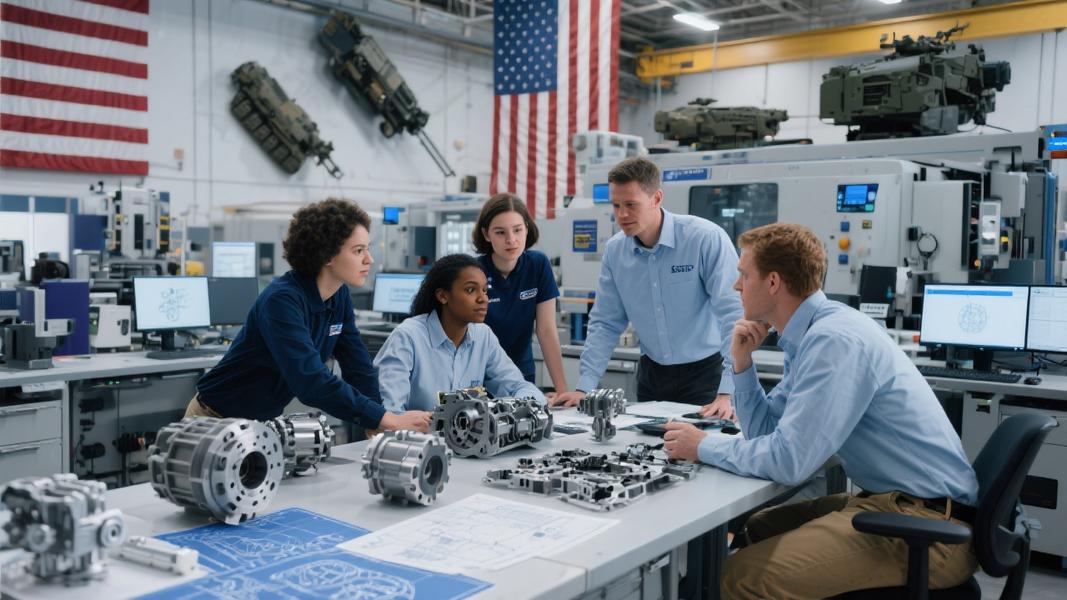
In a bid to solve a growing defense crisis that few Americans know about, the Department of War has committed nearly $1.8 million to tackle a decidedly unglamorous problem: military parts that no longer exist.
The two-year investment, awarded to the Great Plains Innovation Network (GPIN) in Manhattan, Kansas on August 27, 2025, aims to develop reverse engineering capabilities for obsolete defense-critical components that lack proper technical documentation. The announcement, delayed by the recent government shutdown, represents a strategic push to address what defense experts call a mounting vulnerability in America’s military readiness.
“This is an important effort as some of our most important legacy systems are to some degree unsustainable as the original equipment manufacturers are no longer in our industrial base,” said Michael Cadenazzi, Assistant Secretary of War for Industrial Base Policy, in a statement released with the funding announcement.
What’s at stake? Potentially billions in defense assets. The defense electronics obsolescence market alone was valued at $2.7 billion in 2024 and is projected to grow at over 8.4% annually through 2034. Many critical weapons systems and platforms rely on components that haven’t been manufactured in decades.
The Pentagon’s Parts Problem
The issue stems from a dramatic consolidation in the defense industrial base, which has shrunk from 51 prime vendors after the Cold War to just five major prime contractors today, according to Department of War documents. This contraction, coupled with rapid commercial technology cycles, has left the military scrambling to maintain legacy systems when parts break or wear out.
“The most common is the notion that aftermarket parts are exclusively created by reverse-engineering an OEM’s part. That does happen, that’s the classic clone, but I think most people may not know that OEMs themselves offer the majority of aftermarket support in terms of spares and repairs,” noted an industry expert in a recent interview about sustainment challenges.
The Kansas initiative will partner GPIN with Kansas State University and other Midwest institutions to train engineers in the delicate art of reverse engineering — essentially recreating parts when original blueprints no longer exist.
3D Printing to the Rescue
Modern solutions are already showing promise. On the USS Bataan, sailors recently used additive manufacturing — commonly known as 3D printing — to replace a critical de-ballast air compressor component in just five days, a process that would have taken weeks or months through traditional supply chains, as reported by industry publications.
The technique involves scanning existing parts, creating digital designs, and printing replacements on demand. It’s already being deployed for everything from aircraft braking systems, which GS Engineering was recently tasked with reverse engineering, to nuclear enterprise components.
But these aren’t just any parts. Some components support nuclear systems, with Parts Life, Inc. currently supporting the Nuclear Enterprise by reverse engineering seals for Air Launched systems, according to Defense Logistics Agency materials.
Broader Strategy Emerges
The GPIN funding appears to be part of a larger Pentagon initiative. A recent strategy document from the Department indicates plans to “identify and mitigate supply chain fragility by addressing parts obsolescence through a consortium” — suggesting the Kansas project may be just the beginning.
The technical challenges can be daunting. When engineering drawings are unavailable, teams must reverse engineer everything from electrical cords to complex testing functions, often with limited reference materials, according to industry publications.
Can a Midwest innovation hub really solve a problem of this scale? Cadenazzi seems to think so. “At the end of the project, the United States will have a more resilient and competitive supply chain as a result of the collaboration we’ve made possible between GPIN and Kansas State University, and others across the Midwest as they forge new partnerships,” he said.
For now, the nation’s defense readiness partly hinges on the ability of engineers in Kansas to recreate the past — one obsolete part at a time.
