
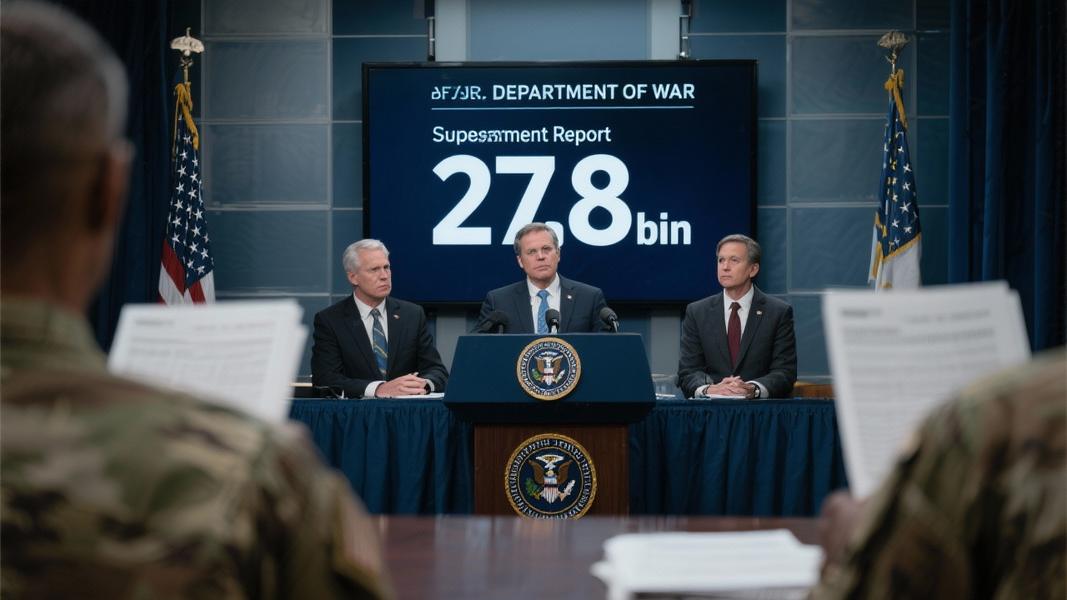
The Pentagon has requested $28.2 billion for its secretive Military Intelligence Program (MIP) for fiscal year 2025, marking a notable decrease from the previous year’s funding request as defense priorities shift in an increasingly complex global landscape.
The Department of Defense announced the topline figure Tuesday, emphasizing that the disclosure “does not jeopardize any classified activities” contained within the highly guarded intelligence initiative. The $28.2 billion request represents a $1.1 billion reduction from the $29.3 billion the Pentagon sought for FY2024.
Intelligence Budget Landscape
What’s behind the numbers? While the Pentagon remains characteristically tight-lipped about specific programs, the MIP encompasses projects supporting the defense secretary’s intelligence and counterintelligence objectives—all of which remain classified.
The Military Intelligence Program represents just one piece of America’s intelligence funding puzzle. The U.S. intelligence budget is split into two major components: the National Intelligence Program (NIP) and the MIP, as outlined by the Office of the Director of National Intelligence.
For context, the FY2025 budget request for the National Intelligence Program stands at a substantial $3.1 billion, a significant jump compared to the $76.5 million appropriated in FY2024. Meanwhile, the MIP received $29.8 million in FY2024 appropriations.
Strategic Implications
The reduced MIP funding request comes at a time when intelligence capabilities are being tested globally. Defense officials have indicated the budget reflects the defense secretary’s strategic priorities, though they haven’t elaborated on which specific intelligence capabilities might see reduced investment.
“The total is $28.2 billion,” the Pentagon stated matter-of-factly in its brief announcement, offering little insight into the rationale behind the decrease. This restraint is typical for intelligence budget discussions, where details remain shrouded in secrecy.
Budget watchers note that intelligence spending often fluctuates based on emerging threats and technological investments. The $1.1 billion reduction might signal a strategic reallocation rather than a diminished emphasis on intelligence gathering.
The budget request now moves to Congress, where it will likely undergo scrutiny in closed-door sessions before lawmakers determine the final funding levels for America’s military intelligence operations—decisions that will shape the nation’s information-gathering capabilities in an increasingly unpredictable world.
