
An Alvarado police lieutenant was shot in the neck. Fireworks lit up the sky. And now, nine people are sitting in a federal courtroom facing charges that prosecutors are calling a first of its kind in American legal history.
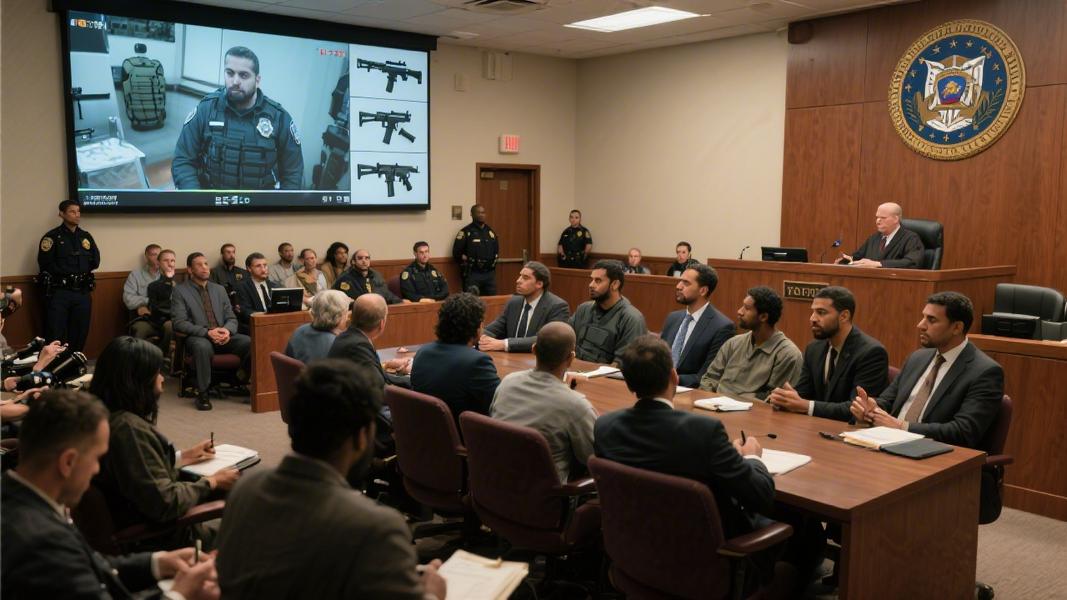
The trial of nine defendants accused of attacking the Prairieland Detention Facility in Alvarado, Texas, on July 4, 2025, entered a dramatic phase this week as jurors were shown body camera footage capturing the chaos of that night — and the raw, unfiltered reactions of the officers who responded to it. Prosecutors say it was a coordinated ambush. Defense attorneys say the picture isn’t so clean. Either way, what unfolded at that ICE detention center has become one of the most politically charged criminal cases in the country.
Nine Defendants, One Alleged Mastermind
The accused are Daniel Estrada, Ines Soto, Elizabeth Soto, Maricela Rueda, Bradford Morris, Savanna Batten, Benjamin Song, Zachary Evetts, and Cameron Arnold. Federal prosecutors allege each of them participated in the attack on the Prairieland facility, allegedly operating under the direction of Benjamin Song. Song is positioned by the government as the central figure — the organizer behind what they’re calling a deliberate, planned strike on a federal immigration detention center.
Authorities allege the assault wasn’t spontaneous. According to prosecutors, fireworks were ignited as a distraction, buildings and vehicles were damaged, and federal officers were fired upon. An Alvarado police officer who responded to a 911 call was shot in the neck and, remarkably, survived. Criminal charging documents allege the assailant fired approximately 20 to 30 rounds at correctional officers before the night was over. That’s not a skirmish. That’s a firefight.
What the Body Cam Caught
The footage shown to jurors didn’t pull punches. Responding officers, clearly stunned by what they were encountering, can be heard on camera saying, reported Fox4 News, “What the [expletive]! This appears to be a targeted hit on Prairieland… This is like a straight coordinated terror attack on the ICE detention center.” It’s the kind of language that lands hard in a courtroom — visceral, immediate, and not exactly designed for legal precision.
That’s exactly what defense attorneys jumped on. During cross-examination, they pressed a Johnson County deputy on just how quickly he’d reached those sweeping conclusions. “So, less than five minutes into the stop, you were using those types of phrases?” one defense attorney asked. The deputy’s answer was blunt: “At that time, I did not know” — acknowledging he hadn’t yet confirmed how many people were armed or even present at the scene when he made those initial characterizations. It’s a small crack in the prosecution’s narrative, but defense teams tend to build walls out of small cracks.
What Was in the Car
Still, some of the physical evidence isn’t easy to explain away. A Johnson County deputy testified about what was recovered from a vehicle driven by Meagan Morris, a separate defendant not among the nine currently on trial. The deputy described the contents with visible disbelief: described as “shocking” — weapons, body armor, and ammunition all packed inside. Whatever the intent of those in the vehicle that night, they weren’t exactly traveling light.
A Historic — and Contested — Legal Label
Here’s where the case gets even more loaded. Prosecutors contend the attack was orchestrated by members of what they describe as a North Texas Antifa cell, and they’ve labeled this the first federal indictment in the nation tied to alleged Antifa-related domestic terrorism charges. That’s a significant legal milestone — or a significant legal overreach, depending on who you ask. Civil liberties groups and legal observers have been watching closely, aware that how this case is prosecuted could set precedents for how loosely organized political movements are treated under federal terrorism statutes.
Five individuals connected to the incident have already accepted plea deals and now face up to 15 years in prison on material support to terrorism charges — itself a historic first, marking the first time Antifa has been targeted with that specific charge. In total, 19 people have been arrested in connection with the July 4 incident. Nine are on trial now. Ten others were arrested separately and face their own proceedings.
The Bigger Picture
What does it mean when a holiday fireworks display becomes cover for an alleged assault on a federal detention center? It’s a question that cuts through the legal noise. This case sits at the volatile intersection of immigration politics, domestic extremism law, and the ongoing national debate over what constitutes terrorism versus protest versus something far darker. None of those lines are easy to draw, and federal prosecutors are essentially asking this jury to draw them.
The trial continues. More witnesses are expected. More footage, likely. And somewhere in a Johnson County courtroom, nine defendants are waiting to see whether a jury believes the government’s version of that Fourth of July night — or whether the defense can keep planting enough doubt to make those five minutes of body cam language feel like a rush to judgment.
For the officer who took a bullet in the neck and lived to see this case go to trial, the verdict may carry weight no legal label can fully capture.
