
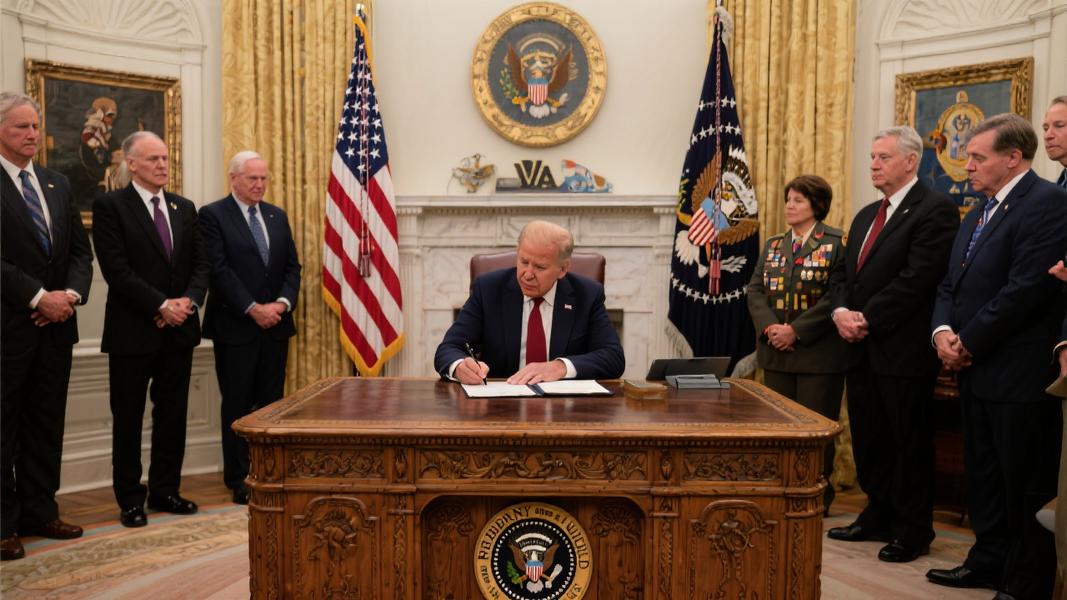
President signs two veterans bills strengthening oversight and health research for those who served
The White House announced Thursday that the President has signed two significant pieces of legislation aimed at improving accountability at the Department of Veterans Affairs and investigating cancer risks among veteran aviators.
Budget Oversight and Executive Pay Limits
The PRO Veterans Act of 2025, introduced by Senator Dan Sullivan (R-Alaska), establishes new guardrails for VA operations, requiring the agency to provide quarterly briefings to Congress on any potential budgetary shortfalls. Perhaps more significantly, it prohibits certain pay incentives for senior VA executives — a direct response to what some lawmakers viewed as exploitation of bonus structures under previous leadership.
Senator Jerry Moran, who championed similar legislation, has been particularly vocal about what he characterized as abuse of the PACT Act bonus system by VA leadership in the previous administration.
“This legislation restores regular order within the VA,” said a Senate Veterans Affairs Committee spokesperson. “It’s about ensuring transparency and preventing the kinds of executive compensation issues we’ve seen in recent years.”
The bill also establishes a Veterans Experience Office, aimed at improving service delivery and communication with those who served.
Cancer Study for Aircrew Veterans
Remember those who flew America’s military aircraft? They’re finally getting attention regarding potential health impacts of their service.
The second bill signed Thursday, the ACES Act of 2025, directs the VA to collaborate with the National Academies of Sciences, Engineering, and Medicine to study cancer prevalence and mortality rates among veterans who served as aircrew members on fixed-wing aircraft.
The study represents a significant step toward understanding potential occupational hazards faced by aviators during their military service. Cancer clusters among former aircrew have been reported anecdotally for years, but comprehensive research has been lacking.
What’s driving this newfound attention to aircrew health concerns? Veterans advocacy groups have long pushed for more research into potential links between aviation service and cancer rates, particularly following similar studies conducted for ground-based personnel exposed to various environmental hazards.
Both bills passed with bipartisan support, reflecting rare consensus in a divided Congress when it comes to veterans’ issues. The VA is expected to begin implementing the new requirements immediately, with the first quarterly budget briefing anticipated before year’s end.
For veteran aviators waiting for answers about their health concerns, the cancer study represents a long-awaited acknowledgment of their service and its potential long-term costs.
