
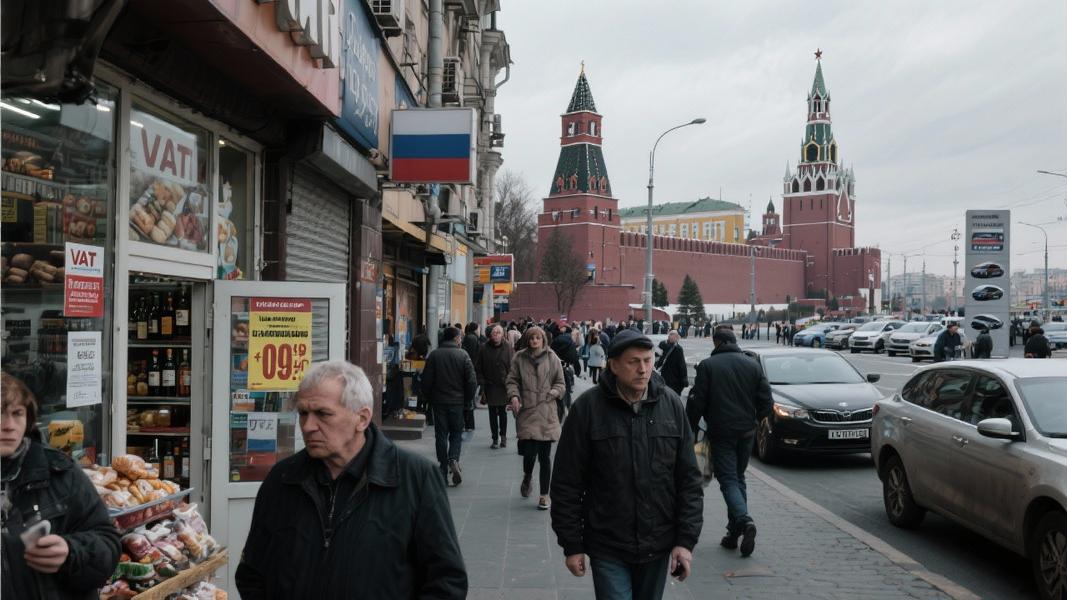
Russia plans to hike its value-added tax by two percentage points to 22% starting in 2026, a move that would catapult the country into the ranks of the world’s top 20 nations with the highest VAT rates.
The tax increase, proposed by Russia’s Finance Ministry, aims to direct fresh revenue primarily toward defense and security spending as the country deals with the financial strain of its ongoing military operations. The change would take effect January 1, 2026, according to a statement from the ministry released earlier this week.
“The preferential VAT rate of 10% will be maintained for all socially important goods, such as food, drugs and medical products, products for children and so on,” the ministry emphasized, attempting to soften public reaction to the news.
What’s the financial impact? The two-point increase could generate approximately 0.5% of GDP in additional revenue — roughly 1 trillion rubles annually — even before exemptions are applied. That’s welcome news for a government grappling with significant budget pressures.
Not Russia’s First VAT Hike
This isn’t the first time Russia has turned to VAT increases to shore up government finances. The country implemented a similar two-percentage-point increase in 2019, and officials appear to be drawing confidence from that experience.
The Ministry of Finance forecasts that VAT revenues will grow by approximately 20% following the rate increase, comparable to the 19% revenue growth experienced after the previous hike.
But the move comes with consequences for Russia’s global tax standing. “As a result, Russia will enter the top 20 countries in the world with the highest VAT rates,” according to economic analysis published by the Institute for Economic Policy.
For ordinary Russians, the increase will likely mean higher prices for most goods and services not covered by the preferential rate. It’s a burden that comes at a time when many households are already feeling economic pressure from other directions.
The timing of the announcement — nearly a full year before implementation — suggests officials may be attempting to give businesses and consumers time to prepare for the change. That said, economic experts remain divided on whether the actual revenue boost will match the ministry’s optimistic projections.
As Russia continues to prioritize military spending, the VAT increase represents just one piece of a larger fiscal puzzle — one that increasingly asks Russian citizens and businesses to shoulder the costs of the country’s geopolitical ambitions.
