
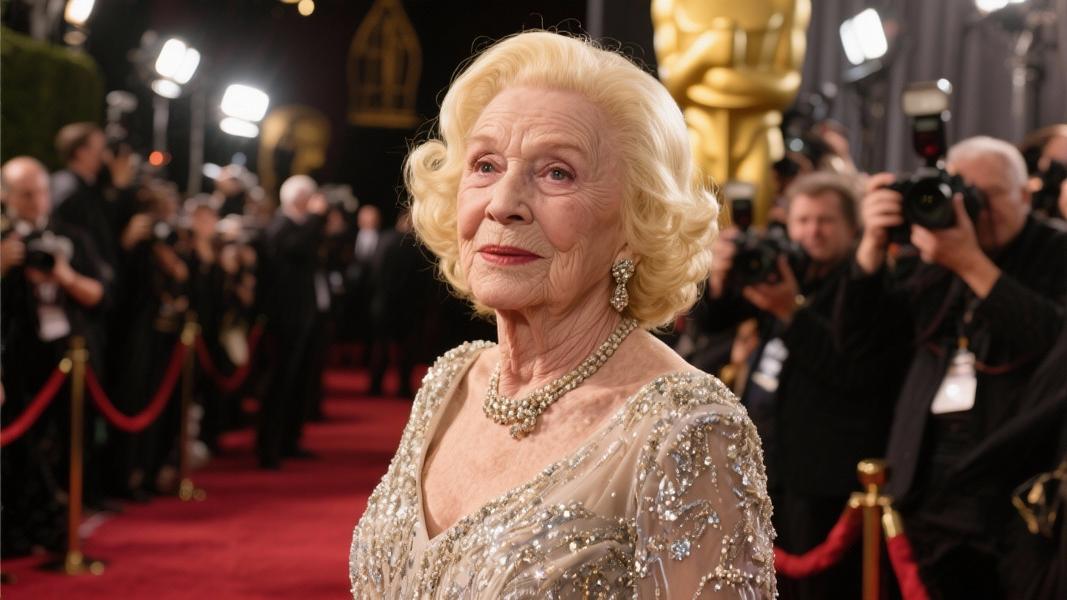
Acclaimed Actress Sally Kirkland Dies at 84, Leaves Legacy of Boundary-Breaking Performances
Sally Kirkland, the Oscar-nominated actress whose six-decade career spanned avant-garde theater, Andy Warhol’s Factory scene and Hollywood acclaim, died Tuesday morning in Palm Springs, California. She was 84.
Kirkland’s representative Michael Greene confirmed she passed away in hospice care, just two days after being admitted to the facility, following complications from fractured bones and subsequent infections. A GoFundMe campaign had recently been established by friends to help cover her medical expenses, as revealed by sources close to the actress.
From Warhol’s Factory to Oscar Recognition
Born on Halloween in 1941 in New York City, Kirkland came from artistic roots. Her mother, also named Sally Kirkland, was a prominent fashion editor at Vogue and Life magazines, while her father worked in the scrap metal business, according to biographical records.
Kirkland’s artistic journey began with rigorous training. She studied under legendary acting teachers Lee Strasberg and Uta Hagen at the prestigious Actors Studio before graduating from the American Academy of Dramatic Arts in 1961. This classical foundation would serve her throughout a career that ultimately encompassed more than 250 film and television productions.
Though she appeared in countless projects across six decades, it was her star turn in the 1987 independent film “Anna” that brought Kirkland her greatest critical recognition. Playing an aging Czech actress relegated to teaching younger performers while struggling to revive her own career, Kirkland delivered what Los Angeles Times critics called “a blazing comet of a performance” — one that earned her both a Golden Globe win and an Academy Award nomination for Best Actress.
“Kirkland is one of those performers whose talent has been an open secret to her fellow actors but something of a mystery to the general public,” wrote one critic at the time. “There should be no confusion about her identity after this blazing comet of a performance,” the reviewer noted.
A Fearless Artistic Spirit
What set Kirkland apart? Perhaps it was her willingness to take risks that others wouldn’t. Time magazine memorably dubbed her “the latter-day Isadora Duncan of nudothespianism” for her readiness to disrobe both for roles and social causes, as documented in theater circles.
Not all of these boundary-pushing performances were met with acclaim. Her appearance in the experimental 1969 film “Futz,” where she notoriously rode nude on a pig, was part of a project one Guardian reviewer bluntly described as “the worst film he had ever seen.” The critic didn’t mince words: “It was about a man who fell in love with a pig, and even by the dismal standards of the era, it was dismal.”
But such critical misses never deterred Kirkland, who remained committed to her craft with almost religious devotion throughout her life. In a 1991 interview, she emphasized the importance of Shakespearean training for actors, revealing her deep respect for theatrical tradition despite her avant-garde reputation.
“I don’t think any actor can really call him or herself an actor unless he or she puts in time with Shakespeare,” Kirkland said. “It shows up, it always shows up in the work, at some point, whether it’s just not being able to have breath control, or not being able to appreciate language as poetry and music, or not having the power that Shakespeare automatically instills you with when you take on one of his characters.”
A Colorful Life
Beyond her acting career, Kirkland was known for her colorful presence in the 1960s New York avant-garde theater scene and as a member of Andy Warhol’s famed Factory collective. This period established her as more than just an actress but as a cultural figure bridging experimental art and mainstream entertainment.
Was she always understood by critics and audiences? Hardly. But Kirkland’s willingness to take artistic risks and her dedication to performance as a transformative act remained constants throughout her remarkable career.
As news of her passing spreads through Hollywood, many will likely remember not just her Oscar-nominated turn in “Anna,” but a fearless performer who, across 60 years in the spotlight, never stopped pushing boundaries or believing in the power of her craft.
