
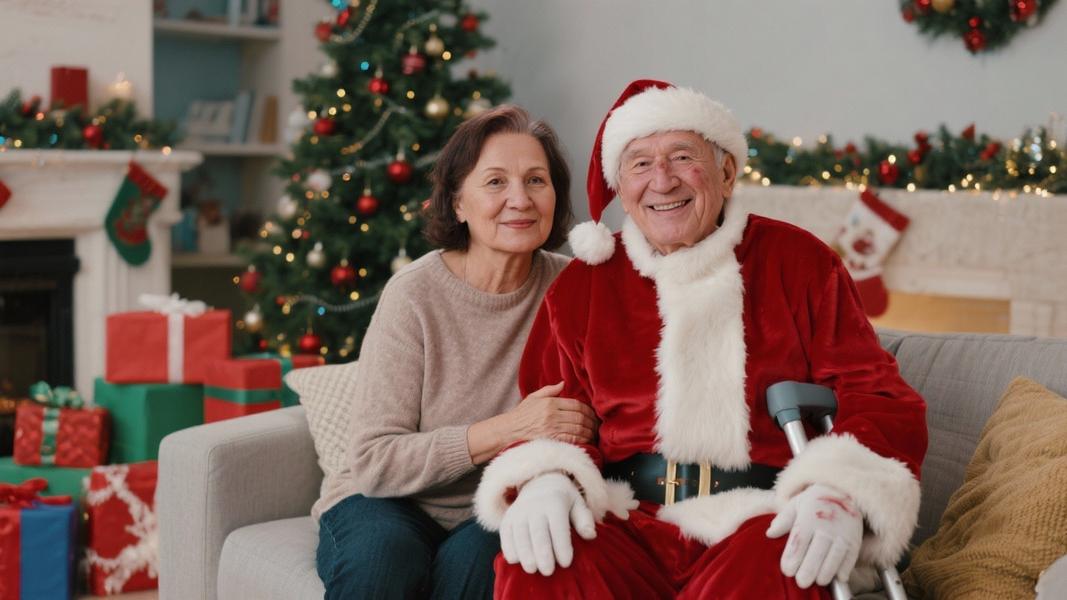
From Santa suit to hospital gown and back again, Brent Rasmussen’s journey through stroke recovery has become its own kind of Christmas miracle.
The North Texas man who brings holiday joy as Santa Claus faced a life-threatening cerebellar stroke two years ago that left doctors questioning if he’d ever walk or speak normally again. Today, he’s back to spreading Christmas cheer after what medical professionals describe as a remarkable recovery.
“We love it. Bringing the magic to each child in the Christmas season is our goal,” Rasmussen told local media, his voice betraying little evidence of the medical odyssey that nearly silenced it forever.
A Misdiagnosis Nearly Cost Everything
Rasmussen’s ordeal began with a massive cerebellar stroke that was initially misdiagnosed. By the time he received proper treatment, the damage was severe. After three months, he had lost 45 pounds, remained dependent on a walker and feeding tube, battled persistent vertigo, and could barely communicate — a devastating situation for someone whose identity was wrapped up in joyful interactions with children and families.
His recovery required surgery, an extraordinary 10.5 weeks in the hospital, and months of intensive rehabilitation at UT Southwestern Medical Center. The average hospital stay for stroke patients is typically just five to seven days, according to stroke recovery guidelines from medical institutions.
“It was such a wonderful surprise and just really kind of the culmination of all our efforts here,” Richards said of Rasmussen’s eventual recovery, which defied many expectations.
The Critical Window for Recovery
How long does meaningful stroke recovery last? Medical experts emphasize that while the first three months are crucial, improvements can continue much longer.
“Every person is different. The most rapid period of recovery is that first three months after stroke, but people can keep recovering past… that, out to six months, a year,” one stroke specialist explained in a video on stroke rehabilitation timelines.
For Rasmussen, this extended recovery window proved essential. His rehabilitation journey stretched well beyond the typical timeframe, involving a comprehensive approach that included physical, occupational, and speech therapy sessions aimed at rebuilding fundamental abilities many take for granted.
North Texas has developed sophisticated stroke care systems that emphasize rapid response timelines, including EMS prenotification and early identification of large vessel occlusions, according to UT Southwestern’s stroke care protocols. These systems likely played a role in Rasmussen’s eventual successful outcome, despite the initial misdiagnosis.
Beyond Physical Recovery
The journey back from a severe stroke isn’t just physical. Emotional and cognitive challenges often prove equally daunting.
“The road to recovery after a stroke is full of uncertainty and stroke survivors have several challenges to face, including physical, cognitive and emotional challenges. But with some hard work, practice, and family support, you can face these challenges and conquer them,” a Texas Health specialist notes.
For Rasmussen, returning to his role as Santa represented more than just physical recovery — it marked the reclaiming of his identity and purpose. The white beard that once seemed like it might never again frame a hearty “Ho Ho Ho” now once again brings joy to children throughout North Texas.
His story serves as a powerful reminder that behind every Santa suit might be someone fighting their own battles — and that sometimes, the most meaningful gifts are second chances.
