
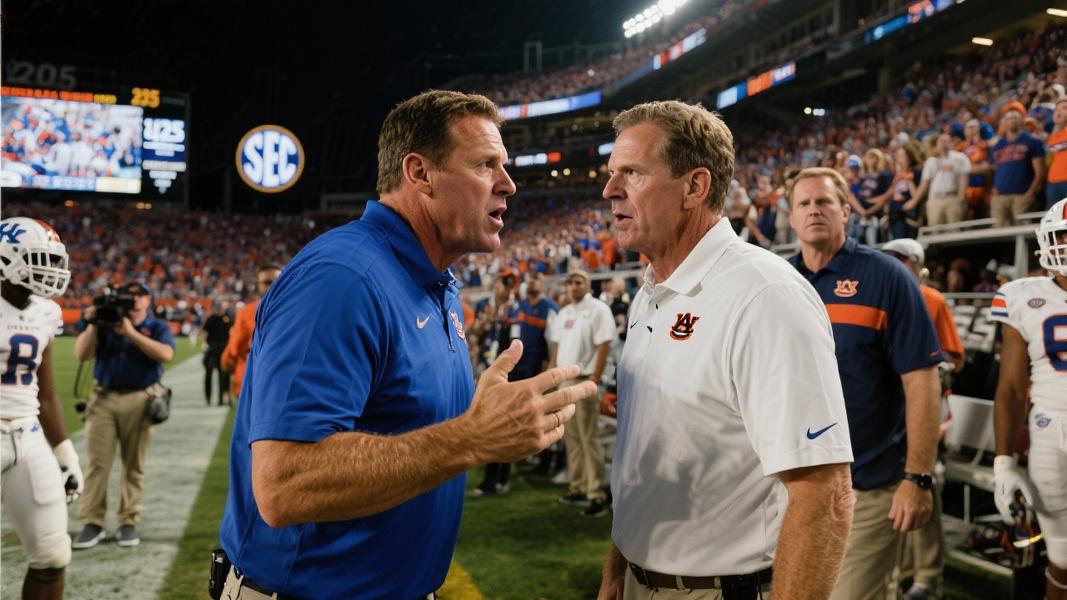
The Southeastern Conference is putting its traditional “cupcake” games on notice, announcing a shift to a nine-game conference football schedule starting in 2026. The move marks the end of an era where SEC powerhouses could coast through late-season matchups against significantly weaker opponents.
Schedule Change Sparks Controversy Among Coaches
SEC Commissioner Greg Sankey defended the decision as necessary preparation for the expanded College Football Playoff landscape. “Our requirement to play an additional power opponent ensures SEC teams are well prepared to compete and succeed in the College Football Playoff,” Sankey explained.
But not everyone in the conference is on board. Kentucky’s Mark Stoops didn’t mince words about the change: “I’ve already been on the record saying it makes no sense to go to nine games in the SEC,” the head coach stated, suggesting the move benefits other conferences more than the SEC itself.
The new format, which will require each SEC team to play every other conference opponent at least once every two years while maintaining three annual rivals, also mandates scheduling at least one nonconference opponent from another Power Five conference each season. This structure has been confirmed through the 2029 season.
Playoff Committee’s Inconsistencies Fuel Concerns
Missouri’s Eli Drinkwitz voiced frustration over what he sees as the College Football Playoff committee’s failure to consistently value strength of schedule. “The level of inconsistencies that have been created is hard to ignore, and we were all given the promise there’s gonna be a strength of schedule metric factored in — didn’t happen,” Drinkwitz lamented.
Texas A&M’s Mike Elko echoed these concerns with a stark warning: “We have to figure out how to reward SEC teams for playing in the SEC, because if we’re not going to be rewarded for strength of schedule metrics, and we’re not going to be rewarded for strength of record, then it’s going to become really, really challenging with us going to nine SEC games to figure out how the best teams are going to get into the playoffs,” he cautioned.
Are coaches’ voices falling on deaf ears? Elko thinks so. “The coaches have been pounding this drum and nobody seems to be listening,” he noted.
The Future of “Cupcake” Games
Despite the schedule change, don’t expect the tradition of SEC teams scheduling easy wins to disappear entirely. The nine-game format still leaves room for two nonconference games, which will likely continue to feature opponents from the Football Championship Subdivision (FCS) or Group of Five conferences. These matchups have historically been lopsided affairs, with power conference teams going 56-0 against FCS opponents this season with an average victory margin of 42.7 points.
The SEC isn’t alone in this shift. The conference is actually playing catch-up, as the Big Ten, Big 12, and ACC have already adopted similar nine-game formats, albeit with some variations.
Still, the timing of this change coincides with college football’s expanding playoff format, raising legitimate questions about whether the SEC’s traditional dominance might be challenged by a schedule that no longer allows its powerhouses to pad their records with guaranteed wins late in the season.
For now, fans can expect more meaningful conference matchups starting in 2026 — and perhaps a few fewer November blowouts against outmatched opponents. Whether that translates to more or fewer SEC teams in the College Football Playoff remains to be seen.
