
Seventeen nations. One declaration. And a message from Washington that the Western Hemisphere’s cartel problem is no longer America’s burden alone to carry.
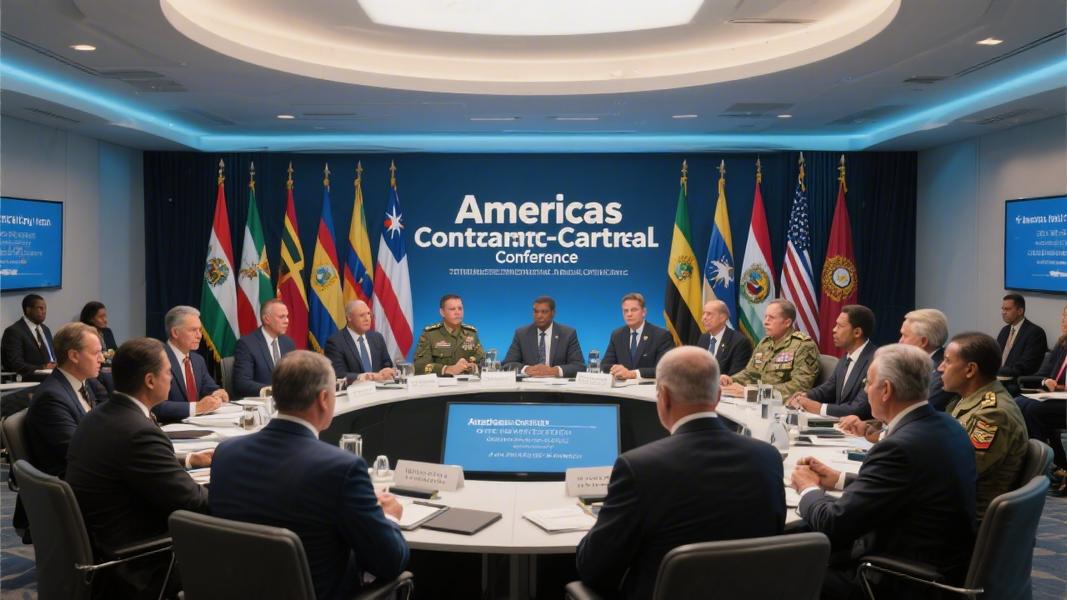
On March 5, 2026, Secretary of War Pete Hegseth convened the inaugural Americas Counter-Cartel Conference at U.S. Southern Command headquarters in Doral, Florida — gathering defense and security officials from across the region for what the Pentagon is billing as a watershed moment in hemispheric cooperation. The event marked a deliberate, high-profile push to reframe the cartel crisis not as a U.S. border problem, but as a shared threat demanding a unified military and security response, reported U.S. Southern Command.
A Coalition, Not a Lecture
Hegseth was direct about the framing from the start. “This conference is about you; this conference is about us,” he told assembled delegates. “This conference is not called the ‘America’s Counter Cartel Conference’; it’s the ‘Americas Counter Cartel Conference.'” It’s a subtle but pointed distinction — one clearly designed to signal that Washington isn’t simply summoning allies to receive instructions, but asking them to co-own the mission.
Whether every nation in the room felt that spirit of partnership equally is another question. Still, the symbolism of 17 countries sitting down together at SOUTHCOM carries real weight, particularly as cartel violence and narco-trafficking have destabilized governments and communities from the Rio Grande to the Southern Cone.
The Declaration and What It Commits To
By the end of the conference, all participating nations had signed a Joint Security Declaration reaffirming their collective commitment to peace, sovereignty, and regional stability. The document focuses on four core pillars: expanded border security cooperation, countering narco-terrorism, disrupting human and drug trafficking networks, and protecting critical infrastructure from criminal exploitation.
On paper, it’s a comprehensive agenda. In practice, the hard work starts now. Declarations are easy. Coordination between nations with competing interests, limited resources, and fragile institutions — that’s where these frameworks so often stall.
Numbers That the Administration Wants You to Notice
How bad was it before? Bad enough that even incremental progress is being treated as a headline. Officials at the conference highlighted a 56% reduction in fentanyl flow into the United States, a dramatic drop in illegal crossings at the southern border, and what they described as successful deterrence of narco-terrorist activity in the Caribbean since September 2025. Those are significant figures — if they hold up under scrutiny.
Hegseth leaned into the momentum. “And if we collectively fight together, there is no gang, there is no terrorist, there’s no cartel that is more powerful than us,” he told the room. “We are here today because each of you has committed to doing your part. And that commitment cannot just be lip service. This must come with a new approach and a new normal to dismantle and destroy our shared threats of cartels and narco-terrorism.”
That last line — can’t just be lip service — is the kind of thing that sounds better in a conference room than it reads six months later, when the follow-through gets complicated.
The Legal Foundation Behind the Push
None of this is happening in a vacuum. On his first day in office, President Trump signed an Executive Order formally designating narco-traffickers and cartels as Designated Terrorist Organizations — a legal reclassification that unlocks a significantly broader set of military and law enforcement tools against them. That order, detailed in administration briefings, effectively gave the Pentagon new authority to treat cartel operations as counterterrorism targets rather than strictly law enforcement matters.
It’s a consequential shift. Critics have raised concerns about the implications of militarizing what has historically been treated as a criminal justice issue, particularly in sovereign nations where U.S. military involvement is politically sensitive. Supporters argue the cartels’ firepower, financing, and reach long ago crossed into terrorist territory — and that the old framework simply wasn’t working.
What Comes Next
The conference was a beginning, not an end. The real test of the Americas Counter-Cartel framework will come in the months ahead — in intelligence-sharing arrangements that actually get used, in joint operations that cross borders without triggering diplomatic crises, and in whether the nations that signed that declaration in Doral are still at the table when the mission gets harder and more expensive than anyone wants to admit.
Seventeen signatures on a joint declaration is a good photo. Seventeen nations dismantling cartel infrastructure together — that’s a different story, and it hasn’t been written yet.
