
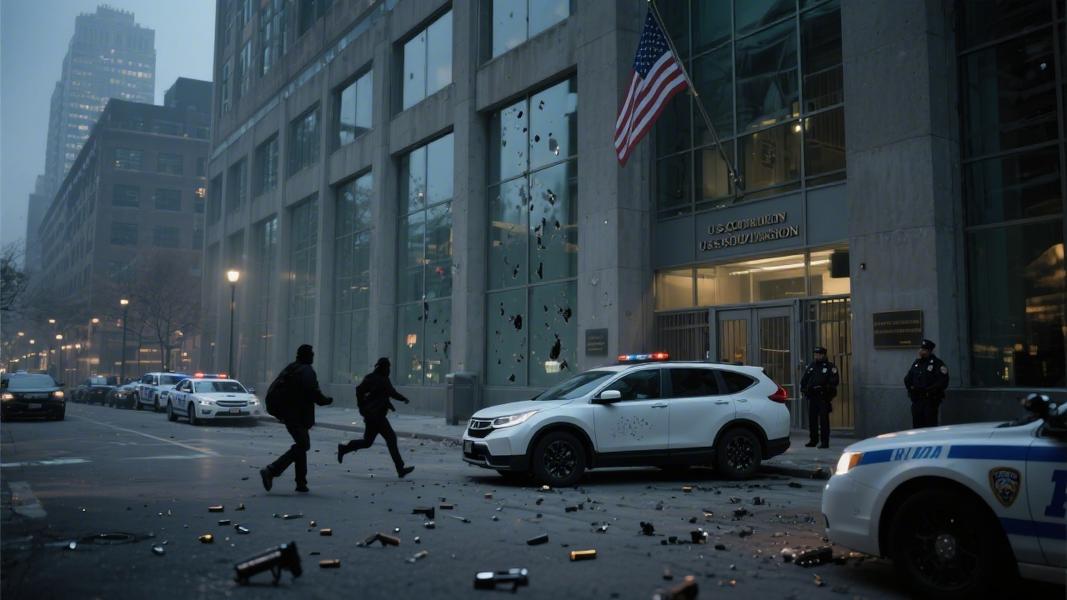
Gunshots rang out at the United States consulate in Toronto before dawn Tuesday, rattling a city already on edge after a string of overnight attacks on Jewish houses of worship in the region.
At approximately 5:29 a.m. local time, someone opened fire on the front of the U.S. consulate building — one of the most symbolically significant diplomatic posts on Canadian soil. No injuries were reported, but the message, intentional or not, landed hard. Canadian officials were quick to condemn it, and federal investigators moved swiftly to determine whether the attack rises to the level of terrorism.
What Happened Outside the Consulate
According to investigators, a white Honda CRV pulled up to the consulate and two individuals stepped out. They discharged what appeared to be a handgun at the front of the building, then climbed back into the vehicle and drove southbound. The whole thing, by most accounts, was over in moments. Toronto police confirmed that “evidence of a firearm discharge has been located” — though as of the latest update, no suspect had been identified.
It’s a brazen act, even by the standards of a city that’s seen its share of violent incidents. Targeting a foreign nation’s consulate — especially that of Canada’s closest ally — carries implications that go well beyond a typical street crime.
A National Security Incident, At Minimum
RCMP Chief Superintendent didn’t mince words. “It’s definitely a national security incident because we have the U.S. consulate, after all, struck by gunfire,” the official stated, adding that whether it qualifies as a terrorist event “will be subject to the investigation that will be undertaken in the coming days and weeks.” That investigation, the superintendent noted, would rely on evidence gathered both at the scene and through coordination with partner agencies.
That’s a careful answer — deliberately so. Law enforcement rarely commits to the “T-word” early in an investigation, and for good reason. But the framing itself signals how seriously officials are treating this. National security incidents don’t get that label casually.
Canadian political leaders weren’t nearly as measured. The shooting, one official condemned, is “an absolutely unacceptable act of violence and intimidation aimed at our American friends and neighbours.” Strong language — and probably the right kind, given the diplomatic weight of what happened.
A Troubling Pattern Emerging in Toronto
Here’s where it gets harder to ignore. The consulate shooting didn’t happen in a vacuum. Just days earlier, two synagogues in the greater Toronto area were targeted in separate overnight incidents, with bullet holes discovered in the front door of at least one of them. No one was hurt in those attacks either — but the pattern is difficult to dismiss as coincidence.
Three targeted shootings. No injuries, but no shortage of intent. Whether these incidents are linked remains an open question — one that investigators are now racing to answer. Still, the clustering of attacks on a Jewish institution and an American diplomatic post, all within days of each other, is the kind of thing that keeps counterterrorism officials up at night.
What Comes Next
The investigation is in its early stages. No suspects have been publicly named, no motive confirmed, and the white Honda CRV that carried the shooters was last seen heading south — direction unknown. Canadian federal authorities, Toronto police, and almost certainly U.S. diplomatic security services are now working the case together.
For a country that has long prided itself on relative stability and its warm relationship with Washington, the image of bullet holes in the facade of an American consulate is a deeply uncomfortable one. It’s not the Canada anyone wants to be talking about.
As the RCMP superintendent put it — calmly, deliberately — the evidence will tell the story. The question is what story that turns out to be.
