
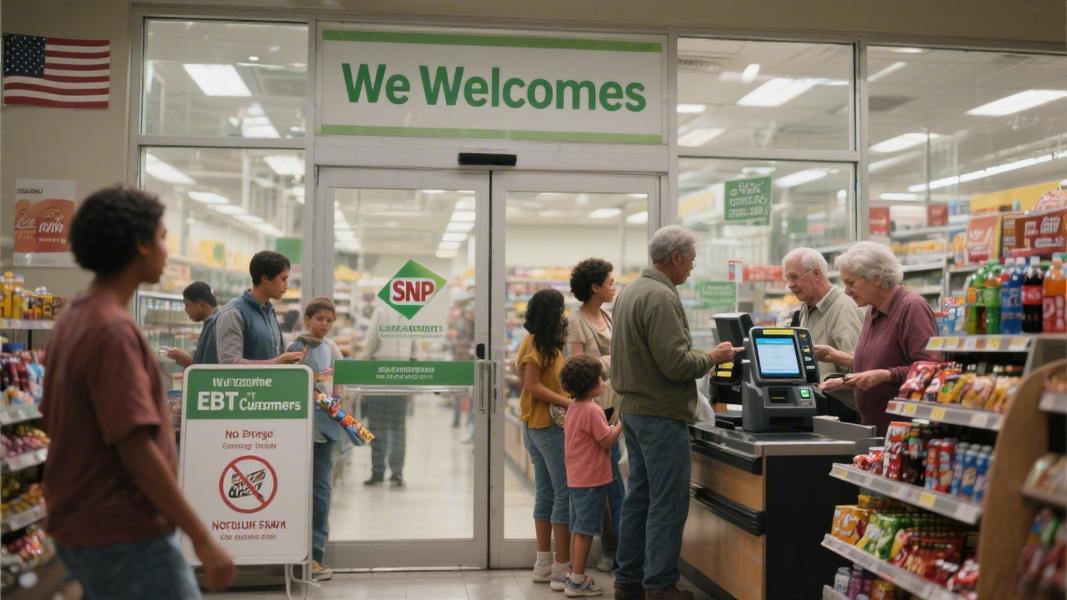
Starting the new year with an empty cart — or at least a restricted one. As of January 1, 2026, millions of Americans enrolled in the federal food assistance program known as SNAP can no longer use their benefits to buy soda, candy, or a growing list of foods the government has deemed junk.
Five states — Indiana, Iowa, Nebraska, Utah, and West Virginia — became the first to implement sweeping restrictions on what can be purchased using Electronic Benefits Transfer cards, affecting an estimated 1.4 million people. The rollout is part of the Trump administration’s broader Make America Healthy Again initiative, and it’s moving fast. By fall 2026, reported restrictions will cover 18 states in total — a dramatic reshaping of a program that feeds more than 42 million Americans.
What’s Actually Banned
The restrictions target what officials describe as the worst offenders in the American diet. Sugary beverages, pre-packaged desserts, candy, and salty snack foods are all on the prohibited list. That might sound like a short list, but the reach is considerable. USDA Secretary Brooke Rollins noted that a full 20 percent of all SNAP dollars go toward sugary drinks, pre-packaged desserts, salty snacks, and sugary treats — with sugary drinks ranking as the single largest purchase category across the entire program.
That’s a staggering figure. One in five federal food assistance dollars, spent on products that, by most nutritional standards, offer little to no health benefit. For the administration, it’s the central justification for acting now.
The Political Engine Behind the Push
This isn’t happening in a vacuum. The restrictions arrive as Health Secretary Robert F. Kennedy Jr. has made overhauling America’s food and health systems a signature cause — and as the Trump administration has leaned into the idea that federal spending on food assistance carries a hidden cost. “We cannot continue a system that forces taxpayers to fund programs that make people sick and then pay a second time to treat the illnesses those very programs help create,” Kennedy said in a statement last December.
It’s a politically potent framing. Cast the status quo as a double-billing of taxpayers — once for the chips and Coke, once for the diabetes treatment — and the restrictions start to look less like an intrusion and more like fiscal responsibility. Rollins has echoed the same message, saying the administration reached out to state leaders directly and asked them to develop “creative solutions” to the country’s worsening health problems.
The Rollout and What’s Coming
So how does this actually work? States aren’t acting unilaterally — they’re receiving waivers through the USDA that allow them to modify what SNAP benefits can purchase, something that has historically been tightly controlled at the federal level. The five states that went live January 1st are, in effect, the pilot wave. Retailers operating in those states are now required to update their point-of-sale systems to flag and block restricted items when customers pay with EBT cards.
Still, the logistics are anything but simple. Defining “junk food” in a legally enforceable way — one that can be consistently applied across thousands of grocery stores, corner shops, and bodegas — is a genuinely complicated undertaking. Is a flavored yogurt covered? What about a sweetened granola bar marketed as a health food? The line between snack and staple has always been blurry, and retailers are scrambling to get it right before they face compliance issues.
By fall, thirteen more states are expected to join the first five. That expansion will make SNAP purchase restrictions one of the most significant structural changes to the program in decades — quietly reshaping what the federal safety net looks like, one prohibited item at a time.
The Debate Isn’t Over
Critics — and there are plenty — argue that restricting what low-income Americans can buy with food assistance is paternalistic at best and punitive at worst. Anti-hunger advocates have long contended that SNAP recipients make purchasing decisions that closely mirror those of non-recipients at similar income levels, and that singling out the poor for dietary policing ignores the deeper structural factors driving food insecurity and poor health outcomes.
But it’s not that simple, either. Proponents counter that the program was never intended to subsidize nutritionally empty foods, and that the sheer volume of SNAP dollars flowing toward sugary drinks in particular represents a policy failure hiding in plain sight. Both sides have data. Both sides have a point. That’s what makes this fight so durable.
What’s undeniable is the scale of what’s unfolding. Eighteen states, 1.4 million people already affected, and a federal bureaucracy that has, for the first time in a very long time, decided that what you put in your cart with government money is very much its business. Whether that’s a long-overdue correction or an overreach dressed up in the language of public health may depend entirely on who’s standing in the checkout line.
