
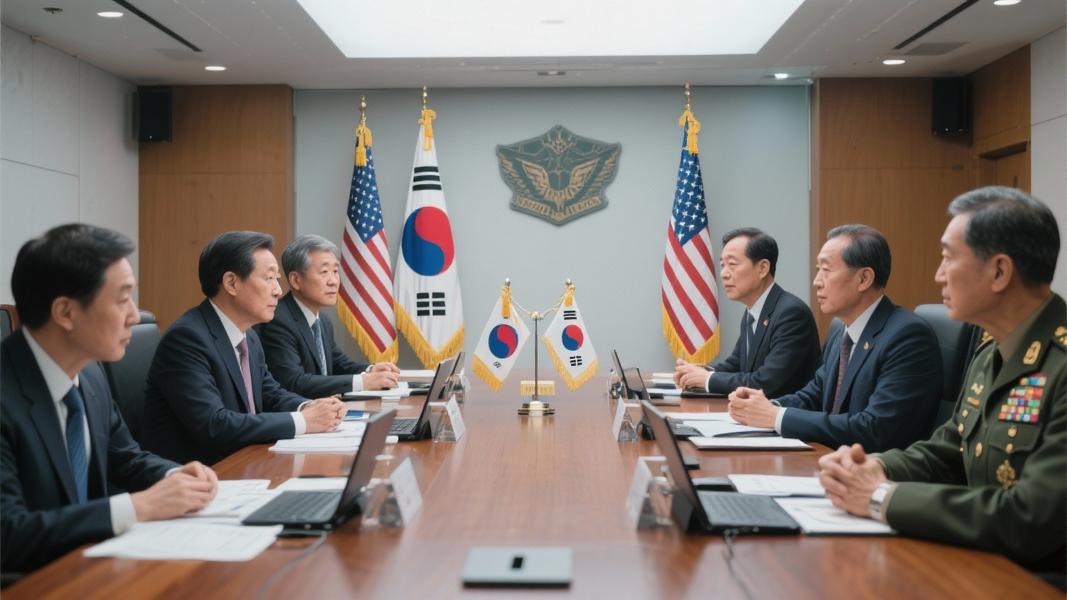
South Korea and the United States bolstered their defense alliance this week during high-level talks in Seoul, as both nations navigate an increasingly complex security landscape in the Indo-Pacific region. The discussions come amid ongoing concerns about North Korea’s missile and nuclear programs.
The 27th Korea-U.S. Integrated Defense Dialogue (KIDD) took place on September 23-24, 2025, with Major General Yoon Bong hee leading the South Korean delegation and Mr. John Noh, Deputy Assistant Secretary of War for East Asia, heading the American team. Senior defense and foreign affairs officials from both countries participated in what officials described as productive exchanges aimed at modernizing their partnership.
Evolving Alliance for Regional Stability
What’s driving these talks? The changing security environment in Northeast Asia has prompted both nations to reassess their defense cooperation framework. This week’s dialogue focused on creating what officials called a “mutually beneficial and future-oriented” alliance structure, with particular attention to follow-up measures from the recent ROK-U.S. Summit.
“This meeting laid the foundation for enhancing bilateral understanding on Alliance issues,” a joint statement noted, with both sides pledging continued cooperation going forward. The dialogue represents the latest chapter in a decades-long security partnership that has adapted to shifting regional dynamics.
The previous dialogue, held in Washington D.C. earlier this year, had already signaled a robust commitment to mutual defense. That meeting emphasized modernizing defense systems through emerging technologies, including cyber defense capabilities, space-based surveillance, and advanced command and control networks.
North Korean Challenges
Pyongyang’s shadow loomed large over the discussions. North Korea’s unpredictable behavior and continued advancements in missile and nuclear capabilities remain a central concern for both Seoul and Washington, requiring what officials called “coordinated and agile response mechanisms.”
The ongoing dialogue reflects a broader strategy of integration between South Korean and American defense postures. Both nations have increasingly focused on developing synchronized approaches to security threats not only on the Korean Peninsula but across the Indo-Pacific region.
Still, experts note that the alliance continues to evolve beyond its traditional focus on North Korean threats. The expansion of scope reflects both countries’ growing concerns about regional stability and the changing nature of security challenges in the 21st century.
“We’re seeing a more comprehensive approach to alliance management,” said Dr. Min-ho Park, a security analyst at Seoul National University, who wasn’t involved in the talks. “It’s no longer just about deterring North Korea, but about creating a sustainable security architecture for the entire region.”
As the dialogue concluded, both delegations expressed satisfaction with the outcomes while acknowledging the work ahead. With geopolitical tensions showing little sign of abating, the ROK-U.S. alliance appears poised to remain a cornerstone of security strategy in a region where the stakes couldn’t be higher.
