
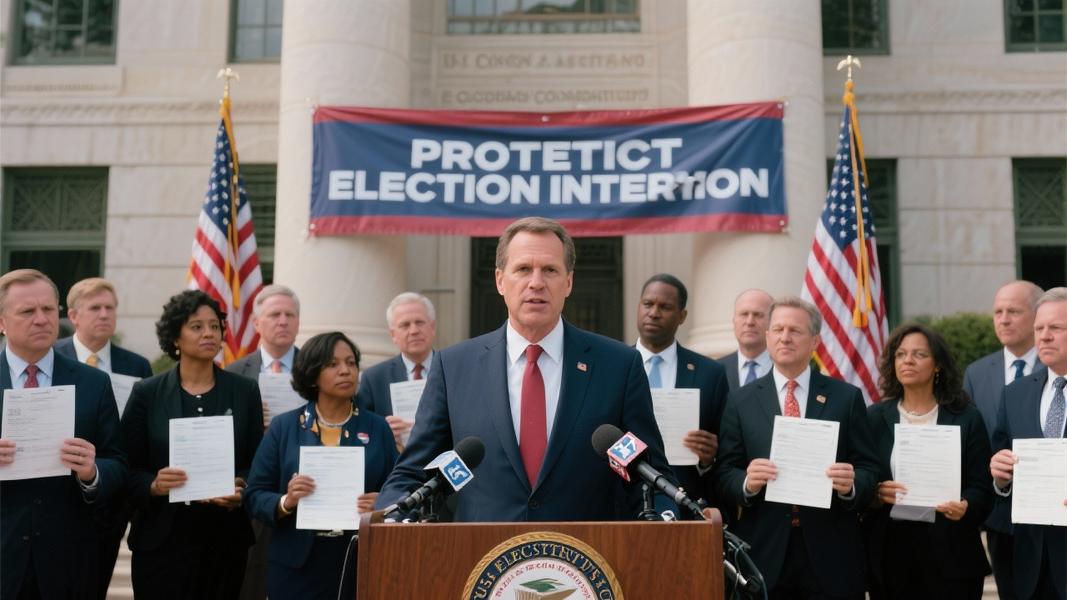
A coalition of 14 state attorneys general, led by Texas Attorney General Ken Paxton, has thrown support behind a petition requiring proof of citizenship for voter registration, setting up a fierce battle over election access that pits election security advocates against voting rights groups.
The petition, filed by America First Legal Foundation to the Election Assistance Commission (EAC), seeks to mandate documentary proof of U.S. citizenship on federal voter registration forms. Paxton argues that the current system relying on self-attestation fails to protect the integrity of voter rolls.
“It’s imperative that only eligible U.S. citizens are registering and voting in our elections,” Paxton said in a statement. “Free and fair elections are the cornerstone of our Republic, and every illegal vote dilutes the voice of law-abiding American citizens. We must require proof of citizenship to protect the voice of the true American people.”
Partisan Divide Deepens
The move comes after more than 1,000 public comments were submitted during the EAC’s comment period, most supporting the petition. But the issue has created a stark partisan divide, with California Attorney General Rob Bonta leading a counter-coalition of 19 attorneys general in opposition.
What’s driving this push? The petition aligns with former President Donald Trump’s Executive Order 14248, which directed federal agencies to preserve election integrity. That order was blocked by federal courts, leading America First Legal — founded by former Trump advisor Stephen Miller — to pursue the change through the EAC instead.
Bonta’s coalition maintains that the documentation requirement would be unlawful and create significant burdens on state and local officials. They highlight that federal courts have already blocked Trump’s executive order mandating proof of citizenship from taking effect.
Access vs. Security
Critics of the proposal warn that millions of eligible voters could be excluded. Approximately 146 million Americans don’t have passports, and about 21 million voting-age citizens — roughly 9% of the electorate — lack easy access to documentation like passports or birth certificates, according to data cited by the Coalition on Human Needs.
The U.S. Vote Foundation has also weighed in against the petition, warning that “introducing proof-of-citizenship requirements without the creation of an appropriate, secure technological infrastructure would endanger voters and the electoral process alike.” The organization expressed particular concern for overseas and military voters.
Meanwhile, Paxton contends the change would actually reduce administrative burdens on states and improve public confidence in elections. His comment to the EAC suggests that requiring proof of citizenship would strengthen election integrity in line with Trump’s executive order.
But is this really about streamlining the process? The National Women’s Law Center doesn’t think so. The organization opposes the petition in the strongest terms, stating it would “deny millions of eligible voters the ability to register” and conflicts with federal law.
The EAC now faces a consequential decision that could reshape voter registration nationwide, with both sides claiming they’re protecting democracy — one by securing the ballot box against potential fraud, the other by ensuring eligible citizens maintain their access to vote.
