
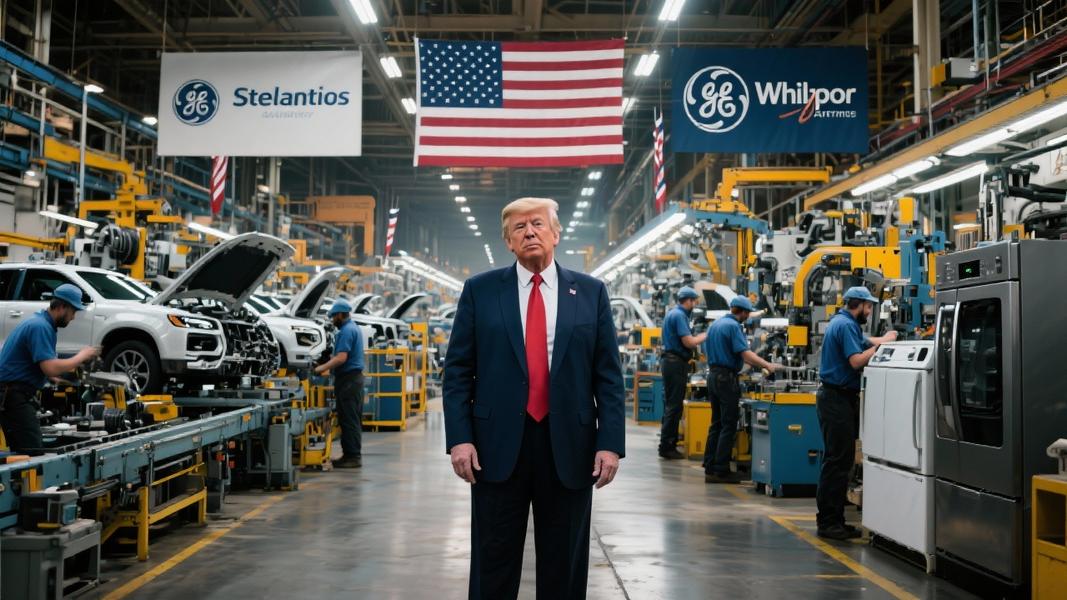
Manufacturing giant Stellantis is pouring a staggering $13 billion into U.S. operations over the next four years, part of a wave of major investments that the Trump administration points to as evidence of America’s industrial resurgence.
The automaker’s ambitious plan aims to expand U.S.-based production by 50%, bringing new life to its shuttered Belvidere, Illinois plant while significantly boosting capacity at facilities in Toledo, Ohio; Warren and Detroit, Michigan; and Kokomo, Indiana. The investment is expected to create 5,000 new jobs and introduce five new vehicles to American production lines, according to reports.
Manufacturing Renaissance?
Stellantis isn’t moving alone. Whirlpool Corporation has committed $300 million to its Ohio-based laundry manufacturing facilities, a move projected to add up to 600 new jobs. Meanwhile, GE Aerospace Foundation is launching a $30 million workforce skills training program designed to prepare Americans for advanced manufacturing roles.
“Under President Donald J. Trump’s bold leadership, America’s manufacturing sector is surging forward with unprecedented momentum,” claimed a statement from the administration highlighting these investments. The narrative fits neatly with Trump’s longstanding “America First” economic policy, which has emphasized onshoring production and revitalizing traditional manufacturing sectors.
But what’s driving this particular wave of investment? Industry analysts point to a complex mix of factors beyond political leadership, including supply chain vulnerabilities exposed during the pandemic, increasing automation possibilities, and the strategic value of manufacturing closer to North American consumers.
Belvidere’s Second Chance
For residents of Belvidere, Illinois, the Stellantis announcement represents more than just statistics. The plant’s closure in February 2023 left nearly 1,350 workers without jobs and sent economic shockwaves through the community. Its planned reopening stands as perhaps the most tangible symbol of manufacturing’s potential comeback in regions hit hard by previous industrial contractions.
The company’s decision to not only reopen Belvidere but to expand operations in four additional states represents one of the largest recent commitments to American auto manufacturing by any global player. Industry observers note that Stellantis, formed by the merger of Fiat Chrysler and PSA Group, appears to be doubling down on its American presence at a pivotal moment for the auto industry.
Workforce development remains a critical challenge amid this manufacturing push. GE Aerospace Foundation’s $30 million training initiative acknowledges the skills gap that many manufacturers face as they attempt to expand operations in the United States. Modern manufacturing facilities require increasingly specialized technical knowledge, creating both opportunities and hurdles for communities hoping to benefit from industrial expansion.
Economic Impact
The collective impact of these investments extends beyond the immediate jobs created. Economic analysts typically estimate that each manufacturing job supports multiple positions in adjacent industries and services, creating a multiplier effect that could significantly boost regional economies where these investments are concentrated.
Still, questions remain about the long-term sustainability of this manufacturing growth. Can these investments withstand potential shifts in trade policy, economic conditions, or consumer preferences? Are they contingent on specific government incentives that might change with future administrations?
The Stellantis investment in particular represents a significant bet on the continued relevance of American auto manufacturing, even as the industry navigates the complex transition toward electric vehicles and increasingly automated production processes.
For communities like Belvidere, Warren, Toledo, Detroit, and Kokomo, those longer-term questions likely take a back seat to the immediate promise of renewed economic activity. After decades of manufacturing decline in many American regions, the possibility of reversing that trend—even partially—carries both economic and symbolic weight that transcends partisan politics.
As one former Belvidere plant worker put it after hearing about the reopening plans: “This isn’t just about getting jobs back. It’s about getting our dignity back.”
